
Scorpions in Costa Rica: Hiding Spots, Conditions, and Prevention
✓ Pest control company licensed by the Ministry of Health
Scorpions are arachnids looking for shelter and prey (insects). In homes, they tend to show up more when there's clutter, cracks, and plenty of insects in yards or around the perimeter.
Contents
Scientific name
Scorpions belong to the order Scorpiones. Costa Rica has a wide diversity of species; in urban and semi-urban areas, many of the ones people run into belong to genera like Centruroides (exact identification requires an inspection).
Safety: don't handle scorpions with your bare hands. If a sting occurs or you notice symptoms, seek medical attention. This guide is informational and focuses on prevention and environmental control.
What locals call them in Costa Rica
In Costa Rica they're called alacranes or escorpiones (Spanish for scorpions); in everyday speech, "alacrán" is the more common word.
Are there scorpions in Costa Rica?
Yes. Scorpions live in every province of Costa Rica, from the dry Pacific lowlands to the Central Valley, and they do get into houses: garages, storage rooms, laundry areas and shoes left on the floor are the usual spots. Sightings go up in the dry months and whenever a yard has rubble, firewood and plenty of insects for them to eat.
Here is what to do: shake out shoes and clothing stored in the garage before putting them on, cut down shelter around the perimeter, seal the gaps under doors and around pipes, and keep the insect population down, because scorpions follow their food. If you keep seeing them in the same room, there is almost always an entry point nearby, and that is what a perimeter inspection finds. A sting from the species found around homes is painful but rarely serious for a healthy adult; seek medical attention right away for children, older adults, or any symptoms beyond local pain and swelling.
Where they hide in homes
- Yards: under rocks, stacked wood, rubble, flowerpots, sheet metal, scrap.
- Perimeters: exterior baseboards, wall cracks, concrete joints, and fences.
- Indoors (when they do get in): storage rooms, garages, under furniture, closets that don't get much use.
- Bathrooms and laundry areas: if there are insects and moisture, scorpions may wander into these spots.
Conditions that favor them
- Shelter: piled-up materials, cluttered yards, firewood, rubble.
- Cracks and entry points: gaps around doors, windows, unsealed pipe penetrations.
- Available prey: insects in the yard (cockroaches, crickets, etc.).
- Moisture around the perimeter: dense weeds, drains, nearby standing water.
Signs and patterns
- Nighttime sightings on walls or in the yard (most species are more active at night).
- Repeated sightings in the same room or hallway can point to a nearby entry point.
- A lot of insects in the yard usually correlates with more scorpion activity.
Practical prevention
- Cut down on shelter in the yard: clear out rubble, unneeded wood, and scrap.
- Control the underlying insect population and cut back on lights near entrances that attract insects.
- Seal cracks and gaps; add door sweeps where it makes sense.
- Keep weeds trimmed and don't let vegetation touch the walls.
- Check shoes and clothing stored in garages or storage rooms before you put them on.
Professional control
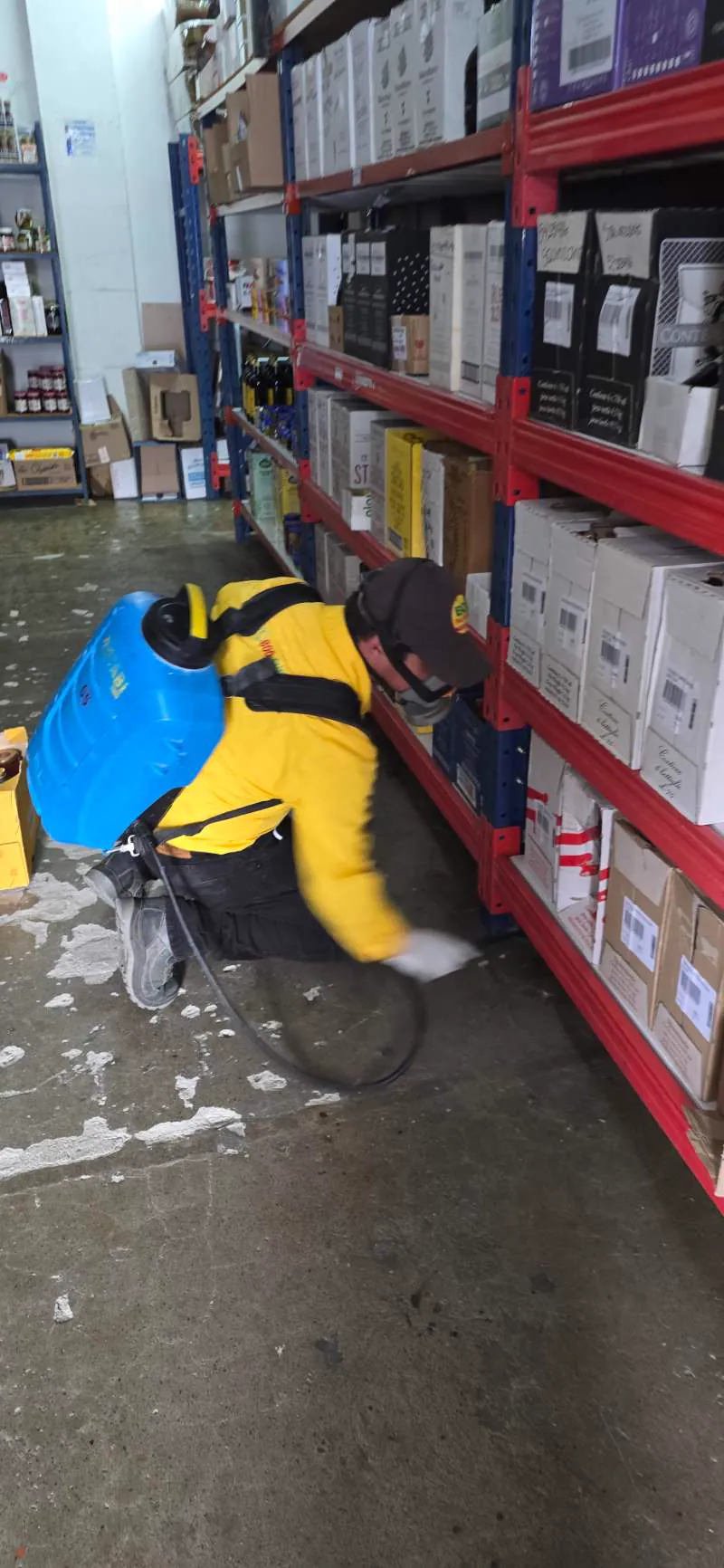
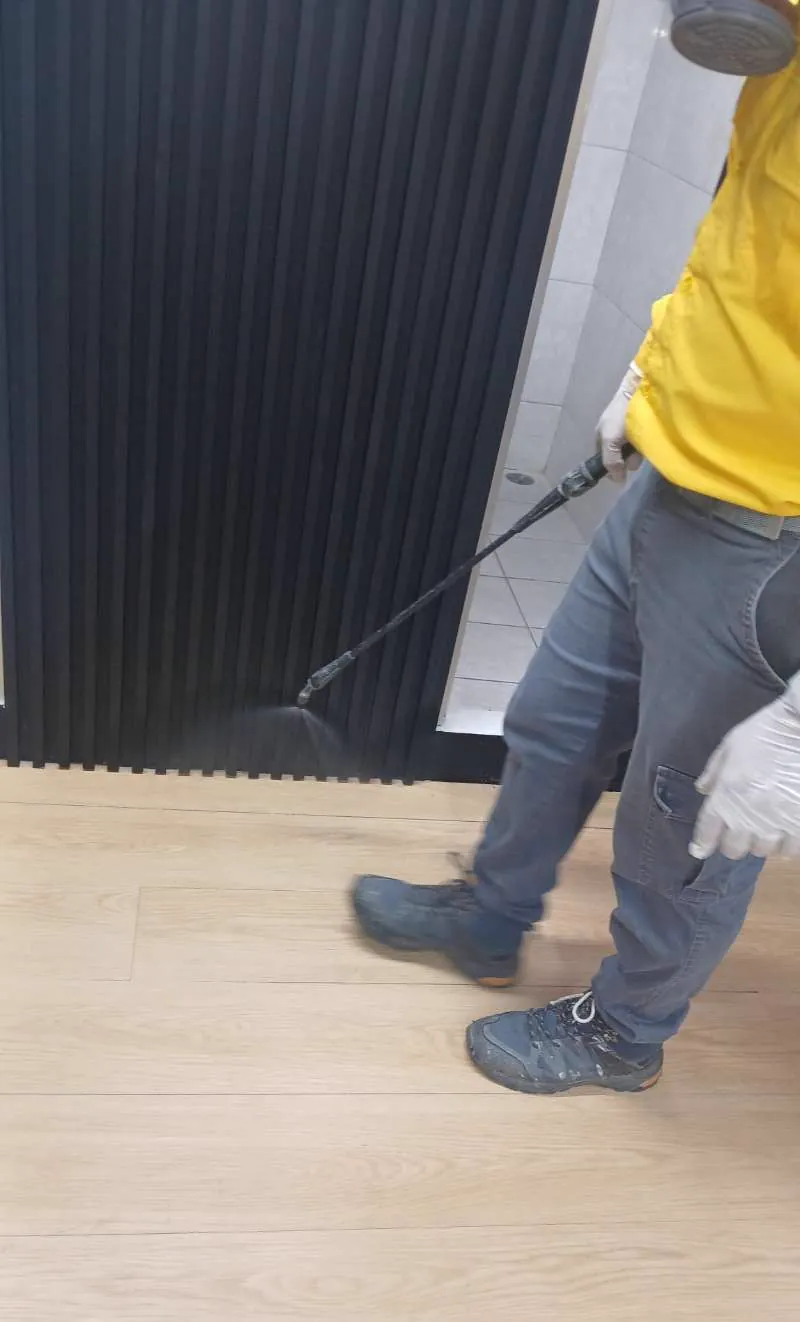
Professional control starts with a perimeter inspection, then reduces shelter and applies targeted treatment at critical entry points. It's paired with exclusion recommendations (sealing) and control of the underlying insect population, to make the environment less attractive in the first place.
How we treat scorpions at EcoPlagas
Real service photos, taken from our technicians' recent reports.
Frequently asked questions
- How do I get rid of scorpions in my house?
- By treating cracks, baseboards, frames and the outside perimeter, and clearing firewood, blocks and stacked material, which is where they live. Sealing gaps under doors and windows keeps them out.
- What should I do if a scorpion stings me?
- Wash the area, apply cold and seek medical care if there is intense pain, numbness or the person stung is a child. Most scorpions in Costa Rica are not life threatening, but the sting hurts.
- How much does scorpion control cost in Costa Rica?
- Home fumigation up to 100 m² starts at ₡39,900 and includes treating the cracks, baseboards and perimeter where scorpions get in. Date confirmed in under an hour and re-entry one hour later.
- Why are there scorpions in my house?
- Because they find dry shelter and food: firewood, blocks, stored roof tiles, cracks in walls and baseboards, and insects in the yard. Reducing stacked material and controlling the cockroaches and crickets they feed on brings the population down.