
Woodworm: how to tell if your furniture has it and how to get rid of it
✓ Pest control company authorized by the Ministry of Health · ✓ Available 24 hours, every day · ✓ Prices published on our website
Free inspectionPest control company authorized by the Ministry of Health · Available 24 hours, every day
- Furniture from ₡59,900; the exact price is given in writing at the inspection
- 30-day check once the plan is complete, with conditions
- Back inside one hour later
- Date confirmed in less than an hour over WhatsApp
In Costa Rica the word polilla is used for three different insects, and the treatment for one doesn't work on the other two. Before you buy any product, it's worth knowing which of the three you have at home. This page focuses on woodworm (polilla de madera or carcoma), the one that leaves small round holes and fine dust in furniture, frames and floors, but it also explains what to do about clothes moths and where to go if the problem is in the pantry.
The short answer to the usual question: spraying the surface of the wood doesn't get rid of woodworm. The larva lives inside, several centimeters below the surface, for one to three years. The product has to reach it through the tunnels, or the piece has to be heated all the way to the core. The details are below.
- Round holes 1 to 2 mm wide with fine, flour-like dust: woodworm. Hard, sand-like pellets and no round holes: drywood termites.
- Woodworm is not a moth: it's a beetle. The damage is done by the larva, which eats wood from the inside for one to three years before coming out.
- Kerosene, vinegar and hardware-store spray stay on the surface and don't reach the larva.
- It is treated by injecting product into the tunnels, with a surface wood treatment, or with heat for small pieces.
- Free inspection; furniture from ₡59,900, with the exact price given in writing at the inspection.
Contents
- Polilla: three different pests with the same name
- What woodworm is
- How to tell if a piece of furniture has woodworm
- Woodworm or drywood termites: how to tell them apart
- Life cycle: why the damage shows up years later
- Which furniture and woods it attacks most
- Why home remedies don't reach the larva
- How woodworm is treated and how much it costs
- Prevention: keeping it from coming back
- Clothes moths: what to do in the closet
- Frequently asked questions
Polilla: three different pests with the same name
When someone in Costa Rica says "tengo polilla", they could mean any of these three. They look different, live in different places and are eliminated in different ways:
- Woodworm (polilla de madera or carcoma). These are small beetles, mainly of the genera Anobium and Lyctus. The larva lives inside the wood and eats it away. It gives itself away with round holes 1 to 2 mm wide and a fine dust that piles up underneath. It attacks furniture, door and window frames, floors, wooden ceilings and handicrafts. It is the subject of this page.
- Clothes moth. This one really is a small moth, Tineola bisselliella, golden, 6 to 8 mm, that flies clumsily inside the closet and avoids light. The larva eats animal fibers: wool, silk, feathers, leather. It leaves irregular holes in clothing and little silk tubes between the folds. There is a full section on it further down.
- Pantry moth. Another small moth, Plodia interpunctella, which lays its eggs in flour, rice, grains, cereal and pet food. You can recognize it by small worms and webbing inside the bags. The treatment is to check and throw out what is infested and clean the cupboard; it is explained in the guide to pantry moths and weevils.
To find your way quickly: if the holes are in wood, keep reading. If they are in a sweater or a rug, go to the section on clothes moths. If what you saw was small worms in the flour, read the pantry guide.
What woodworm is
Although everyone calls it polilla (moth), woodworm is not a moth. It is a beetle 2.5 to 5 mm long, brown, that is almost never seen because it spends most of its life as a larva inside the wood. The adult lives only a few weeks: it leaves the wood by boring the round hole, mates, lays eggs in cracks and pores of other wood, and dies. The real damage is done by the larva, a small curved white grub that eats wood and leaves behind tunnels packed with dust.
Polilla de madera and carcoma are the same pest; carcoma is the name used by makers of wood treatment products.
How to tell if a piece of furniture has woodworm
- Round holes 1 to 2 mm wide, with clean edges, like pricks from a thick pin. They are usually grouped in one area of the piece.
- Fine dust the color of light wood, coming out of the holes and piling up under the furniture or on the floor. If you clean it up and it comes back a few days later, the infestation is active.
- New holes versus old ones: recent ones are light inside, the color of freshly cut wood; old ones have darkened to the same tone as the surface. A piece with only dark holes and no dust may have been inactive for years.
- Small brown beetles on windows or near lamps, especially from March to June, which is when the adults come out.
Woodworm or drywood termites: how to tell them apart
It's the most common mix-up and the most expensive one, because the treatments are different. Both pests live inside the wood and both leave residue underneath, but the residue and the holes look nothing alike:
- Woodworm: the dust is a fine flour, soft between your fingers, sometimes mixed with elongated particles. The holes are round and regular, and they are exit holes: each one was bored by an adult on its way out. The tunnels are narrow and packed with that same dust.
- Drywood termites: they leave hard pellets, like sand or ground pepper, that fall in little piles from tiny openings the colony makes to push out waste and then seals again. They don't leave round holes scattered across the piece. Inside, the wood is hollow, with clean, wide tunnels.
If what you have is sand and not flour, it's a different pest, and you should read the guide to termites and the article on how to tell if your house has termites.
Life cycle: why the damage shows up years later
The female lays her eggs in cracks, open pores and old holes in the wood. The larva hatches and burrows inward, where it feeds for one to three years. At the end it turns into a pupa near the surface, and the adult comes out by boring the round hole you see.
This explains three things that confuse a lot of people. First, by the time the holes appear, the damage has been happening inside for years. Second, a piece of furniture bought "with nothing wrong" can show its first holes two years later, because it already had larvae. Third, the holes are exits, not entrances: putting product into a hole treats a tunnel the larva has already left.
Which furniture and woods it attacks most
- Softwoods and medium hardwoods widely used in the country: laurel, cedar, pine, cypress. The outer part of the trunk (the sapwood) is its favorite; the heartwood of hardwoods is almost never attacked.
- Secondhand furniture and antiques: the most common way woodworm gets into a home is buying a used piece of furniture that already has it.
- Handicrafts, picture frames, boxes, wooden toys with no varnish or an open finish.
- Frames, baseboards, floors and wooden ceilings, especially in homes with high humidity: the Anobium larva needs wood with some moisture, which is why it is more common in rainy areas, storage rooms and closed closets without ventilation.
Why kerosene, vinegar and hardware-store poison don't reach the larva
All the popular remedies have the same problem: they stay in the first millimeter of the wood, and the larva is several centimeters deep, inside a tunnel that doesn't connect to the surface until the adult comes out.
- Kerosene, diesel or gasoline: they don't get through varnish, they stain, they leave an odor for months and they put fuel inside an occupied home. They don't reach the larva.
- Vinegar, oil, lemon, garlic: none of them has any effect on an insect that is inside the wood.
- Hardware-store "woodworm poison" spray kills the adults that happen to be outside at that moment and nothing else. It seems to have worked because you stop seeing beetles, until the next emergence, one or two years later.
- Spraying into the holes: they are exit holes; the larva that bored them is already gone. The active larvae are in closed tunnels.
- Varnishing or painting over it: it hides the dust and the holes, but the larvae keep eating under the new finish.
How woodworm is treated and how much it costs
- Inspection. We confirm that it is woodworm and not termites, check whether it is active (fresh dust, light-colored holes) and measure how far it has spread: a single piece of furniture is one job; frames, floors or a wooden ceiling are another.
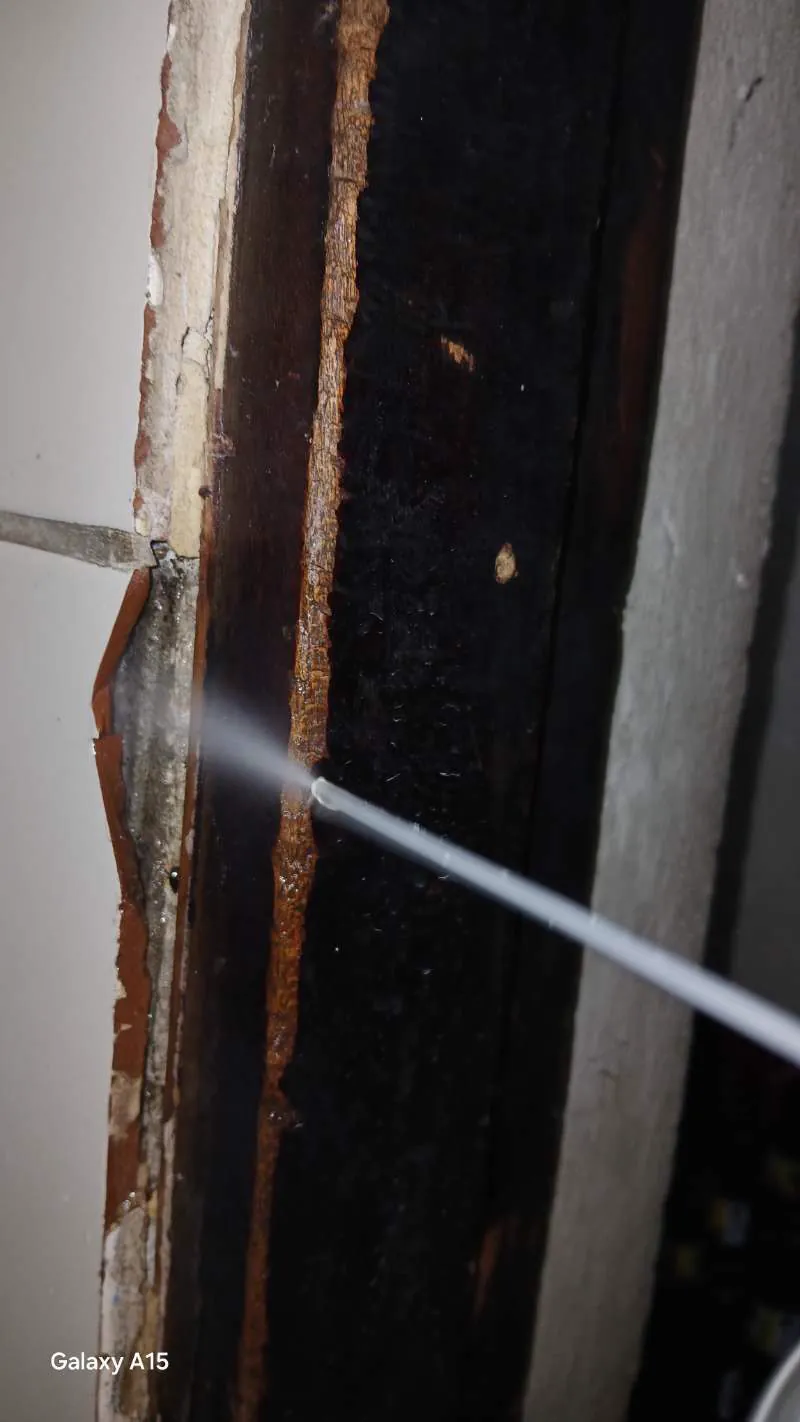
- Injection into the tunnels. The wood treatment product is injected under pressure through the holes and through small drill holes, so that it runs through the tunnels and reaches the larvae inside. That is what makes the difference compared with spraying the surface.
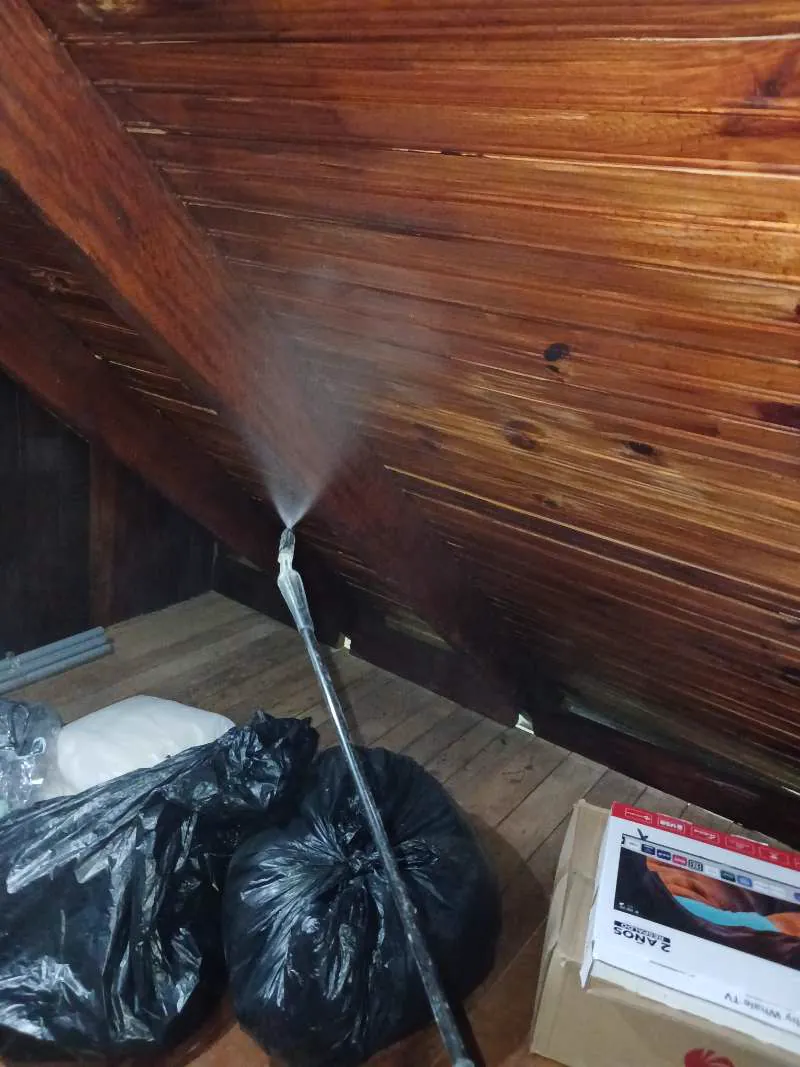
- Surface treatment with wood treatment product. On bare wood, the product penetrates a few millimeters and leaves the piece protected against larvae hatching from new eggs. On varnished wood, the unfinished areas (back, underside, joints) have to be treated, or the varnish sanded off.
- Heat for small pieces. Handicrafts, picture frames and objects that fit in a chamber are heated until the core of the wood stays above 55 °C for one hour; that kills larvae and eggs without chemicals.
- Follow-up. If you have not fumigated in the last 6 months, it takes two applications and the second one is charged; the 30-day check only applies once the plan is complete.
Price: free inspection; furniture from ₡59,900, with the exact price given in writing at the inspection. The date is confirmed in less than an hour over WhatsApp, and we serve nationwide, 24/7. Re-entry to the treated area is one hour later. If you have not fumigated in the last 6 months, it takes two applications and the second one is charged; the 30-day check only applies once the plan is complete. Published prices include VAT; you can see them on the prices page.
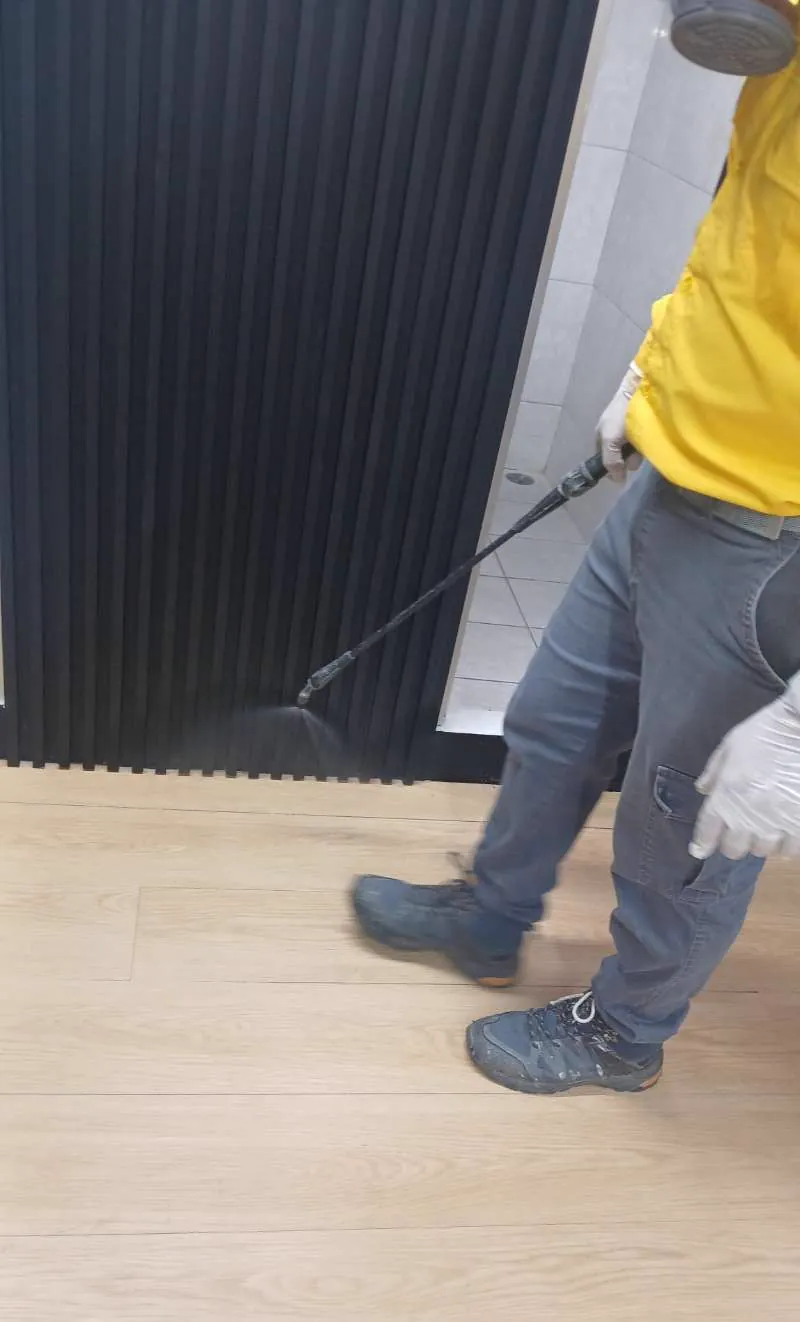
Photos of real wood treatment jobs, taken from recent reports by our technicians.
Prevention: keeping it from coming back
- Lower the humidity. Ventilate closets and storage rooms, move furniture away from damp walls and fix leaks. Woodworm larvae thrive in damp wood.
- Keep up the finish. Adults lay eggs in open pores, cracks and old holes. After treatment, seal the holes with wax or wood filler and keep the varnish or paint in good condition.
- Check used furniture before bringing it in. Look for holes that are light inside and for dust. If in doubt, leave it on a sheet of white paper in the garage for two weeks: if dust appears, it's active.
- Get rid of unused wood. Firewood, boards and construction scraps outside the house and away from the wall.
- Once a year, check the back and underside of furniture, the frames and the floors.
Clothes moths: what to do in the closet
Clothes moths eat keratin: wool, silk, cashmere, feathers, leather and blends that contain them. They barely touch pure cotton and synthetics, unless they are soiled with sweat or food, because that also serves as food. The signs are irregular holes, little silk tubes or webbing between the folds, cream-colored larvae up to 1 cm long, and the golden moths that fly out when you open the closet.
- Wash at 60 °C or run through a hot dryer for 30 minutes everything that can take it. Delicate items go in the freezer for 72 hours or to the dry cleaner.
- Vacuum thoroughly the empty closet: corners, rails, drawers, under furniture and the edges of the rug. Throw out the vacuum bag outside.
- Store clean and sealed. Out-of-season clothes go in washed, in airtight bags or boxes; dirty clothes in storage are what attracts them most.
- When to fumigate: if moths keep appearing for more than three weeks after washing and vacuuming, there are larvae somewhere that wasn't checked: rugs, upholstery, under baseboards, clothes stored elsewhere. That is when a residual treatment in closets, baseboards and rugs makes sense, and it is included in home fumigation: up to 100 m² ₡39,900, up to 200 m² ₡49,900, over 200 m² ₡59,900, VAT included.
Frequently asked questions about woodworm
- How do I know if woodworm is still active?
- Clean up the dust and put a sheet of white paper under the piece of furniture. If new dust appears within one or two weeks, there are larvae at work. Also check the holes: recent ones are light, fresh-wood colored inside, while old ones have darkened to match the surface.
- Does woodworm spread from one piece of furniture to another?
- Yes. The adults leave the infested piece, fly and lay eggs in cracks and pores of other wood nearby: frames, floors, other furniture. That's why a used piece of furniture with active woodworm should be treated or isolated before the next generation comes out.
- Does hardware-store woodworm poison work?
- Only against the adults that happen to be outside at that moment. It doesn't reach the larva, which is several centimeters inside the wood and feeds for one to three years. To get rid of it, product has to be injected into the tunnels, bare wood has to be treated with a wood treatment product, or the piece has to be heated all the way to the core.
- How much does it cost to get rid of woodworm in Costa Rica?
- At EcoPlagas the inspection is free. A piece of furniture is treated starting at ₡59,900, and the exact price is given in writing at the inspection, because it depends on how many pieces are affected and whether wooden frames, floors or ceilings are involved. The date is confirmed in less than an hour over WhatsApp.
- Is woodworm the same as termites?
- No. Woodworm is a beetle that leaves round holes 1 to 2 mm wide and a fine, flour-like dust. Termites leave hard pellets like sand, don't make round holes and hollow out the wood from the inside. They are treated with different techniques, which is why the inspection starts by checking the residue.
- How do I get rid of clothes moths in the closet?
- Wash at 60 °C or run through a hot dryer everything that can take it, freeze delicate items for 72 hours, vacuum the empty closet into every corner and store clean clothes in sealed bags or boxes. If moths are still coming out after three weeks, there are larvae in carpets, upholstery or baseboards, and a residual treatment is worthwhile.