Termites in Costa Rica: How to Identify Them and What Favors Their Presence
✓ Pest control company licensed by the Ministry of Health · ✓ More than 10,000 clients
In Costa Rica, termites (locally called comején) are a frequent concern because of the damage they can cause to wood and structural components. A common mistake is waiting to "see a lot of them" before acting: with termites, most of the colony and the damage happen out of sight.
Contents
Scientific Name (Groups) and Types of Termites
Termites belong to the order Blattodea (the same broad evolutionary line as cockroaches). In pest control, they're usually classified by how they live:
- Subterranean termites: need contact with soil moisture or protected routes; they typically build mud tubes to move around without drying out.
- Drywood termites: can live inside relatively dry wood; they leave characteristic droppings ("pellets" or frass).
- Arboreal termites: can build nests in trees and move toward nearby structures if there are bridges and moisture.
Important: the exact scientific name depends on the species, but for most clients it's more useful to identify the type (subterranean vs. drywood), since that changes the treatment and prevention approach.
Common Names in Costa Rica
The most commonly used term is comején. "Termitas" is also used in technical contexts. When winged reproductives (alates) appear, many people mistake them for "flying ants."
Where They're Found in Homes
- False ceilings: wood, trim, debris buildup, and areas with moisture, condensation, or leaks.
- Door and window frames, baseboards, built-in furniture.
- Structures with wood in contact with moisture or soil (patios, storage rooms, terraces).
- Outdoor areas: logs, firewood, stored lumber, trees with nearby nests.
Conditions That Favor Termites
- Moisture: leaks, poor ventilation, condensation, seepage through walls or roofs.
- Vulnerable wood: unprotected, in constant contact with moisture, or already deteriorated.
- Bridges from the outside: vegetation touching the house, wood placed against the structure.
- Lack of inspection: since they work hidden, they're often detected late if critical points aren't checked.
Typical Signs
- Mud tubes on walls, columns, or near baseboards (more typical of subterranean termites).
- Winged swarmers near lights, windows, or patios during certain seasons.
- Wood that sounds hollow, gives under pressure, or shows internal tunnels.
- Debris: pellets or frass (more common with drywood termites), or a buildup of dust/fragments in affected areas.
Note: not every species shows every sign. That's why diagnosis usually includes inspecting hidden points (like false ceilings) and evaluating moisture.
Prevention and Maintenance
- Fix leaks and water intrusion; improve ventilation in attics.
- Avoid storing wood or firewood against the house.
- Trim vegetation touching roofs or walls.
- Periodically check frames, baseboards, and points where moisture can enter.
Professional Control (Diagnosis + Strategy)
Effective control starts with a diagnosis: termite type, extent of the infestation, and moisture conditions. Depending on the case, the approach uses targeted treatments, barriers, or specific strategies, especially when the infestation is in false ceilings or structural wood. In many cases, it's also recommended to fix the root causes (moisture/access points), since otherwise reinfestation is likely.
How We Treat Termites at EcoPlagas
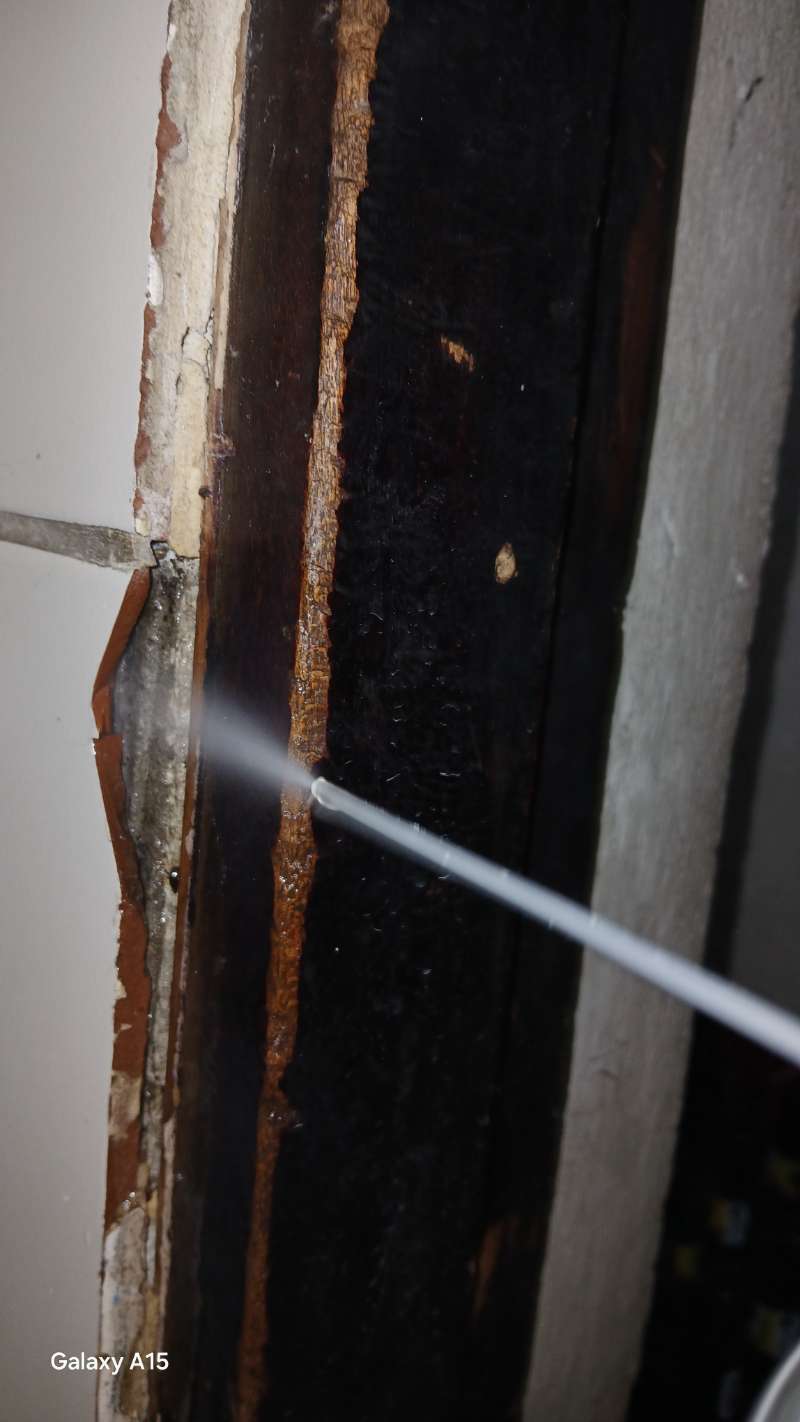
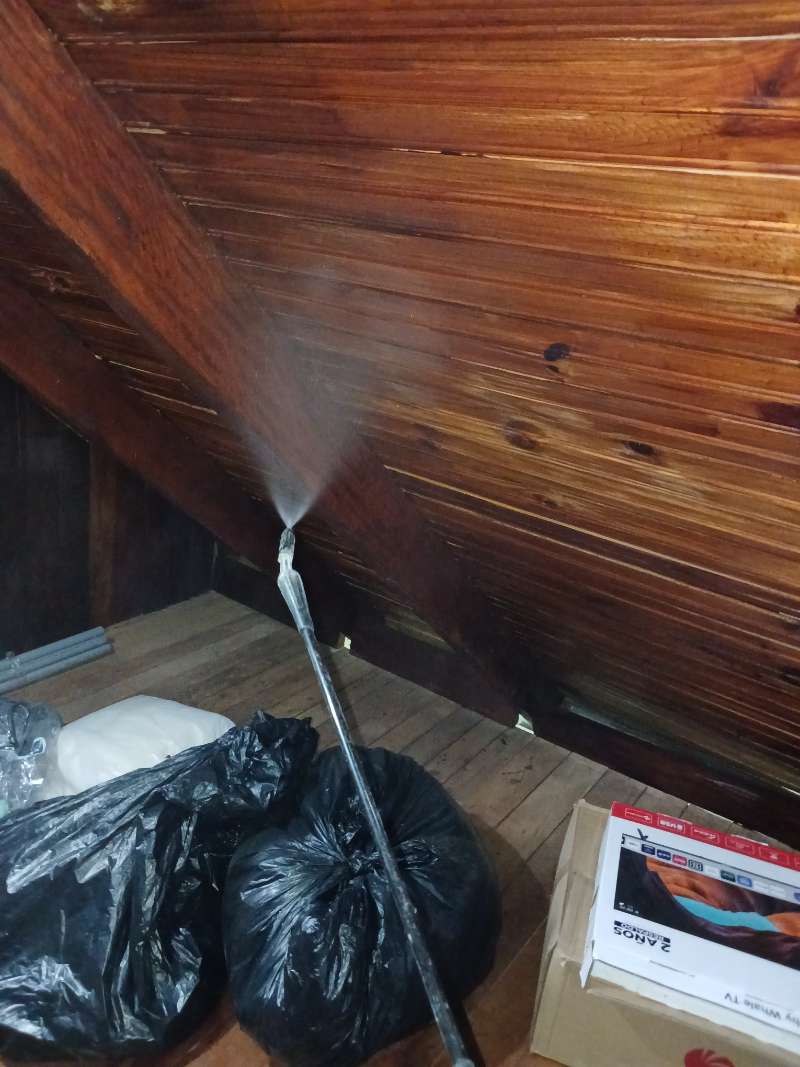
Photos from real service visits, taken from recent reports by our technicians.