
Leafcutter ants: how to get rid of the nest and why they keep coming back to the same garden
✓ Pest control company authorized by the Ministry of Health · ✓ Available 24 hours, every day · ✓ Prices published on our website
Leafcutter nest: quoted on WhatsApp based on sizeWith a diagnostic visit · Pest control company authorized by the Ministry of Health · Available 24 hours, every day
- Bait made specifically for leafcutter ants at the active entrances, with a 2 to 3 week follow-up
- If there are also other pests in the house: homes up to 100 m² from ₡39,900, VAT included
- 30-day check once the plan is complete, with conditions
- Date confirmed in less than an hour over WhatsApp
- The leafcutter ant (zompopa, genus Atta) cuts leaves to feed a fungus it farms underground. The colony eats the fungus, not the leaf.
- You can spot the nest by mounds of loose soil with several entrances and clean trails with cut leaves moving along them at night.
- The queen is 1 to 3 m deep. Insecticide on the trail kills workers and doesn't touch the nest.
- What works is granular bait made specifically for leafcutters, which the workers carry to the fungus, applied at active entrances in dry weather, with a 2 to 3 week follow-up.
- Boiling water doesn't reach the nest; gasoline is dangerous and prohibited. There is no published rate: it is quoted on WhatsApp based on the size of the nest, with a diagnostic visit.
Contents
- What the leafcutter ant is and why it isn't just another ant
- How to recognize a leafcutter nest
- The damage: a garden stripped bare in one night
- Why insecticide on the trail doesn't work
- What does work against a leafcutter nest
- Home remedies that don't work
- When the nest is on the neighbor's lot or a vacant lot
- Prevention
- Price and how quotes work
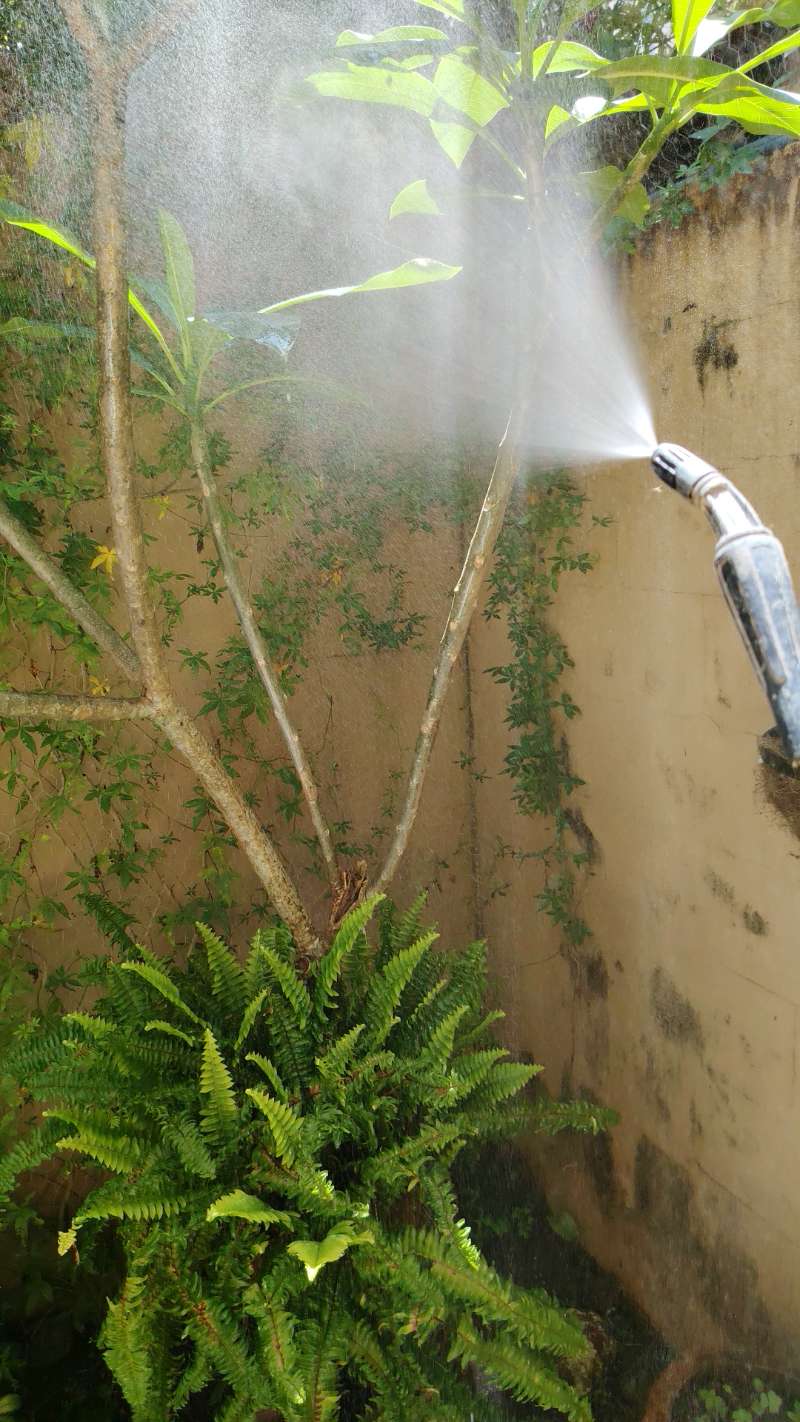
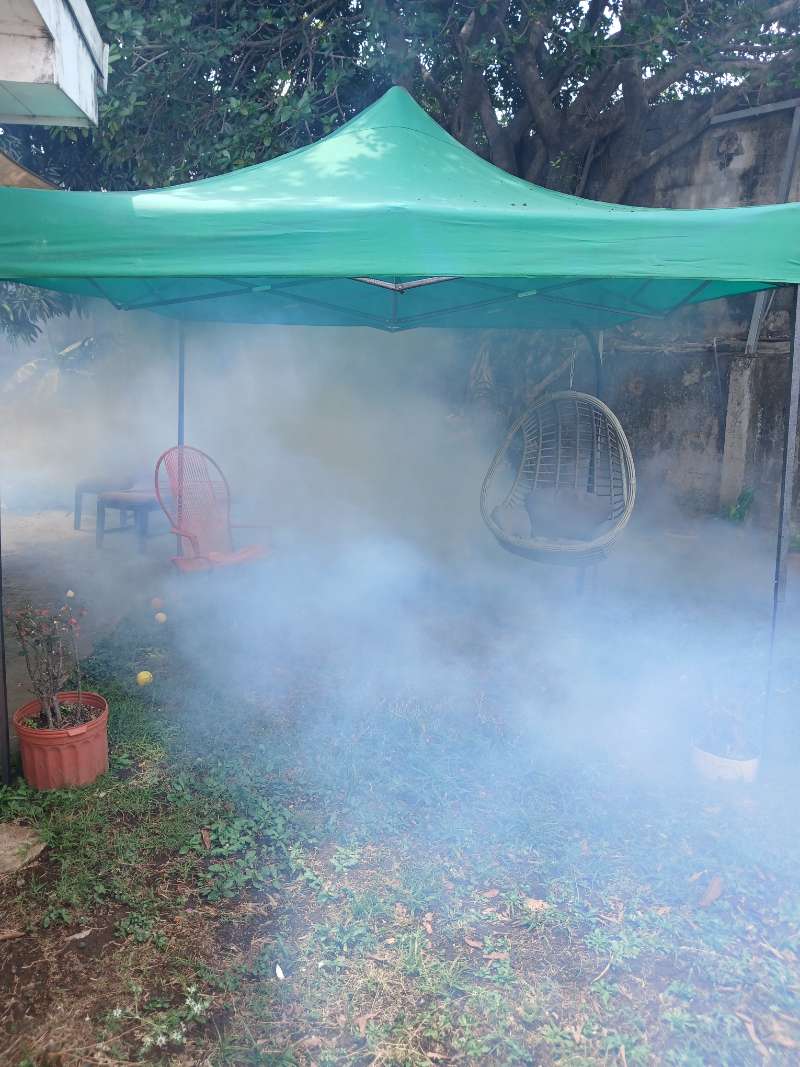
- How we treat it (real photos)
- Frequently asked questions
What the leafcutter ant is and why it isn't just another ant
The zompopa is the leafcutter ant, genus Atta (and its smaller relative, Acromyrmex). In other countries it is called arriera. It is the largest ant that gets into gardens in Costa Rica: workers range from 2 to 15 mm depending on their job, with a large head and jaws that cut a leaf like scissors, and the queen is over 2 cm long.
What sets it apart from the ants that get into the kitchen is that it doesn't eat the leaf it carries. It takes it to the nest, chews it into a paste and grows a fungus on that paste. That fungus feeds the entire colony, including the queen and the larvae. The leafcutter ant is a farmer: the leaf is fertilizer, not food. A mature colony has millions of workers and a queen that lives more than ten years; as long as the fungus and the queen are alive, the colony can replace any number of dead workers.
How to recognize a leafcutter nest
- Mounds of loose soil, a different color from the surrounding ground (lighter or redder), fan-shaped or like small craters, with no grass on top. It is the soil the workers bring up when digging the chambers.
- Multiple entrances. A mature nest has dozens of entrances spread over several square meters: some are for traffic, with ants coming and going, and others are for ventilation, with no one passing through.
- Clean trails 2 to 10 cm wide, swept clear, crossing the grass like a highway. Other ants travel along edges and cracks; leafcutter ants clear their own path and maintain it.
- Walking cut leaves. At night and in the early morning, a line of green leaf pieces moving along the trail. During the day the trail is usually empty.
- Half-moon cuts on the edges of the leaves of the affected plant, clean, as if made with scissors.
To find the nest, go out at night or before six in the morning with a flashlight and walk in the direction the loaded workers are heading. The mound may be ten meters from the affected tree, under a fence, among roots or on the other side of the wall. A mound under a meter across is usually a colony one or two years old; several square meters with entrances spread around is an old colony, and that can't be solved in one visit.
The damage: a garden stripped bare in one night
A large colony can strip a citrus tree, a rosebush or a strip of lawn in a single night. Their favorites in Costa Rican gardens are lime, orange and tangerine trees, rosebushes, hibiscus (amapola), young mango and avocado trees, cacao, coffee and almost any vegetable. On lawns they leave bald patches and bare trails.
A mature tree can survive being stripped and will grow back. A young tree or a rosebush stripped two or three times in a few months weakens and dies. When the nest is under a sidewalk, a wall or the floor of a rancho, the digging sinks the ground and cracks the slab. On coffee farms, citrus groves or nurseries the damage is economic, not just cosmetic.
Why insecticide on the trail doesn't work
It's the first thing almost everyone does: buy an ant killer or ant insecticide at the supermarket and spray the line. The workers on the trail die, and two or three days later there's a new trail, sometimes toward a different plant. It happens for three reasons:
- The queen is 1 to 3 meters deep and the nest spreads several meters wide, with dozens or hundreds of chambers. Nothing sprayed at the surface reaches it.
- The workers that die don't matter. They are a tiny fraction and the colony replaces them effortlessly. What has to be eliminated is the fungus and the queen.
- Kitchen ant baits don't attract them. They are formulated with sugar or fat for ants that eat those. Leafcutter ants are looking for plant material for their fungus: if the bait isn't made specifically for leafcutters, they won't carry it.
Spraying the tree has the same problem: you're treating the leaf, not the nest. The colony switches plants and carries on.
What does work against a leafcutter nest
- Granular bait made specifically for leafcutter ants. These are pellets with a plant-based attractant and a slow-acting ingredient. The worker carries it as if it were a leaf, takes it to the nest and adds it to the fungus. The fungus dies and the colony is left without food. It is slow on purpose: if it killed quickly, the workers would detect it and stop carrying it.
- Application at the active entrances and along the trails, late in the afternoon, when they start coming out. The bait is not put inside the hole and the entrance is not covered: it has to stay where the workers will find it and carry it off.
- Only in dry weather. Wet bait loses its attractant and the workers won't carry it. It is applied with a dry forecast for the next 24 hours and never right after rain, when the soil is soaked and traffic drops. In the rainy season, this decides the day of the visit.
- Dose based on the size of the nest. A half-meter mound and a twenty-square-meter nest don't take the same amount. That's why the nest needs to be seen before quoting.
- Follow-up after 2 or 3 weeks. Traffic should drop until it disappears. If leaves are still coming out, the application is repeated at the entrances that are still active. Without this check, the job is only half done.
- Large nests or nests under structures: dust injection. When the nest is very old, sits under a sidewalk or a wall, or bait alone isn't enough, dust is injected under pressure through the traffic entrances so it reaches the chambers. It is combined with bait, not used instead of it.
Home remedies that don't work (and one that's dangerous)
- Boiling water, ash, lime or detergent in the nest entrance. They reach the first few centimeters. The colony seals that entrance and opens another one a meter away.
- Gasoline, diesel or kerosene in the nest. They don't reach the fungus chambers, they contaminate soil and water, and the fumes in an enclosed hole are a real fire or explosion risk, especially if someone brings a flame near. It is also prohibited under environmental regulations. Don't do it.
- Cutting or spraying the affected plant. It removes the symptom. The colony has dozens more plants to choose from and has been there for years.
- Kitchen ant baits and sprays. Leafcutter ants don't carry them, as explained above.
- Plugging the entrances with cement or rocks. They open others. The nest doesn't depend on one entrance.
When the nest is on the neighbor's lot or a vacant lot
It's more common than you'd think: the stripped garden is yours and the nest is on the other side of the wall, on a vacant lot or in a green area. It needs to be said clearly: if the nest can't be reached, the colony can't be eliminated from your side. What can be done:
- Bait on the trails and entrances on your property. The workers carry it to the nest even if it's outside, so the effect gets there, but with a smaller dose than needed. It reduces traffic; it doesn't always eliminate it.
- A residual product barrier along the perimeter where they cross, and direct protection of the plants they attack most, so they forage in another direction.
- Talk to your neighbor before spending money. Treating both sides in the same visit solves the problem at the root and usually costs less than repeating treatment on one side only. If it's a vacant lot, the owner or the municipality is responsible for the land.
Prevention
- Check the garden when the first rains come (May and June). That's when new queens fly: a winged female lands, drops her wings and starts digging. A nest a few months old is a 20 cm mound that can be eliminated with one application; the same nest three years later is a job of several visits.
- Don't leave a mound alone "because it's small". It's the easiest and cheapest colony you'll ever get rid of.
- Keep the grass short next to walls and fences, so you can see the trails before a plant wakes up stripped.
- Protect young trees with a plastic band smeared with grease around the trunk while the nest is being treated. It's a temporary measure that keeps the tree from losing its leaves a second time.
- After treatment, keep an eye on the spot for a month. If you have not fumigated in the last 6 months, it takes two applications and the second one is charged; the 30-day check only applies once the plan is complete.
Price and how quotes work
There is no published rate for leafcutter ants, because a young mound and a nest that's years old are not the same job. It is quoted on WhatsApp based on the size of the nest, with a diagnostic visit. The most useful thing is to send a photo of the mound and the trail: with that we can tell you whether it's a leafcutter ant or another ant, and schedule the visit. The quote includes the application and the follow-up after 2 or 3 weeks.
If there are also other pests in the house (kitchen ants, cockroaches, spiders), home fumigation is separate and does have a published price: up to 100 m² ₡39,900, up to 200 m² ₡49,900, over 200 m² ₡59,900, VAT included. See the prices page.
In both cases the date is confirmed in less than an hour over WhatsApp, we serve nationwide, 24/7, re-entry to the treated area is one hour later. If you have not fumigated in the last 6 months, it takes two applications and the second one is charged; the 30-day check only applies once the plan is complete.
How EcoPlagas treats leafcutter ants
Photos of real outdoor jobs, taken from recent reports by our technicians.
Frequently asked questions about leafcutter ants
- How do I get rid of a leafcutter ant nest for good?
- By locating the nest and applying granular bait made specifically for leafcutter ants at the active entrances and along the trails, in dry weather, so the workers carry it to the fungus. After 2 or 3 weeks it is checked and repeated at any entrances that are still active. For large nests or nests under structures, dust is also injected through the entrances.
- Does supermarket ant killer work on leafcutter ants?
- No. Insecticides for kitchen ants kill the workers on the trail, and the colony replaces them within days. Their baits use sugar or fat, which leafcutter ants don't carry because they are looking for plant material for their fungus. The queen is 1 to 3 m deep and nothing applied at the surface reaches her.
- When should leafcutter ant bait be applied?
- Late in the afternoon, when they start coming out, and only in dry weather: wet bait loses its attractant and they won't carry it. Never right after rain. In the rainy season the day is chosen based on the forecast.
- What if the nest is on the neighbor's lot?
- From your side the colony can't be eliminated, only the traffic reduced with bait on the trails on your property and a residual barrier on the perimeter. What solves the problem is treating the nest, so it's worth talking to your neighbor and doing both properties in the same visit.
- How much does it cost to get rid of leafcutter ants in Costa Rica?
- At EcoPlagas there is no published rate for leafcutter ants: it is quoted on WhatsApp based on the size of the nest, with a diagnostic visit, and includes follow-up. If there are also other pests in the house, home fumigation up to 100 m² costs ₡39,900, VAT included.
- Is it dangerous to pour gasoline into a leafcutter ant nest?
- Yes. It doesn't reach the fungus chambers, it contaminates soil and water, and the fumes in the hole can catch fire or explode if someone brings a flame near. It is also prohibited under environmental regulations. Boiling water isn't dangerous, but it doesn't work either: it reaches the first few centimeters and the colony opens another entrance.