
Grasshoppers in Costa Rica: a Pest of Gardens, Vegetable Beds and Crops
✓ Pest control company licensed by the Ministry of Health · ✓ Open 24 hours, every day · ✓ Prices published on our website
Farms, condominiums and businesses: quoted on WhatsAppPest control company licensed by the Ministry of Health · Available 24/7
- Targeted application in vegetable beds, green areas and crops, with an assessment visit.
- In a home, it is handled within the ₡39,900 visit if there are other pests.
- 30-day check once the plan is complete, with conditions
- Date confirmed in under an hour
In Costa Rica, grasshoppers appear at the end of the dry season and with the first rains, between April and June, when the eggs that spent the dry season buried in the soil all hatch at once. A few weeks later the nymphs are already in the grass, and by July the adults are eating the leaves of whatever they find: vegetable beds, gardens, fruit trees, pasture. In a home in the GAM (the Greater Metropolitan Area), this means leaves chewed from the edge inward and big green grasshoppers stuck to the wall at night, drawn by the light.
The good news is that for a home, the grasshopper is almost always a garden problem, not a health problem: it does not sting, does not transmit anything and does not breed inside the house. It is managed by keeping the grass short, putting physical barriers over the vegetable bed and, when there are many, with a targeted application. Where you do need a methodical approach is on farms, in nurseries, in condominiums with large green areas and at businesses with crops, because there the damage is economic and a large population one season leaves eggs for the next.
- Order Orthoptera: “chapulín” and grasshopper are the same thing; a locust is the one that forms swarms.
- They hatch with the first rains; the damage runs from May to September.
- They eat leaves in vegetable beds, gardens, fruit trees and pasture. They do not sting or move into the house.
- They are managed with short grass, barriers, biological control and targeted application. The whole garden is not sprayed.
- Farms, condominiums and businesses quoted on WhatsApp; in a home, included in the ₡39,900 visit.
Contents
- What they are: grasshopper, “chapulín” and locust
- When they appear and how long they last
- The damage in gardens, vegetable beds, lawns and crops
- The giant green grasshopper and the small ones in the grass
- Why they come to the house
- How to manage them
- What not to do
- Service for farms, condominiums and businesses, and what happens in a home
- How we treat it (real photos)
- Frequently asked questions
What they are: grasshopper, “chapulín” and locust
“Chapulín” and grasshopper are two names for the same group: short-horned orthopterans (order Orthoptera, suborder Caelifera). In Costa Rica people say chapulín. They have long hind legs for jumping, strong jaws for cutting leaves and, as adults, wings to fly short distances. There are dozens of species in the country, from the 1 cm ones in the grass to the 10 cm ones in the trees.
A locust is not a separate species but a behavior: some grasshoppers, when the population explodes, change color and behavior, group together and migrate in swarms of thousands or millions. In Central America the species with this behavior is the Central American locust (Schistocerca piceifrons), which appears sporadically in Costa Rica’s northern Pacific region in dry years followed by heavy rains. It is a regional agricultural problem, coordinated by the Ministry of Agriculture and growers, not a household problem. Crickets and katydids (the green ones with very long antennae that sing at night) are relatives, but they do not behave like a leaf pest.
When they appear and how long they last
The cycle follows the rains. The female lays her eggs in the soil at the end of the rainy season, buried a few centimeters deep in bare ground or thin grass: roadsides, vacant lots, pastures, the edge of the vegetable bed. The eggs sit still through the dry season.
With the first rains, from April to June depending on the area, they hatch en masse. The nymphs are miniature grasshoppers, without wings, that molt five or six times over six to eight weeks; they move little and eat close to where they hatched, and that is when control is easiest. From July to September they are winged adults and spread out, and that is when you see them around the house and in the trees. Toward October they lay eggs and the population drops. If you had a lot of them in the garden the previous year, count on the eggs being there.
The damage in gardens, vegetable beds, lawns and crops
Grasshoppers eat leaves, and they eat a lot: a large adult eats several times its own weight in foliage every day. The typical damage is a leaf chewed from the edge inward, with large, irregular cuts, unlike the hole in the middle left by caterpillars or slugs. In heavy attacks only the veins are left.
- Home vegetable beds: lettuce, chard, cabbage, beans, young corn, pepper and tomato leaves. A small vegetable bed can be stripped bare in one week in July.
- Gardens: new shoots on ornamentals, hibiscus, crotons, bougainvillea, plantain leaves and small palms.
- Grass: in garden lawns the damage shows up as thin patches; in pastures with a large population they compete with cattle for forage.
- Crops and fruit trees: corn, rice, sorghum, sugarcane, vegetables, and young citrus and avocado trees. In nurseries, the damage to seedlings is the most costly.
The giant green grasshopper and the small ones in the grass
The one that draws the most attention around homes is the giant grasshopper (Tropidacris cristata), one of the largest orthopterans in the world: adults measure 10 to 14 cm, are green or olive brown with a crest on the thorax and show reddish hind wings in flight. The nymphs are black with yellow or orange stripes and gather in groups of dozens on a single shrub, which is alarming but makes them easy to control in one go. They eat the leaves of trees and shrubs (guava, jocote, tropical almond, palms) and occasionally get into the vegetable bed. They are harmless to people; if you grab one, it kicks with the spines on its hind legs, nothing more.
The small grasshoppers in the grass, 1 to 4 cm long, green, brown or gray, are the ones that do the economic damage: the ones that jump by the dozen when you walk through the lawn in July, the ones that strip the vegetable bed and the ones that reach pest levels on farms. Management is the same for all of them.
Why they come to the house
Grasshoppers don’t want to get into the house; the house is in the middle of where they live. Three things bring them closer:
- Light. Adults fly at night toward porch and terrace bulbs, and in the morning they are stuck to the wall, the window screen or inside the living room if the window was left open. A cool white bulb attracts more than a warm yellow one.
- Tall grass. A 20 cm lawn is both food and shelter. A garden with short grass has a fraction of the grasshoppers of the neighbor who doesn’t mow.
- Vacant lots and neighboring pastures. These are the breeding grounds: bare ground for laying eggs and weeds for the nymphs. When the adults spread out in July, the house next door gets the first wave. There is little you can do about this other than protect your own property.
How to manage them
The right approach goes in stages, and the cheapest step comes first:
- Short grass and no weeds. Mow the lawn regularly from May to September and clear the weeds along the edge of the lot, especially toward the neighboring land. This takes away food and shelter from the nymphs.
- Physical barriers in the vegetable bed. Insect netting over hoops protects lettuce, chard and seedlings without any product. It is the most effective measure for a home vegetable bed and the one we recommend first.
- Hand-picking and lights. Large grasshoppers can be picked off by hand at dawn. Turning off outdoor lights you don’t need reduces how many show up.
- Biological control. Birds, predatory wasps and spiders eat grasshoppers and nymphs; a garden without blanket insecticide keeps that help around. For farms there are products based on the fungus Metarhizium, used against locusts in several countries, which infect the insect and do not affect mammals; they are agricultural-scale and need moisture.
- Targeted application. With a large population, an approved insecticide is applied at the precise place and time: on the grouped nymphs in May and June, along the edges where they advance and in the weedy strips where they concentrate. Only what is needed is treated, not the whole farm, and the pre-harvest interval is respected.
What not to do
Don’t spray the whole garden with a broad-spectrum insecticide because you saw grasshoppers, especially if there are dogs, cats, chickens or children who play on the grass. It also kills the wasps, spiders and birds that keep them in check, leaves residue on the lawn where the pet rolls around, and the ones from the neighboring lot arrive the following week anyway.
Don’t use agricultural products from the farm supply store inside a house or in a vegetable bed you will be eating from in a few days: they are dosed for crops, with harvest intervals that nobody respects in a home vegetable bed.
Don’t burn the weeds to “get rid of the eggs.” It is a fire hazard and the eggs are buried; the fire doesn’t reach them.
Service for farms, condominiums and businesses, and what happens in a home
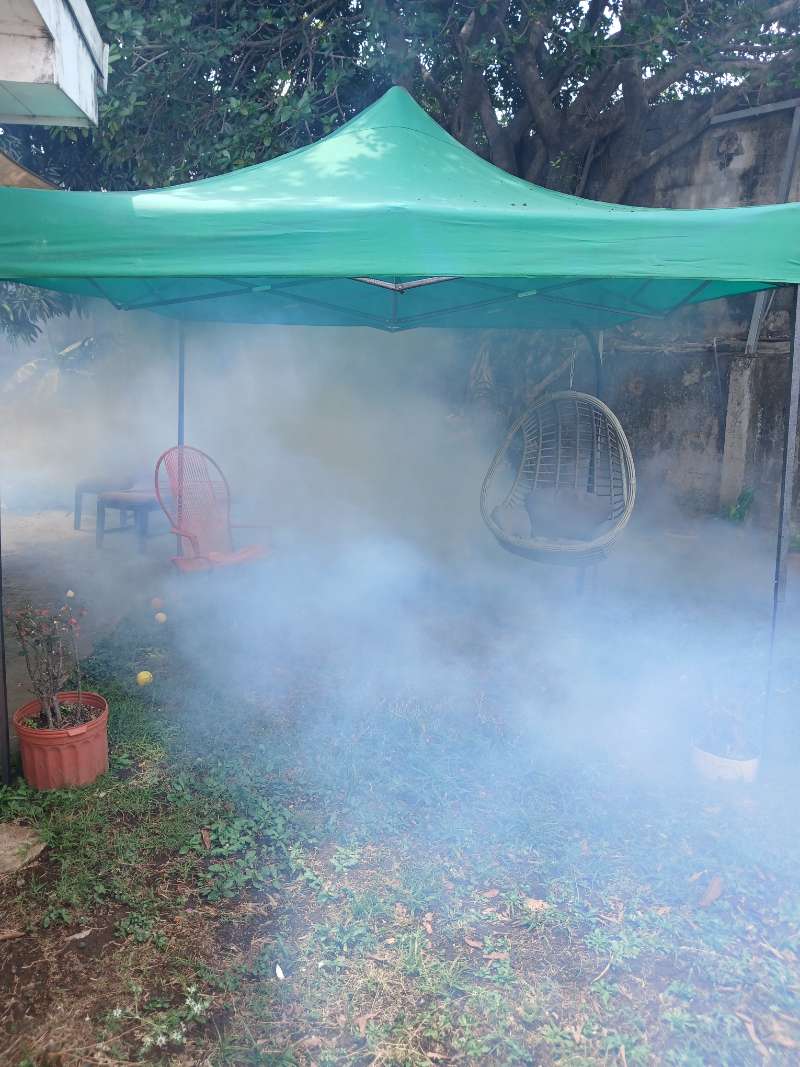
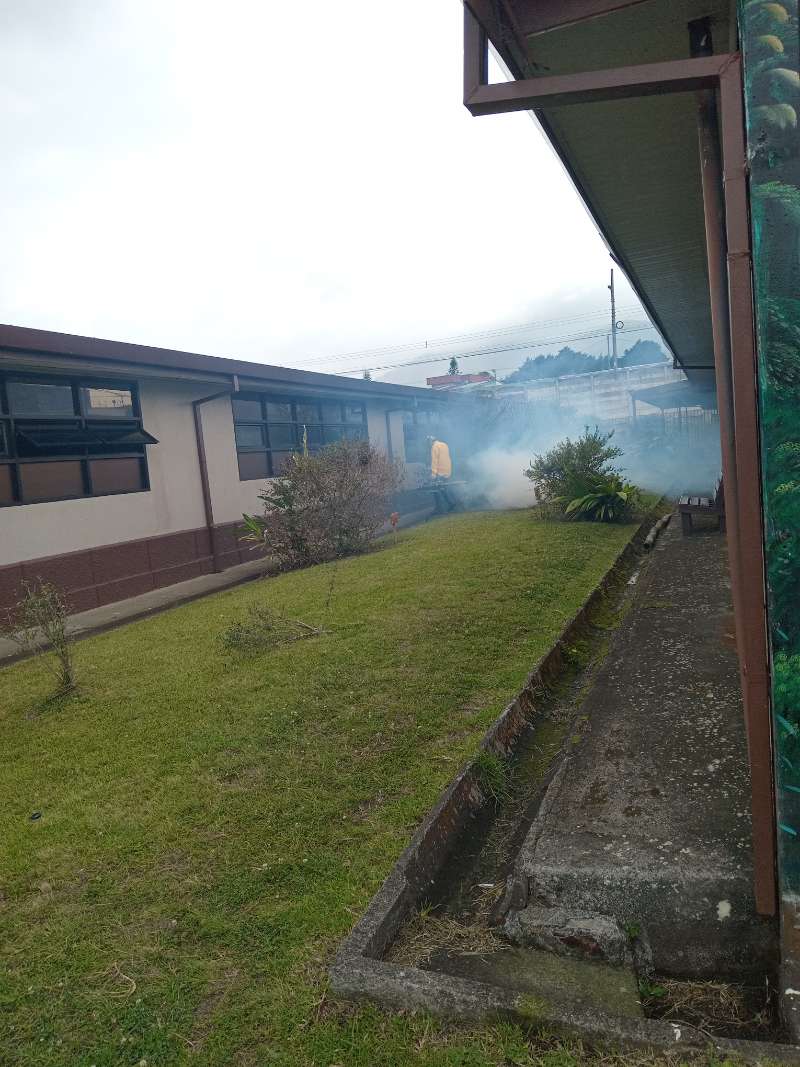
Where grasshoppers really cost money is on farms, in nurseries, in condominiums with large green areas, at hotels and at businesses with crops or green areas. There, EcoPlagas does an assessment visit, determines what stage of the cycle the population is in and applies an approved product in a targeted way in the right strips and at the right times, with follow-up for the season. The quote is on WhatsApp, because it depends on the area, the crop and the number of applications; the same goes for leafcutter ants, which often share a farm with grasshoppers. The details are in pest control for businesses.
In a home, we will be straight with you: a few grasshoppers don’t justify a fumigation, and we will tell you to mow the lawn and put netting over the vegetable bed. If the house already has a visit scheduled for ants, cockroaches or another common pest, the technician also treats the strips of grass and weeds where they concentrate, within the same ₡39,900 visit for a home up to 100 m² (₡49,900 up to 200 m², ₡59,900 over 200 m², VAT included, no travel charge in the GAM). If you have not fumigated in the last 6 months, it takes two applications and the second one is charged; the 30-day check only applies once the plan is complete.
How EcoPlagas treats green areas and gardens
Photos from real jobs, taken from our technicians’ recent reports.
Frequently asked questions
- Are grasshoppers dangerous to people?
- No. They do not sting, do not transmit disease and do not breed inside the house. The giant grasshopper may kick with the spines on its hind legs if you grab it, nothing more. The damage is to plants.
- When are there the most grasshoppers in Costa Rica?
- They hatch with the first rains, from April to June, and the adults spread out from July to September, which is when they are most visible in gardens and homes. Around October they lay eggs in the soil and the population drops until the following year.
- How do I protect my vegetable bed from grasshoppers?
- With insect netting or garden fabric over hoops, short grass around it and no weeds along the edges. It is more effective and safer than any product in a vegetable bed you will be eating from in a few days.
- Why are there big grasshoppers stuck to the wall at night?
- The adults fly toward the light of porch bulbs and end up on the wall or the window screen by morning. Switching to warm-light bulbs and turning off the ones you don’t need reduces how many show up.
- Do you spray the garden for grasshoppers?
- Not the whole garden: it kills the predators that keep them in check, leaves residue where children and pets play, and the ones from the neighboring lot arrive anyway. We apply in a targeted way, in specific strips and at specific times, and in a home it is handled within the visit if there are other pests.
- How much does grasshopper control cost?
- For farms, condominiums and businesses, we quote on WhatsApp based on the area and the crop, with an assessment visit. In a home, it is included in the common pest visit: ₡39,900 up to 100 m², ₡49,900 up to 200 m² and ₡59,900 over 200 m², VAT included and with no travel charge in the GAM.