
Centipedes at Home: Why They Get In, Whether They Are Dangerous and How to Get Rid of Them
✓ Pest control company licensed by the Ministry of Health · ✓ Open 24 hours, every day · ✓ Prices published on our website
Home up to 100 m² from ₡39,900Pest control company licensed by the Ministry of Health · Available 24/7
- We treat cracks, baseboards, bathrooms and the perimeter where they get in.
- Handled together with the other common household pests.
- 30-day check once the plan is complete, with conditions
- Date confirmed in under an hour
A centipede gets into the house for the same reason almost everything that lives in the garden does: the weather outside changed. With heavy rain the soil floods and it comes out looking for a dry spot; with a long dry spell it looks for moisture, and finds it in bathrooms, laundry sinks and laundry rooms. That is why you see more of them in the first weeks of May and during the storms of September and October, and almost always in the bathroom, behind the toilet or inside the sink.
Are they dangerous? Centipedes do bite, and the bite of a large one hurts quite a bit, similar to a wasp sting, with local redness and swelling. But it rarely goes beyond that in a healthy person. The one you see most often indoors, the long-legged house centipede, can’t even get through the skin and, in fact, eats cockroaches. And a good share of what people call centipedes are actually millipedes, which do not bite. Below we explain how to tell which one you have, what to do if you get bitten and how to get them out of the house.
- Centipede: fast, flat, one pair of legs per segment, bites. Millipede: slow, curls up, does not bite.
- The long-legged house centipede is harmless and eats cockroaches and ants.
- They get in during extreme rain or drought, through drains, gaps under doors and cracks.
- Bite: wash, cold, pain reliever. See a doctor if there is an allergy, spreading swelling or if it is a child.
- Included in the home visit for up to 100 m² from ₡39,900.
Contents
- Centipede or millipede: how to tell which one you have
- The centipedes found in Costa Rican homes
- Where they come from
- Why they get into the house
- What to do if a centipede bites you
- Millipedes that invade en masse with the rain
- Prevention: moisture, seals and leaf litter
- Professional control
- How we treat it (real photos)
- Frequently asked questions
Centipede or millipede: how to tell which one you have
Before you worry, identify the critter, because these are two different animals with two different risks.
- Centipede (class Chilopoda). Flat body, one pair of legs per segment, long legs clearly visible on the sides, long antennae. It moves fast and in a zigzag, and runs from light. It is a predator: it eats insects, spiders and other centipedes. It has a pair of venomous claws under its head, the forcipules, which it uses to inject venom into its prey, and to bite if it gets squeezed.
- Millipede (class Diplopoda). Hard, cylindrical body, two pairs of legs per segment, short legs that are barely visible from above. It moves slowly and, when touched, curls into a spiral. It eats leaf litter and decaying plant matter. It does not bite; its defense is a strong-smelling fluid that in some species stains the skin brown or yellow and can irritate it.
Quick rule: if it ran, it’s a centipede. If it curled into a ball, it’s a millipede. In Costa Rica both are common in gardens, under pots and in leaf litter, and both get into the house when it rains a lot.
The centipedes found in Costa Rican homes
The house centipede (Scutigera coleoptrata). Yellowish gray, with a 2 to 4 cm body and 15 pairs of very long, thin legs that make it look much bigger and ripple like a wave when it runs across the bathroom wall. It is startling, but harmless: its forcipules almost never get through human skin. It lives indoors year-round and eats small cockroaches, ants, silverfish and spiders. If you see several, there is moisture and there is prey.
Large garden centipedes (Scolopendra and relatives). Sturdy, reddish brown, orange or dark green, 8 to 20 cm long in the country’s largest species, with 21 or 23 pairs of short, strong legs. They live outdoors, under rocks, logs, concrete blocks and leaf litter, and occasionally come in at floor level. These do bite, and it hurts.
Small soil centipedes. Slender, 1 to 4 cm long, brown or pale yellow. They show up in potting soil and under leaf litter. They bite little or not at all.
Where they come from
Centipedes need moisture because they lose water easily through their skin. Their hiding places around a house are always the same:
- Leaf litter and mulch against the wall, especially under shrubs and hedges.
- Under pots, pot saucers, boards, rocks, concrete blocks and stacked firewood.
- Drain inspection boxes, yard drains and septic tanks with loose lids.
- Cracks in the slab and in the outside baseboard, where the soil stays damp.
- Inside the house: bathrooms, laundry sinks, the laundry room, under the kitchen sink, behind the toilet tank, and in ceilings with leaks.
If you find one in the shower or the sink, it didn’t come up through the pipes: it came in under the door or through a crack, looked for the dampest place in the house and fell onto a smooth surface it can’t climb out of.
Why they get into the house
There are two times of year when calls about centipedes pile up, and they are opposites:
Extreme rain. When a storm saturates the soil and the drain boxes fill up, the centipedes and millipedes in the garden are left without shelter and migrate. With millipedes it can be massive: dozens or hundreds climbing the walls in a single night, something that happens again and again in GAM (Greater Metropolitan Area) neighborhoods with vacant lots or coffee fields nearby. With centipedes it is one at a time, for the same reason.
Drought. In March and April, with the soil dry, the large garden centipede comes in looking for the moisture of the bathroom or the laundry sink. You see one or two, not an invasion, but they tend to be the big ones.
In both cases the way in is physical: a gap under the door, a drain without a grate, a crack in the baseboard. And the underlying fix is the same as for scorpions and spiders, which come in through the same gaps: seal them and remove hiding places.
What to do if a centipede bites you
A centipede bite leaves two small puncture marks close together, with immediate pain, burning, redness and swelling around them. With a large one the pain can be intense for a few hours and the area stays tender for a day or two. What to do:
- Wash the area with soap and water.
- Apply cold (ice wrapped in a cloth, 10 minutes, several times) for the pain and swelling. Some people get more relief from warm water; either one works.
- Take a common pain reliever if needed. An oral antihistamine helps with the itching.
- Don’t scratch or squeeze the area; keep the wound clean over the following days to prevent infection.
Go to a medical center if the swelling spreads beyond the bite area, if there is difficulty breathing, dizziness, swelling of the face or lips (signs of allergy), if the pain is very intense and does not ease, if the person bitten is a small child, or if after two days the area is hot, red and has pus.
There are no centipedes in Costa Rica whose bite is deadly to a healthy person. The real risk is allergy and secondary infection, not the venom.
Millipedes that invade en masse with the rain
This is the most common question in September and October: hundreds of dark millipedes, 2 to 5 cm long, on the porch, climbing the walls and getting under the doors night after night. They are not dangerous and do not breed indoors; they come from the garden, the neighboring lot or the coffee field because the soil is waterlogged.
The practical approach: sweep them up in the morning wearing gloves (their defensive fluid stains and irritates), put weatherstripping under the doors and treat the perimeter strip outside: a residual product on the outside baseboard stops the migration at the line of the house. Indoors they die on their own within a few days for lack of moisture.
Prevention: moisture, seals and leaf litter
- Lower indoor humidity. Ventilate the bathroom, fix leaks, don’t leave wet clothes in the laundry sink. Without moisture there are no house centipedes and no prey for them.
- Seal entry points. Weatherstripping under exterior doors, silicone in cracks in baseboards, around pipe penetrations and frames, fine grates on yard drains. The guide to sealing your home against pests explains it point by point.
- Keep leaf litter away from the wall. Leave a 30 to 50 cm strip with no mulch, no leaves and no pots directly against the house. Raise pots on feet.
- Firewood, concrete blocks and boards on pallets and away from the house, not stacked against the baseboard.
- Control their prey. Where there are cockroaches and ants, there are centipedes coming to eat them. Solve the first problem and you solve the second.
- Before the rains (April) and during the September storms, check the perimeter and reinforce the weatherstripping. It is the same preparation we recommend for all rainy-season pests.
Professional control
A single stray centipede doesn’t call for a fumigation. But if you see them often, if they are big, if there are children or someone allergic, or if they show up with dozens of millipedes every storm, a visit is worth it, and it almost always also solves whatever is attracting them.
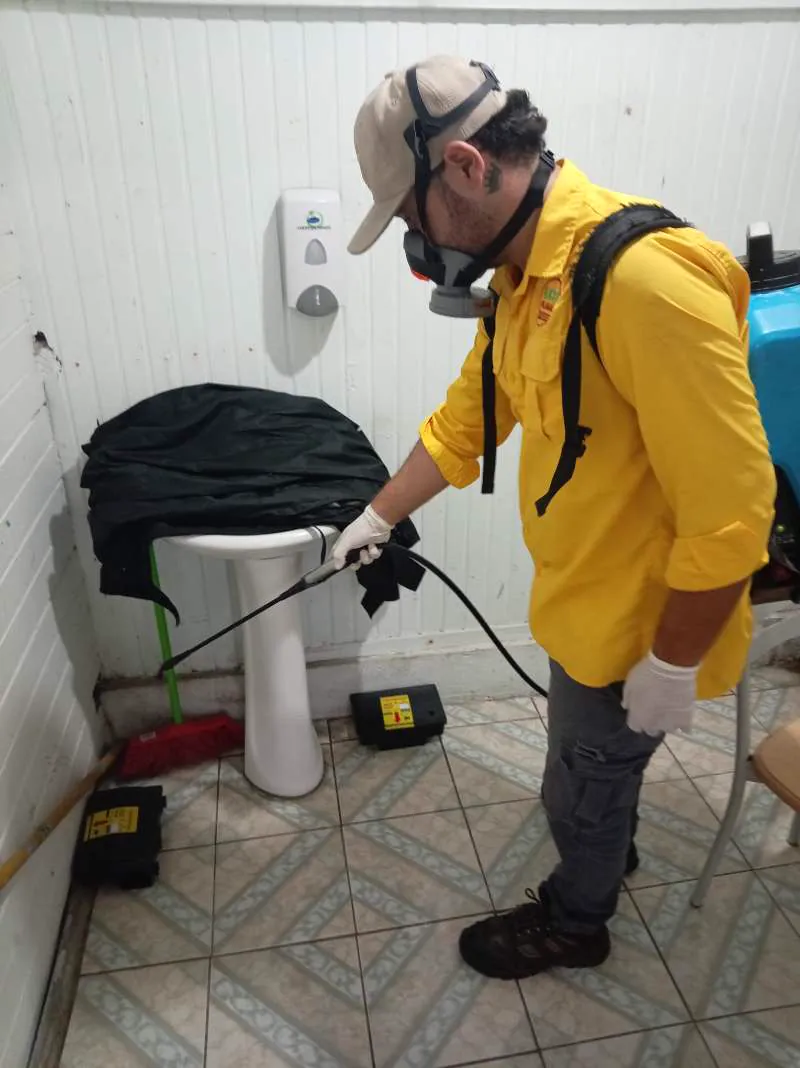
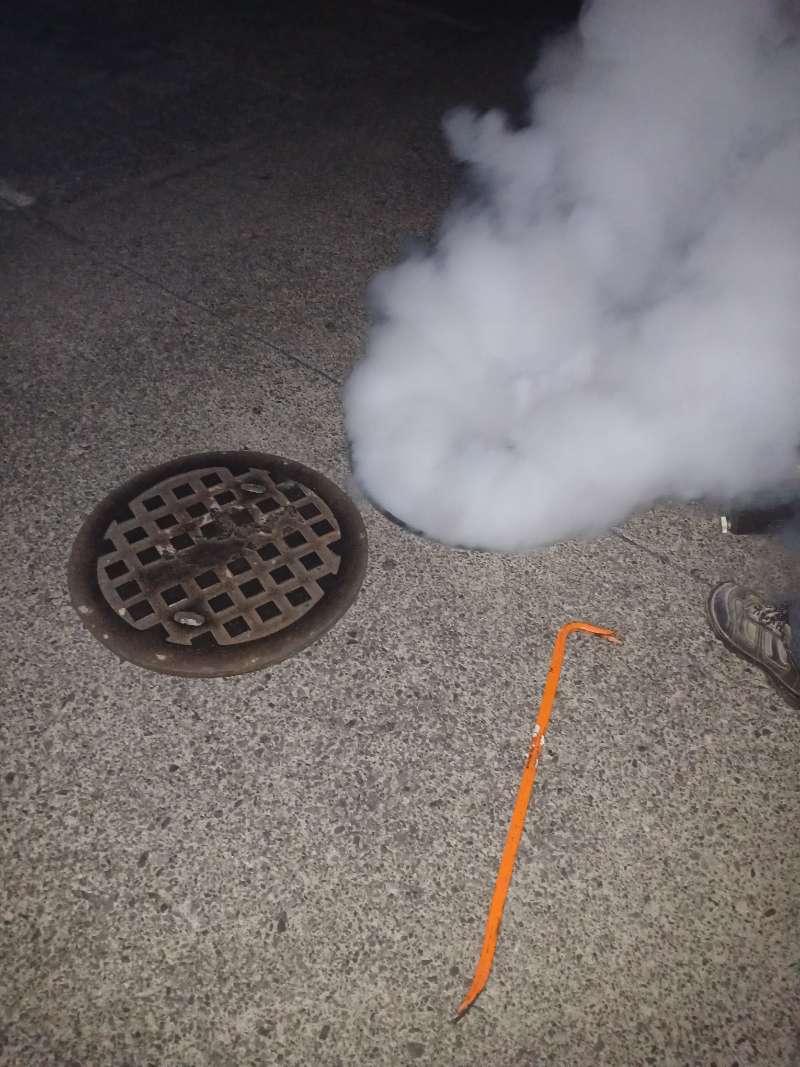
At EcoPlagas, centipede control is included in the home visit, together with other common pests. The technician treats the cracks, baseboards, bathrooms, drains and the base of the walls where they get in with an approved residual product, and tells you what to seal and what to move. Since centipedes come to feed, the treatment for cockroaches and ants during the same visit takes away their reason to stay.
The price for a house or apartment up to 100 m² is ₡39,900, VAT included, with no travel charge in the GAM; up to 200 m² ₡49,900 and over 200 m² ₡59,900. You can go back in one hour later. If you have not fumigated in the last 6 months, it takes two applications and the second one is charged; the 30-day check only applies once the plan is complete.
How EcoPlagas treats centipedes
Photos from real jobs, taken from our technicians’ recent reports.
Frequently asked questions
- Are centipedes dangerous?
- They bite, and the bite of a large one hurts, with local redness and swelling, but it is rarely serious in a healthy person. The real risk is allergy and infection of the wound. The long-legged house centipede, the most common one indoors, is harmless.
- How do I tell a centipede from a millipede?
- A centipede is flat, has one pair of legs per segment, runs fast and bites. A millipede is cylindrical, has two pairs of legs per segment, moves slowly, curls into a spiral when touched and does not bite.
- Why do centipedes show up in the bathroom?
- Because it is the dampest place in the house and because it has prey: small cockroaches, silverfish, spiders. They come in under the door or through cracks, look for moisture and fall into the shower or the sink, where the smooth surface keeps them from getting out.
- What should I do if a centipede bites me?
- Wash with soap and water, apply cold and take a pain reliever if needed. See a doctor if the swelling spreads, if there is difficulty breathing or facial swelling, if it is a small child, or if after two days the area is hot and has pus.
- Why do hundreds of millipedes come in when it rains?
- Because the soil in the garden or the neighboring lot gets waterlogged and they migrate looking for dry ground. They are not dangerous and do not breed indoors. They are controlled with weatherstripping under the doors and a residual treatment along the perimeter strip of the house.
- How much does it cost to get rid of centipedes?
- It is included in the home visit, together with other common pests: ₡39,900 for a house or apartment up to 100 m², ₡49,900 up to 200 m² and ₡59,900 over 200 m², VAT included and with no travel charge in the GAM. 30-day check once the plan is complete, with conditions.