
Slugs in the House and Garden: Why They Appear, How to Get Rid of Them and What Risk They Pose
✓ Pest control company licensed by the Ministry of Health · ✓ Open 24 hours, every day · ✓ Prices published on our website
Home up to 100 m² from ₡39,900Pest control company licensed by the Ministry of Health · Available 24/7
- We treat the perimeter, the garden and the entry points into the house.
- Handled together with the other common household pests.
- 30-day check once the plan is complete, with conditions
- Date confirmed in under an hour
Slugs show up in the house because inside they find the same things they look for outside: moisture, shade and something to eat. They come out at night or after rain, which is why you usually don’t see them, but find the dry, shiny slime trail on the bathroom or kitchen tile in the morning. In Costa Rica the problem is concentrated between May and November, during the rainy season, and only eases when the soil dries out.
Getting rid of them doesn’t depend on a single product. What works is combining three things: removing the damp hiding places around the house, closing off the gaps they use to get in, and using iron phosphate baits, which are safe around dogs and cats. And there is a health reason to take them seriously: in Costa Rica slugs can carry the larva of a parasite, Angiostrongylus, so handle them with gloves and wash vegetables from the garden thoroughly.
- A shell-less mollusk, nocturnal, active when it rains. Leaves a shiny slime trail.
- They get in through gaps under doors, drains and baseboards looking for moisture.
- They can carry the larva of Angiostrongylus: gloves, wash vegetables, watch children and pets.
- What works: remove hiding places, water in the morning, barriers and iron phosphate baits. Salt does not.
- Included in the home visit for up to 100 m² from ₡39,900, together with other pests.
Contents
- What slugs are and when they come out
- Why they get into the house
- The damage to plants and home vegetable gardens
- The real risk in Costa Rica: the Angiostrongylus parasite
- What works to get rid of them
- What doesn’t work
- How EcoPlagas treats it
- Prevention so they don’t come back
- How we treat it (real photos)
- Frequently asked questions
What slugs are and when they come out
A slug is a gastropod mollusk, a relative of the snail but without a shell. Its body is almost all water and it depends on moisture: in the sun it dries out in minutes. It moves on a layer of mucus, and that slime is the silvery trail left behind when it dries. It lays dozens of eggs underground or under leaf litter, and one rainy season is enough for a garden to go from two or three slugs to several dozen.
In Costa Rica the best-known species is Sarasinula plebeia, the bean slug, an agricultural pest in Central America for decades; in homes in the GAM (Greater Metropolitan Area) you also see small gray or brown slugs of other species. For control purposes identification matters little: they all behave the same way. They are nocturnal, come out at dusk and hide before dawn, although on rainy days they can be out during the day. The peak comes from May to November, especially in September and October, when the soil no longer dries out between rains.
Why they get into the house
Slugs get in because the edge of the house is a perfect hiding place: the slab stays cool, the baseboard is shaded all day and behind the wall there are bathrooms, laundry sinks and kitchens with water. The typical routes:
- Gaps under doors that open onto the yard or garden, especially kitchen and laundry-area doors.
- Drains and grates in bathrooms and laundry sinks without a fine cover, through which they come up from the pipes or the drain box.
- Cracks in baseboards and unsealed pipe penetrations behind the washing machine or the kitchen sink.
- Pots and plants brought into the house or onto the porch, with the slug hidden in the soil.
Inside, they prefer the cool tile floor of bathrooms and kitchens, the area under the refrigerator, the laundry sink and the corners behind the toilet. The dry slime trail on the tile is the clearest sign, and if it appears every morning in the same place, the entry point is less than a meter from there.
The damage to plants and home vegetable gardens
In the garden the damage is easy to recognize: irregular holes in the middle and along the edges of leaves, freshly sprouted seedlings that disappear overnight and, near the damage, the shiny trail. They prefer tender, juicy leaves: lettuce, cilantro, cabbage, young beans, basil, strawberries, and among ornamentals hostas, lilies and the new shoots of almost any plant.
A home vegetable garden can lose an entire lettuce planting in one rainy week. On large plants the damage is cosmetic; in seedbeds and leafy vegetables it is economic. They also eat decaying plant matter and leftover pet food, which is why the dog’s bowl has a slime trail on it in the morning.
The real risk in Costa Rica: the Angiostrongylus parasite
Slugs don’t sting or bite, and touching them doesn’t transmit anything through healthy skin. The risk lies elsewhere. The parasite Angiostrongylus costaricensis was first described in Costa Rica in 1971; it is a nematode whose life cycle passes through rats and slugs. Infected rats shed larvae in their feces, slugs ingest them, and a person becomes infected by swallowing the larva: with poorly washed raw vegetables a slug has crawled over, with dirty hands, or, in young children, by putting a slug in their mouth.
Abdominal angiostrongyliasis inflames the intestine and can be mistaken for appendicitis. It is not common, but it is diagnosed in the country, with more cases in children. Dogs can also get sick from eating them.
What you should do: wash vegetables and fruit from the garden thoroughly, leaf by leaf, with drinking water; don’t touch slugs without gloves and wash your hands afterward; keep an eye on young children in the garden at night or after rain; pick up pet bowls at dusk. If a child put a slug in their mouth, see the pediatrician and mention that detail.
What works to get rid of them
Slug control in a home is more about tidiness and barriers than poison. In order of importance:
- Remove hiding places. Lift pots, boards, rocks, concrete blocks and the leaf litter against the wall; that is where they spend the day. Leave a clean, dry 30 to 50 cm strip around the perimeter.
- Water in the morning, never at night. Watering at dusk leaves the soil wet just when they come out to eat.
- Copper barriers. Copper tape or mesh around planters and vegetable beds reacts with the slime and slugs avoid it. It protects small areas, not a whole garden.
- Beer traps. A container sunk flush with the ground and filled with beer attracts them and they drown. It needs refilling every two or three days and only protects a few meters around it.
- Picking them off at night. With a flashlight and gloves, one or two hours after dark, for a week. Tedious, but it visibly lowers the population.
- Iron phosphate baits. The product of choice where there are dogs, cats or children: the slug eats it, stops feeding and dies within a few days, and it is not toxic to mammals at bait doses. Scatter the pellets around the perimeter and between plants, not in piles.
A warning about the other common bait: metaldehyde-based products kill quickly, but they are toxic to dogs and cats, which happily eat them. With pets in the house, don’t use it. If you already used it and your dog shows tremors, drooling or seizures, it is a veterinary emergency.
What doesn’t work
Salt. It kills the slug you can see, slowly and cruelly, and solves nothing: for every visible one there are ten hidden, and salt damages the soil and the plants. It is not control, it is a reaction.
Eggshells, coffee grounds, ash. The evidence is weak: ash and eggshells lose their effect with the first rain, and coffee only repels at high concentrations. They do no harm, but don’t count on them.
Spraying inside the house. Household insecticides are for insects, and a slug is not one. What stops it is closing off the way it gets in.
How EcoPlagas treats it
Slugs rarely come alone: a house with slugs in the bathroom usually has moisture, cockroaches coming up the same drain and ants in the kitchen. That is why at EcoPlagas we don’t treat them as a separate service, but within the home visit, together with other common pests.
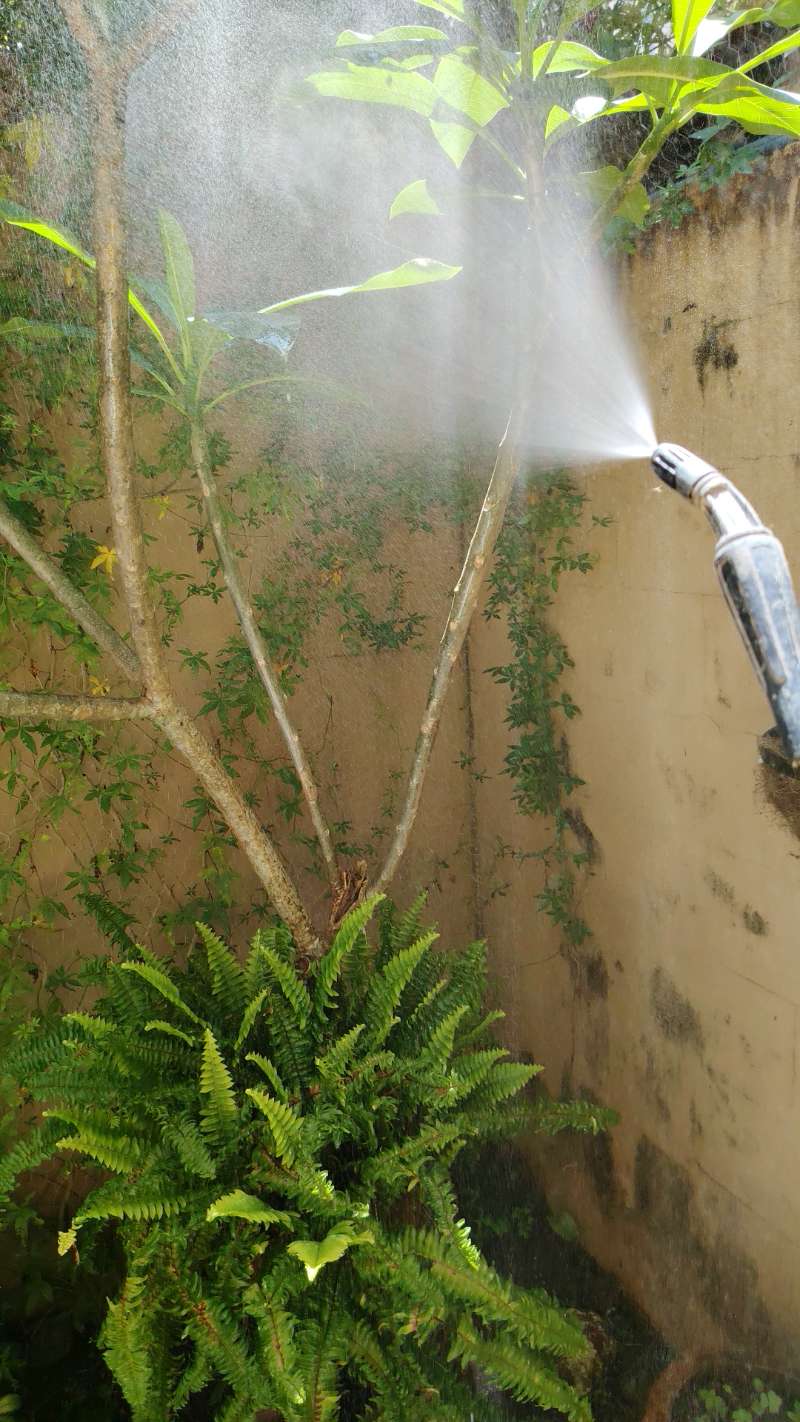
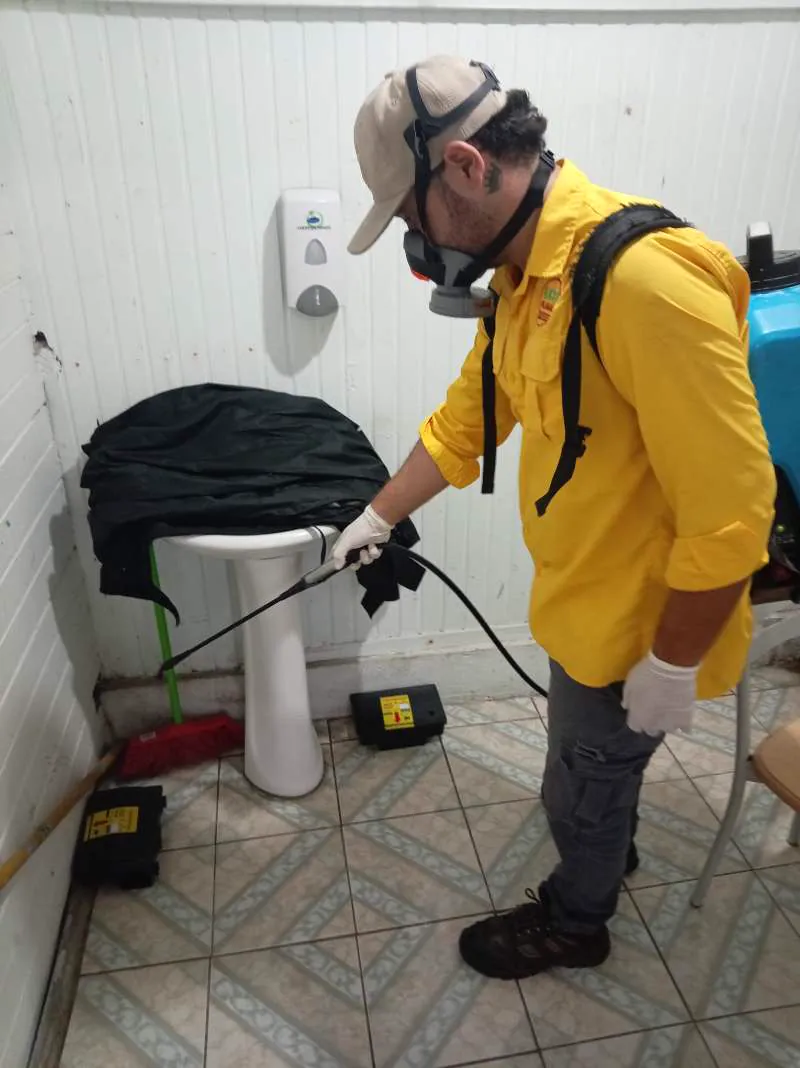
The technician inspects the perimeter and the garden, identifies hiding places and entry points, treats the perimeter strip and the drains, and places mollusk bait where slugs travel and where pets and children can’t reach it. You get instructions on what to move, what to seal and how to water, because without that any product only lasts until the next rain.
The visit price for a house or apartment up to 100 m² is ₡39,900, VAT included and with no travel charge in the GAM; up to 200 m² ₡49,900 and over 200 m² ₡59,900. You can go back in one hour after the treatment. If you have not fumigated in the last 6 months, it takes two applications and the second one is charged; the 30-day check only applies once the plan is complete. The date is confirmed on WhatsApp in under an hour.
Prevention so they don’t come back
- Install weatherstripping or door sweeps under doors that open onto the yard. A 5 mm gap is a highway for a slug.
- Put fine grates or covers on laundry-sink and bathroom drains, and keep them free of standing water.
- Seal cracks in baseboards and pipe penetrations with silicone or mortar. The same guide we use to seal your home against pests applies here.
- Improve drainage: don’t let water pool against the wall or under pots. If the bathroom or laundry sink stays damp all day, see how to control moisture in bathrooms and laundry sinks.
- Raise pots on feet or bricks, and check the soil before bringing a new plant into the house.
- Clear away leaf litter and grass clippings; don’t leave them piled against the house.
- Reapply iron phosphate bait at the start of the rainy season and after the wettest weeks, which is when rainy-season pests take off.
How EcoPlagas treats slugs
Photos from real jobs, taken from our technicians’ recent reports.
Frequently asked questions
- Why do slugs show up in the bathroom?
- Because they are looking for moisture and coolness. They come up through drains without grates, get in through the gap under the laundry-area door or through cracks in the baseboard, and the cool tile floor of the bathroom suits them perfectly. If the slime trail always appears in the same spot, the entry point is less than a meter away.
- Are slugs dangerous to people?
- They don’t sting or bite, but in Costa Rica they can carry the larva of the parasite Angiostrongylus costaricensis, which is transmitted by swallowing it: with poorly washed raw vegetables or with dirty hands. Wear gloves, wash vegetables well and keep an eye on young children.
- Which slug bait is safe around dogs?
- Iron phosphate bait. The slug eats it and stops feeding, and it is not toxic to dogs or cats at the product’s doses. Avoid metaldehyde, which is toxic to pets and attractive to them.
- Does pouring salt on them work?
- It kills the slug you can see, slowly and cruelly, but it doesn’t control anything: many stay hidden and salt damages the soil and plants. It is better to remove hiding places, water in the morning and use iron phosphate bait.
- When are there the most slugs in Costa Rica?
- From May to November, during the rainy season, and especially in September and October, when the soil doesn’t dry out between rains. In the dry season the population drops, but the eggs stay in the soil and come back with the first rains.
- How much does slug control cost?
- It is handled within the home visit, together with other common pests: ₡39,900 for a house or apartment up to 100 m², ₡49,900 up to 200 m² and ₡59,900 over 200 m², VAT included and with no travel charge in the GAM. 30-day check once the plan is complete, with conditions.