
What stands behind every visit
A fumigation takes about an hour to see. What you do not see is everything behind it: who comes into your home or business, what they know, what product they use and what happens to whatever is left over. Here is the whole picture.
- Ministry of Health permitLicensed company and registered products
- Medical exam and cholinesterase testOn file for every technician
- Certified annual trainingExam passed and certificate current
- Occupational health committeeTeam safety as a standing job
- Procedures manualEvery type of job, written step by step
- Waste management planContainers that do not end up in the trash
Who comes into your home
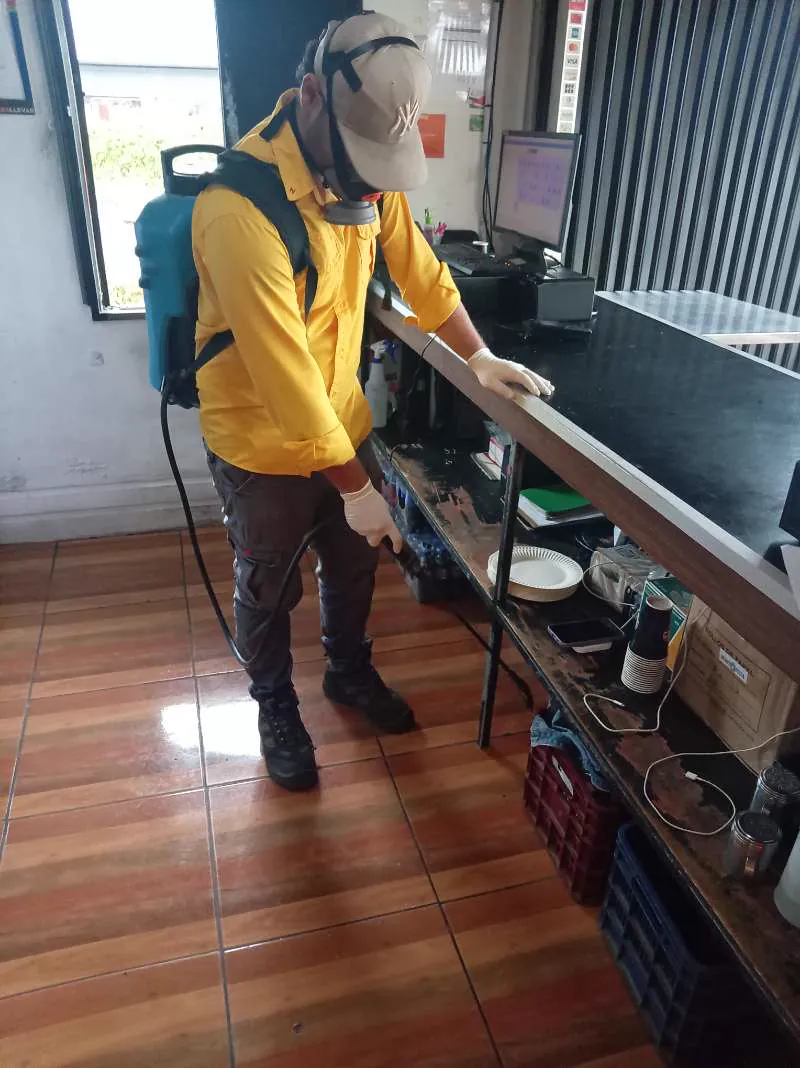
Every technician arrives in a marked vehicle, in uniform and with an ID badge. Behind that is a personnel file:
- Medical exam and cholinesterase test, kept in each technician's file. The cholinesterase test is not mandatory for us, because we do not use the products that affect it, but we do it anyway as a preventive check.
- Full protective equipment on every application, with a respirator when the job calls for it.
- Clean uniform every day and a shower at the end of the shift, so the product does not travel to any other home.
- Annual training passed, with a current certificate. More on that below.
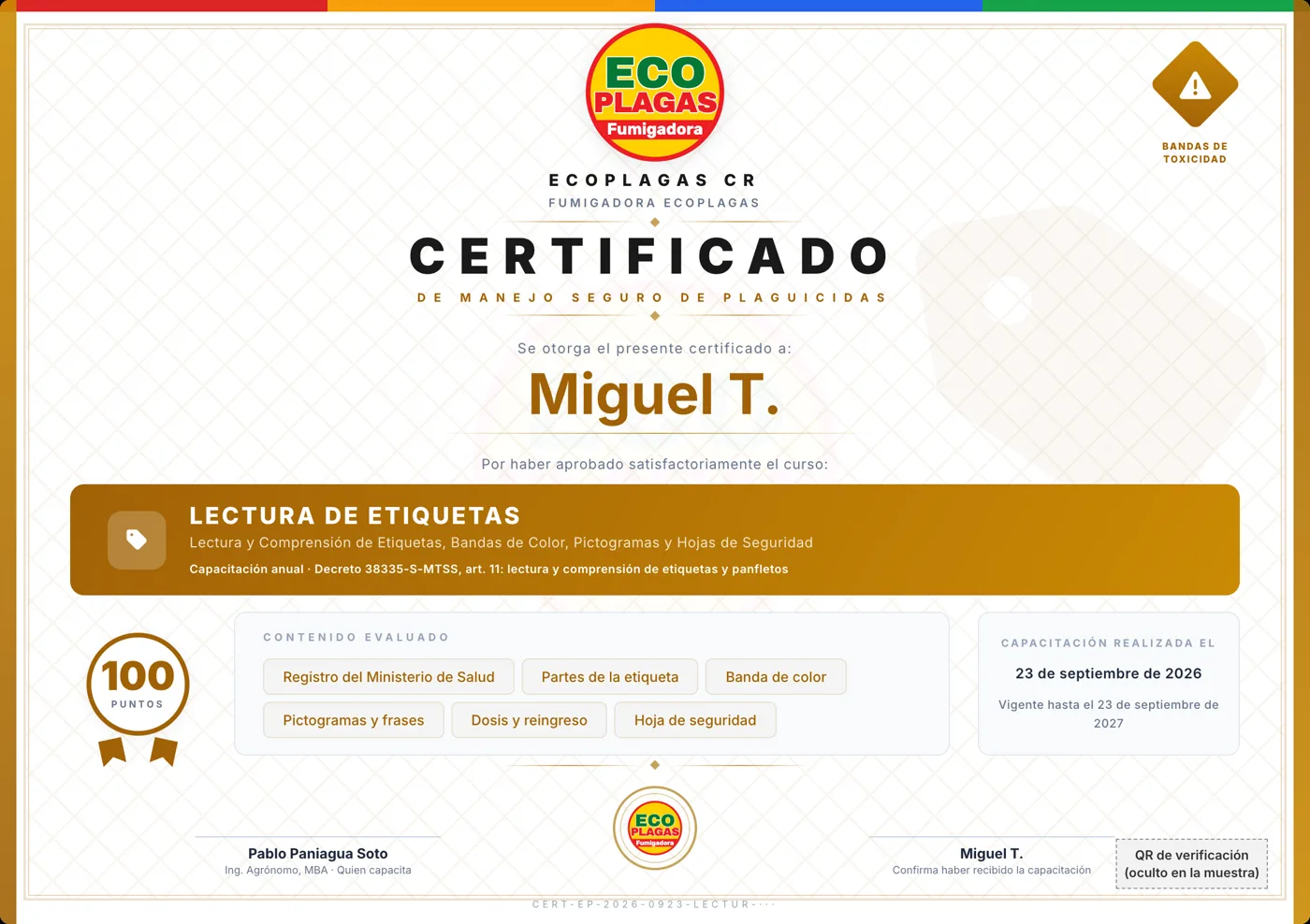
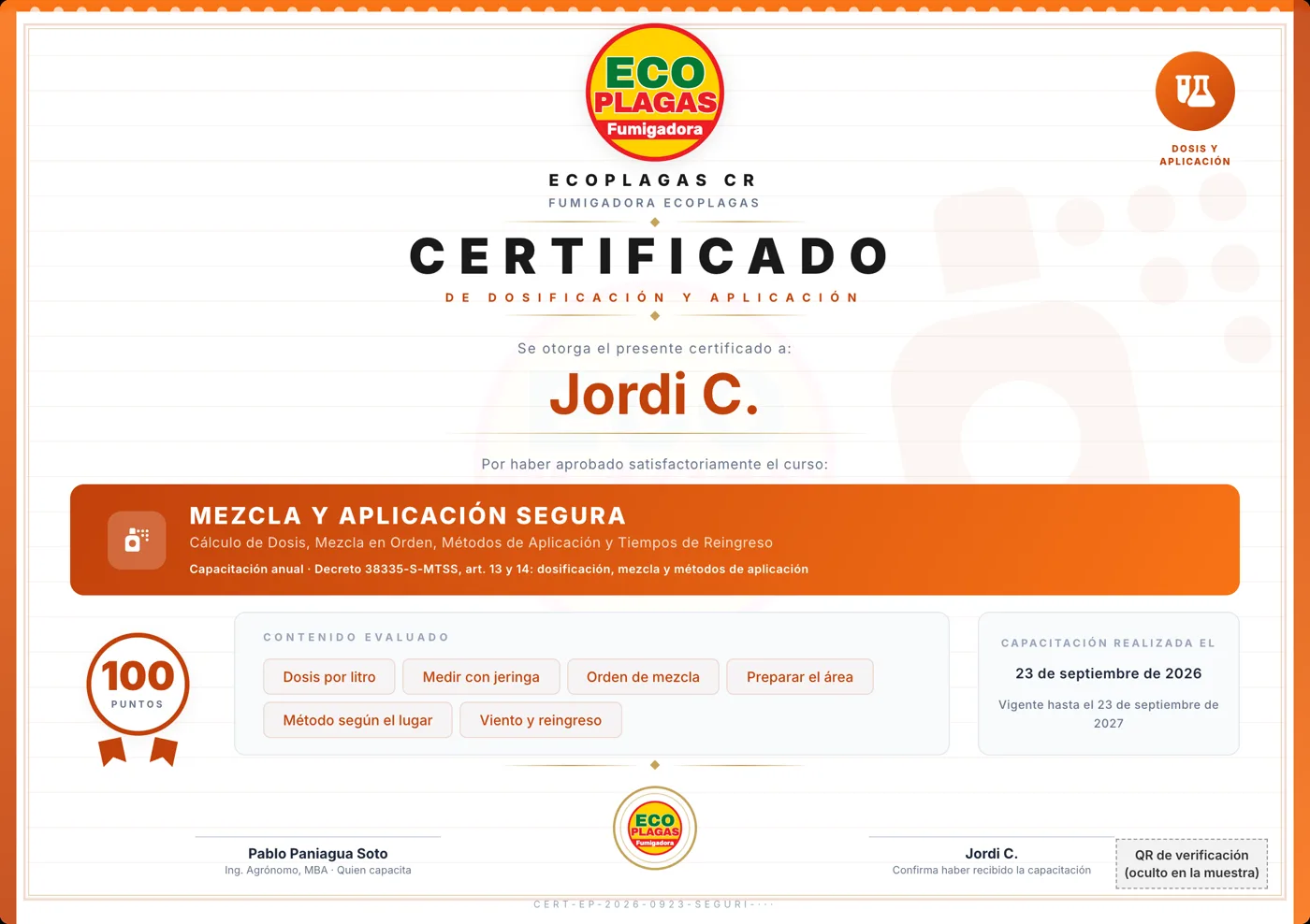
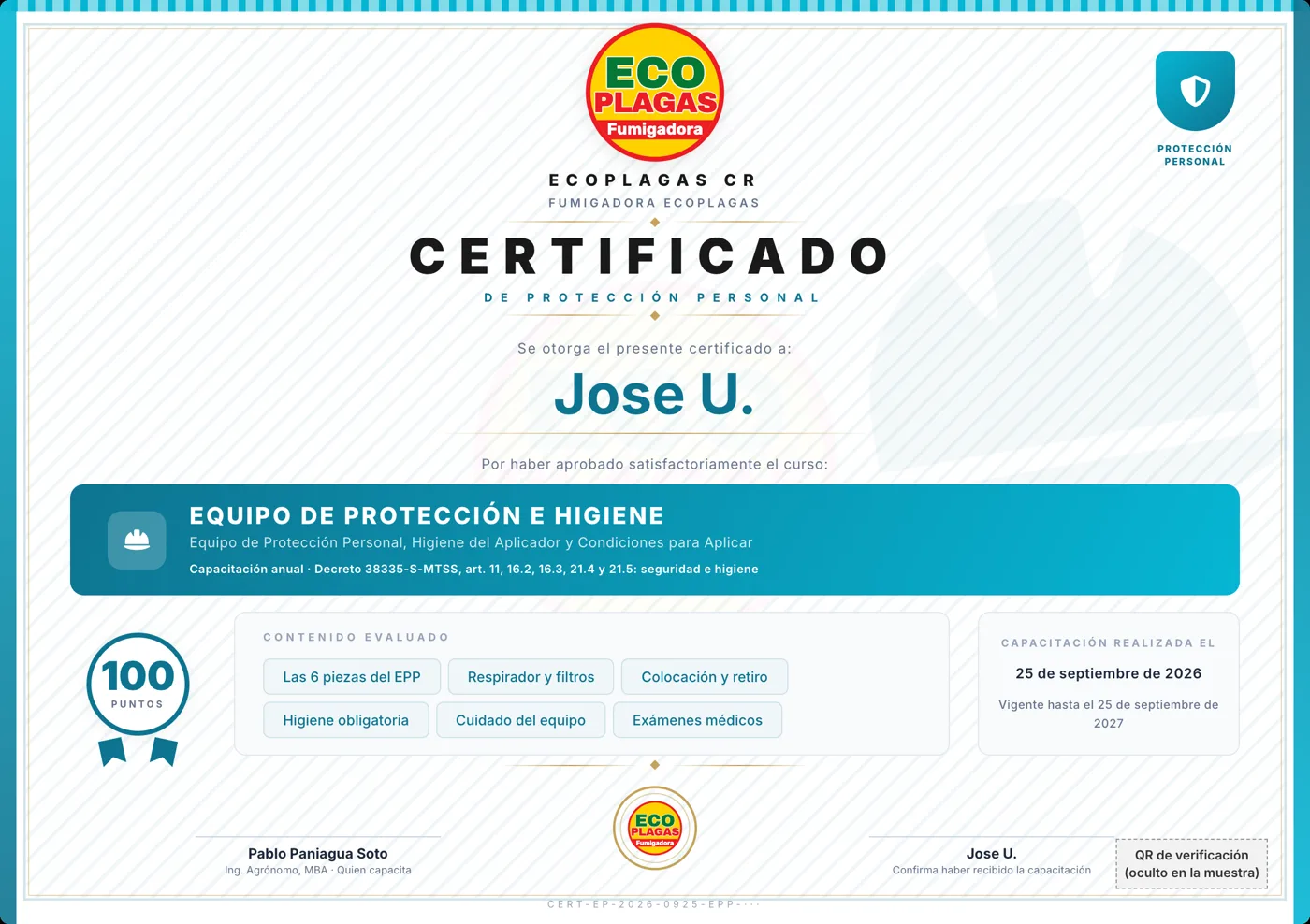
Annual training, with a certificate
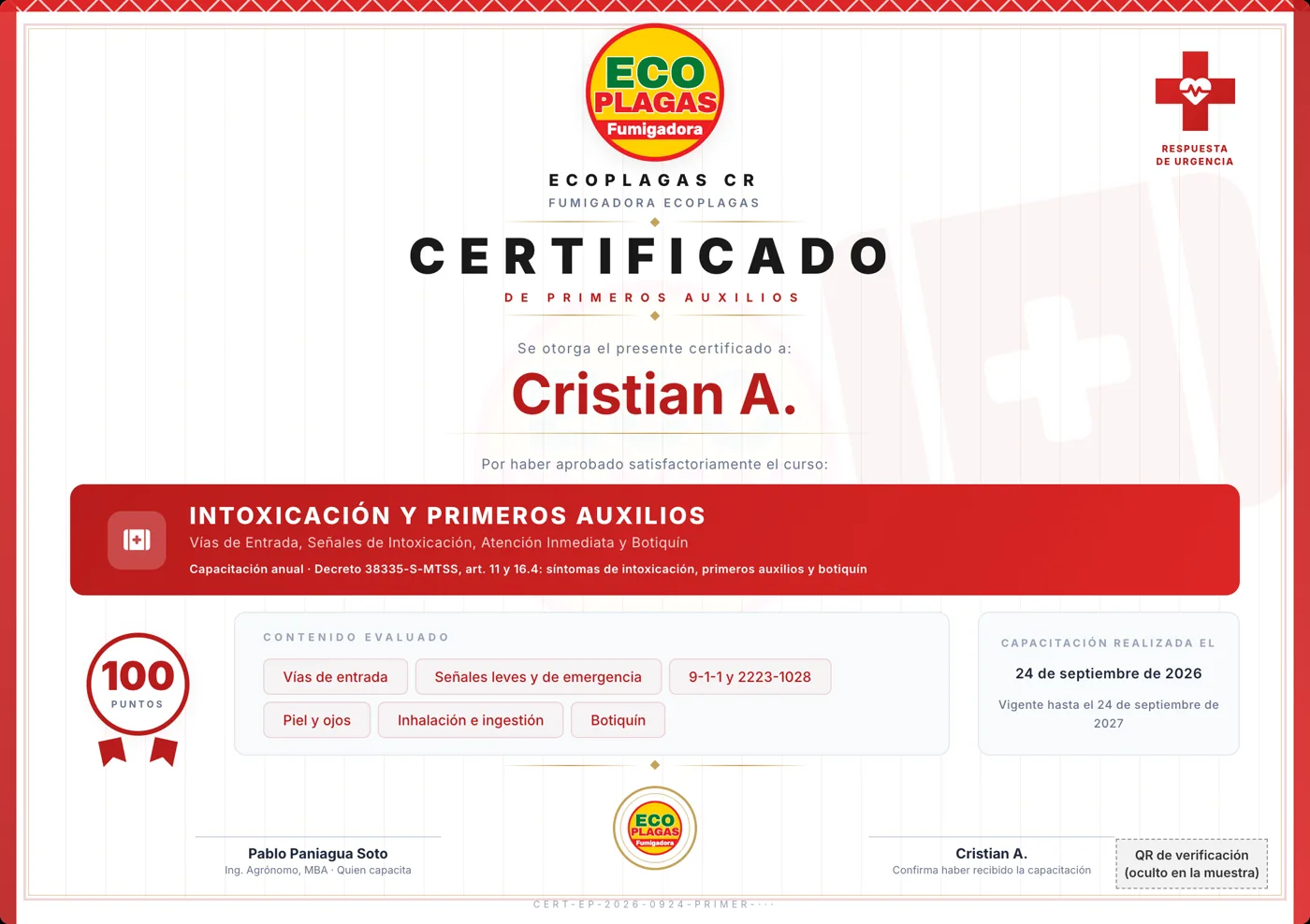
Every technician reads the full course and passes an exam based on real situations from the route. The certificate shows which course was passed, the score, and how long it is valid: it expires after 12 months and is retaken every year. These are real certificates from our team. We only shortened the technician's name and covered the verification QR code.
Occupational health committee
Team safety does not depend on someone remembering. We have an occupational health committee that looks after the technicians' working conditions, their protective equipment and the response to any incident.
A manual for every job
Every type of job has a written, illustrated and reviewed procedure that the technician knows before heading out on the route. It covers, among other things:
- Gel, spray and dust application.
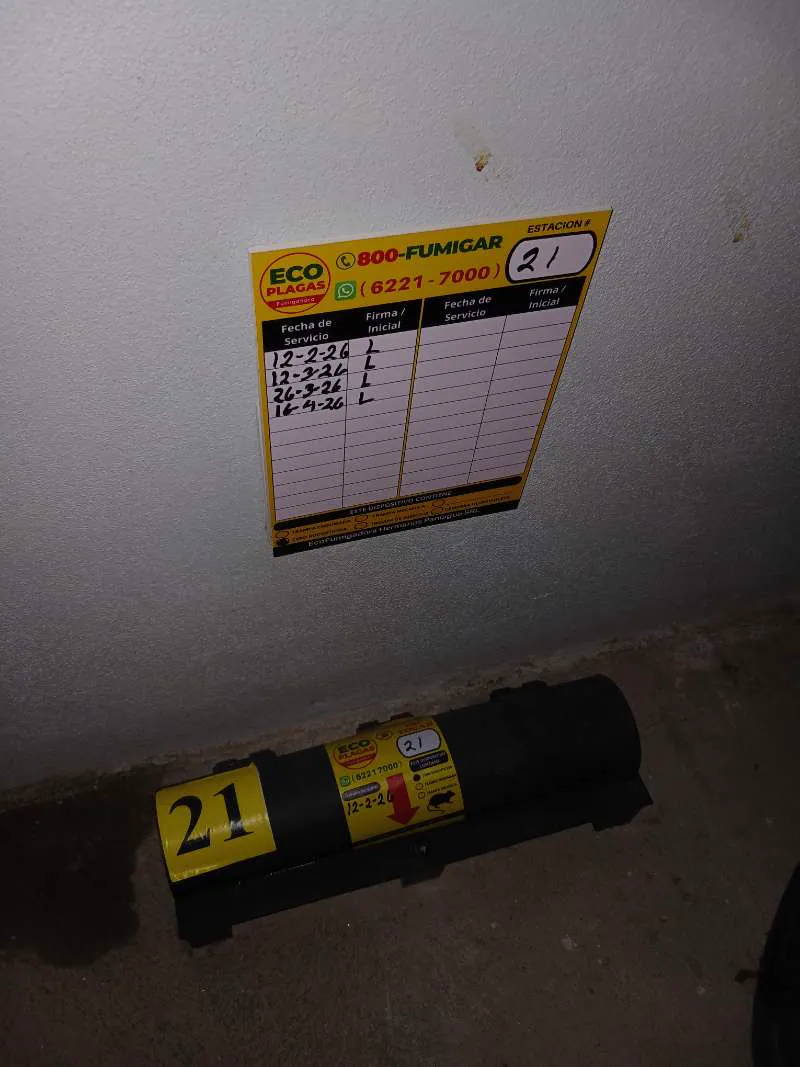
- Rodent control with numbered bait stations.
- Outdoor thermal fogging, only by authorized technicians.
- Calibration of application equipment.
- What to do in case of a spill, poisoning or an emergency.
What product comes into your home
- Products authorized and registered with the Ministry of Health.
- Only green, blue or yellow label products, never red label.
- We do not use organophosphates or carbamates, the groups most toxic to people.
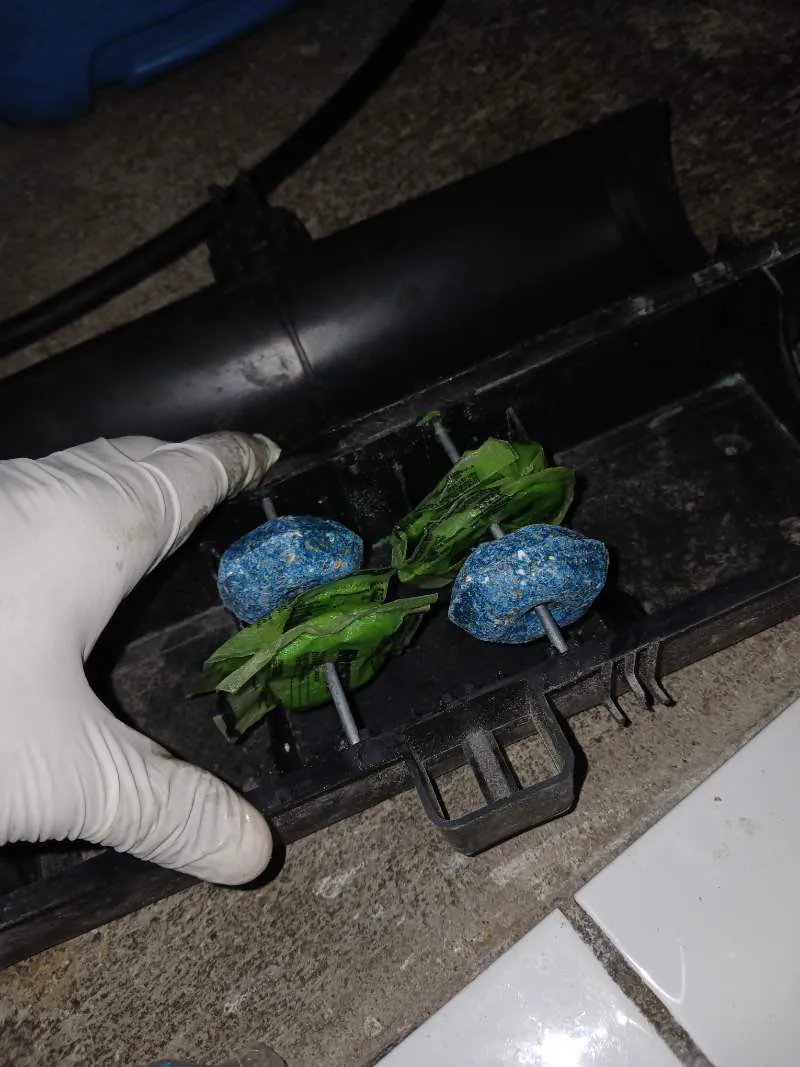
- The product goes where the pests live: gel in cracks and closed bait stations, not spray in the air.
- The technical data sheets and safety data sheets for every product are available to you.
Waste management plan
Whatever is left over from a service does not end up in the regular trash. We have a written plan, with people in charge and records:
- Separate, labeled bins for containers, product cardboard, gloves and removed bait.
- Triple rinsing of every empty container. The rinse water is applied, not poured away.
- Containers go back to the supplier, who signs for them.
- Logbook and weekly inspection of the waste area, with a maximum storage time.
What you get
At home
- Service report with photos.
- What we guarantee with its conditions in writing.
- Cleaning and re-entry instructions.
- Product safety data sheets, if you ask for them.
At your business
- Pest control plan with a map of numbered bait stations.
- Signed logbook for every visit.
- Certificate with a QR code, verifiable online.
- Technical and safety data sheets for every product, for audits.
Frequently asked questions
Are your technicians trained?
Yes. Every technician passes the mandatory pesticide application courses every year, with an exam based on real situations. Each course comes with a certificate that expires after 12 months, and the technician retakes it to keep it current.
Do your technicians get medical exams?
Yes. Every technician has a medical exam and a cholinesterase test on file. The cholinesterase test is not mandatory for us, because we do not use organophosphates or carbamates, but we do it anyway as a preventive check.
Are the products safe around children and pets?
We use products authorized by the Ministry of Health, and only green, blue or yellow label products, never red. People and pets can go back into the treated area one hour after the application.
Can you give me the technical data sheets and safety data sheets?
Yes. Businesses receive them with their pest control plan, and any customer can request them on WhatsApp.
What do you do with empty containers?
They are rinsed three times, the rinse water is applied instead of poured away, and the containers go back to the supplier, who signs for them. Nothing goes into the regular trash.