
Prevention · Pantry
Pantry Moths and Weevils
You open the bag of rice and there are little worms. Or you spot fine webbing stuck in the corner of the flour bag, or small brown moths fluttering clumsily around the kitchen at dusk. The first reaction is to assume the kitchen is dirty. It almost never is: these pests arrive inside the product, from the warehouse or the supermarket, and are discovered weeks later, once they have already moved into other packages.
- They arrive inside the packaging: the egg or larva was already there and develops in your cupboard.
- The larva chews through plastic and paper bags; glass or metal jars with airtight lids do hold up.
- If you find one affected package, check all the others: it has almost certainly spread.
- A treatment does not replace emptying and checking: the source is in a package, not in the wall.
Who is who
- Pantry moth (Indian meal moth): the most common. A brown and gray adult about one centimeter long that flies clumsily at nightfall. The damage comes from the larva: a pale little worm that leaves silk threads. That thread stuck in the corner of the package is its signature.
- Rice or maize weevil: a tiny dark beetle a few millimeters long with an elongated snout. It lays its egg inside the grain and the larva develops inside; that is why at first nothing looks wrong.
- Grain beetle: small, brown, very flat. That shape is what lets it squeeze through seams and folds that look closed.
None of them transmits disease. The damage is economic and to quality: lost product and, if it is a business, a serious finding in an inspection.
Why they came in the package
The cycle starts before the product reaches your home: at the plant, in the warehouse or on the supermarket shelf. The egg is tiny and the newly hatched larva easily gets through a plastic or paper bag; it often gets in through the seam or the fold of the closure.
Then comes the part that confuses everyone: you buy clean rice, store it next to the bag of flour you already had, and three weeks later the rice is affected too. It is not that the house is dirty. It is that the larva moves between packages looking for somewhere to keep eating.
This explains why cleaning the cupboard without checking every package does not work: the source is still inside one of them.
The check: half an hour well spent
- Empty it completely. Everything out, no exceptions. A partial check is the number one reason it comes back.
- Check them one by one, in good light. Look for: silk threads in corners and folds, grains clumped or stuck together, fine dust at the bottom, small holes in the grain, or the insect itself.
- Don't forget the unusual suspects: pet food, birdseed, spices, tea, baking flour, granola, nuts, chocolate, pasta, and that packet of soup that has been sitting there for a year. Pet food is the most frequently forgotten source.
- Throw out what is affected in a closed bag and take it out of the house right away, not to the kitchen trash can.
- Clean the empty cupboard: vacuum corners, shelf grooves and the holes for the shelf supports. Then wipe with soap and water and let it dry well.
- Put back only what is sound and move whatever you can into jars.
How to keep it from coming back
- Glass or metal jars with airtight lids. This is the measure with the biggest impact: the larva cannot get through glass or metal. Thin plastic and zip-top bags are not enough.
- Freeze new purchases for 3 or 4 days if it is flour, rice or bulk food. The cold kills eggs and larvae and does not affect the product.
- Buy reasonable quantities. The 20-pound sack that lasts eight months is an incubator. Better to restock more often.
- First in, first out. New items at the back and old ones at the front. Write the purchase date with a marker.
- Check every three months, even if you have not seen anything. Catching it early is the difference between throwing out one package and throwing out the whole cupboard.
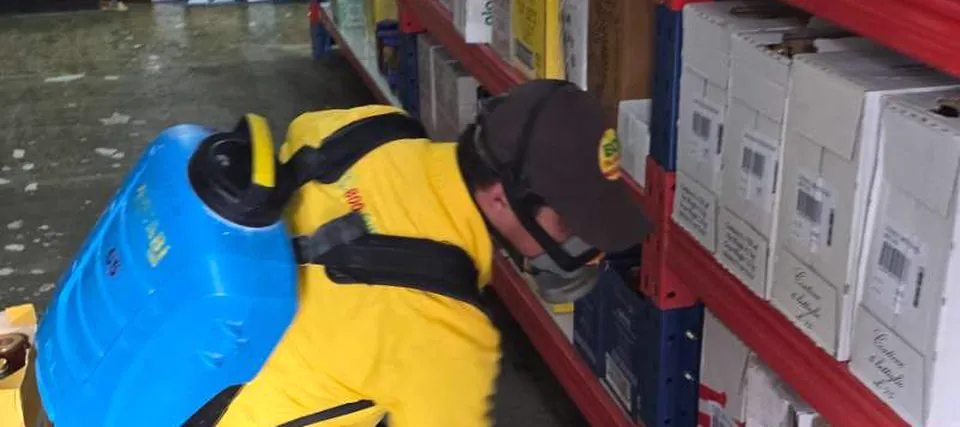
When the problem is in a business with bulk product, throwing out packages does not solve it: it takes treatment of the shelving and structure, monitoring with pheromone traps and control of inventory rotation. That is where a formal plan makes sense, especially if you handle food and decree 37308-S applies to you.
Bulk product with an infestation?
We treat shelving and structure, and install monitoring so you know if it came back before you lose stock.

References: