
Diagnosis · Ants
Ant species in Costa Rica: crazy ants, leafcutter ants, fire ants and the kitchen ones
- Six types account for almost all the ants in Costa Rican homes: crazy, leafcutter, fire, ghost, carpenter and pharaoh.
- The kitchen ones (ghost, crazy, pharaoh) have colonies with many queens: bug spray splits them into several new colonies.
- Carpenter ants get mistaken for termites; leafcutter and fire ants belong to the yard.
- The control that lasts is gel bait that workers carry back to the nest, plus sealing the entry point.
Costa Rica has more than 800 species of ants, but the ones that get into homes come down to six: the crazy ant, which runs around erratically and gets into appliances; the ghost ant, tiny and almost transparent, the classic sugar ant; the pharaoh ant, yellow, found in buildings and hospitals; the carpenter ant, big and black, in damp wood; the leafcutter ant (zompopa), which cuts leaves in the garden; and the fire ant, the one that stings in the grass.
Telling them apart is practical: three of them (crazy, ghost and pharaoh) have colonies with dozens of queens, and with those, supermarket bug spray is the worst possible remedy. We explain why below.
Crazy ant (Nylanderia and Paratrechina): the one that runs without a trail
How to recognize it. It's 2 to 3 mm, dark brown or black, with remarkably long legs and antennae for its size. What gives it away is how it moves: erratic, fast, zigzagging, without the orderly line of other ants. In Costa Rica there are two that people call by the same name: the longhorn crazy ant (Paratrechina longicornis) and the tawny crazy ant (Nylanderia fulva), which forms huge colonies.
Where it lives. Outdoors, in the soil, under flowerpots, in utility meters, and from there it gets into the house in large numbers. It likes the warmth of appliances: breaker boxes, outlets, routers, air conditioners, refrigerator motors, where the buildup can cause short circuits.
What risk it poses. It doesn't sting. The problem is volume: thousands in the kitchen overnight. It's one of the hardest to control because the colony has many queens spread over several nests and moves within days.
How it's controlled. Gel and liquid baits on the entry trails, treatment of the perimeter and of the garden where it nests, and sealing cracks. Spraying it doesn't work: the colony splits and shows up in another room. A single application won't solve it.
Ghost ant and pharaoh ant: the tiny ones in kitchens and buildings
Ghost ant (Tapinoma melanocephalum). The smallest on the list: 1.5 mm, dark head and thorax, abdomen and legs almost transparent, which is why it seems to "disappear" on light surfaces. If you crush a few, they smell like rancid coconut. It lives inside the house: behind tiles, in the joints of kitchen cabinets, under indoor flowerpots, around the laundry sink. It looks for sugar and water: the sugar bowl, spilled juice, the dog's bowl. It doesn't sting; it contaminates food and keeps coming back. It's controlled with sweet gel bait at the points where it passes (hinges, countertop corners, under the sink), cleaning up sugar residue and covering water sources. Step by step in ants at home: how to follow the trails to the nest.
Pharaoh ant (Monomorium pharaonis). 2 mm, yellow or amber with a darker abdomen, like a honey-colored ghost ant. It's the building ant: condos, offices, hospitals and hotels, because it travels through ducts and pipes between floors and nests in walls near heat sources (hot water, water heaters, under floors). It eats everything. It doesn't sting, but it contaminates food and can carry bacteria; in hospitals it's a serious pest. It's the one that bug spray backfires on most: with a repellent, the colony splits into several within days, and one apartment's problem becomes three apartments' problem. Baits only, and in buildings several apartments have to be treated at the same time.
Carpenter ant (Camponotus): the big black one mistaken for termites
How to recognize it. The biggest ones in the house: 6 to 13 mm, black or black and red, with a rounded thorax seen from the side. They come out at night, a few at a time. The winged ones in the rainy season get mistaken for termites; the difference: the ant has a narrow waist, elbowed antennae and front wings longer than the hind wings; the termite has a straight waist, straight antennae and four equal wings.
Where it lives. In damp or damaged wood: window frames with leaks, beams under drips, bathroom cabinets, logs in the garden. It doesn't eat wood, it digs into it to nest and pushes out fine, clean sawdust.
What risk it poses. It can weaken wood that was already damp, but it doesn't destroy sound wood like termites do. The real risk is mixing them up and treating for termites where there are ants, or vice versa. Guide in how to diagnose ants and tell them apart from termites.
How it's controlled. Locate the nest (you can hear a faint rustling when you knock on the wood), treat the gallery directly, protein baits, and fix the moisture that attracted it. Without fixing the leak, it comes back.
Leafcutter ant (Atta): the garden leaf cutter
How to recognize it. Reddish or brown, with spines on the thorax and workers of very different sizes: from 3 mm up to soldiers over 1 cm with huge heads. The line carrying pieces of leaf toward a hole in the ground can't be mistaken for anything else. They come out at night, and with the first rains in May the winged ones fly out.
Where it lives. Underground, in nests that can cover several square meters, with mounds of loose soil and several openings: in the garden, in the lot next door, under the sidewalk. It doesn't come into the house looking for food.
What risk it poses. For the house, none. For the garden, a lot: a colony can strip a citrus tree or a rosebush in one night. It doesn't eat the leaves: it carries them to the nest to grow the fungus it feeds on.
How it's controlled. Granular baits that workers carry to the nest, poisoning the fungus, or direct treatment of the openings. Spraying the lines doesn't work: the queen is meters underground. Full page at leafcutter ant control.
Fire ant (Solenopsis geminata): the one that stings in the yard
How to recognize it. Reddish, 3 to 6 mm, workers of various sizes, the big ones with square heads. What identifies it is the reaction: if you step on the mound, within seconds you have dozens climbing up your leg and stinging at once. The sting burns and within hours leaves a white blister.
Where it lives. In the soil, in open, sunny places: grass, sidewalk edges, under paving slabs, near children's play areas. It builds mounds of loose soil with no visible opening. In Costa Rica the common species is the native one.
What risk it poses. Painful stings, especially for children and pets in the grass, and allergic reactions in some people. It sometimes comes into the house after pet food.
How it's controlled. Direct treatment of each mound and granular bait over the area, repeated because neighboring colonies recolonize. No boiling water or gasoline: they don't reach the queen and they damage the grass.
Why bug spray multiplies them and gel works
Crazy, ghost and pharaoh ants have polygynous colonies: many queens, spread over several connected nests. When a repellent spray hits part of the colony, the workers pick up queens and larvae and move somewhere else. Where there was one nest, there are now three or four. It's the classic case of "I sprayed insecticide in the kitchen and now they're coming out in the bathroom and the bedroom."
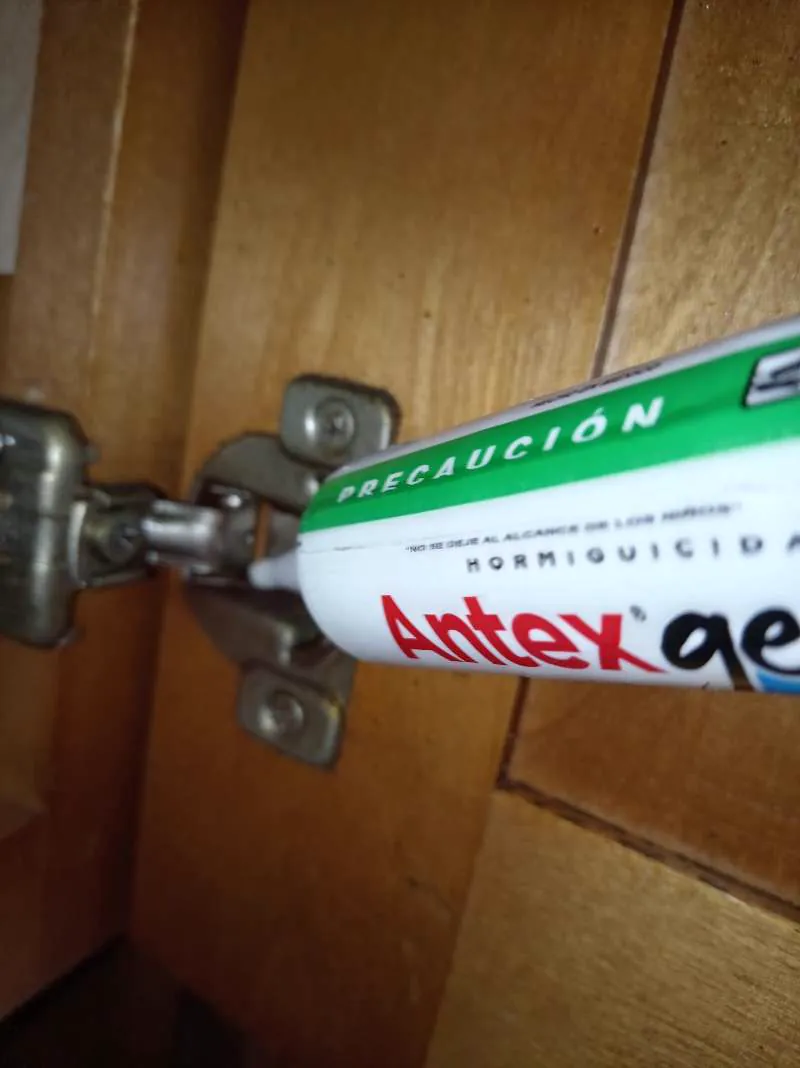
Gel bait does the opposite: attractive food with a slow-acting ingredient that workers carry to the nest and pass on to larvae and queens, and the whole colony dies in one to two weeks. When you see ants on the gel, don't kill them; that's exactly what needs to happen. The complete method is in ant control.
Which one you have
| If you see... | It's probably | The problem is |
|---|---|---|
| Small black ones running erratically, in appliances | Crazy ant | Outside and inside, several colonies |
| Tiny, half transparent, in the sugar | Ghost ant | Inside the kitchen |
| Yellow ones in a building or condo | Pharaoh ant | In the walls, crossing between apartments |
| Big black ones, fine sawdust, damp wood | Carpenter ant | In a leak |
| Lines carrying leaves toward a hole | Leafcutter ant | In the garden, underground |
| Mound in the grass, they sting in groups | Fire ant | In the yard |
What it costs
Household ant treatment is part of the common pest service: up to 100 m² ₡39,900, up to 200 m² ₡49,900, over 200 m² ₡59,900, VAT included, with no travel charge in the Greater Metropolitan Area. You can go back in one hour later. If you have not fumigated in the last 6 months, it takes two applications and the second one is charged; the 30-day check only applies once the plan is complete. Leafcutter ants and fire ants in large yards are quoted based on the area. Send us a photo on WhatsApp and we'll tell you which one it is.
Frequently asked questions
Why did more ants show up after spraying insecticide?
Because crazy, ghost and pharaoh ants have many queens in connected colonies. Repellent makes them split up and move to other rooms. With those species, only bait works.
How do I tell a flying carpenter ant from a termite?
The ant has a narrow waist, antennae bent at an elbow and front wings longer than the hind wings. The termite has a straight waist, straight antennae and four wings of the same size.
Do crazy ants sting?
No. The problem is their numbers and that they get into electrical appliances, breaker boxes and outlets, where they can cause failures.
Do leafcutter ants come into the house?
They don't look for food indoors. They live in the garden and cut leaves from trees and plants to grow a fungus underground. They're controlled at the nest, not on the trails.