Ants
Ants at Home: Breaking Trails and Cutting Off Food Sources

A line of ants appears across the counter and the reaction is immediate: spray. It works for ten minutes and the next day they are back, sometimes by a different route. The reason lies in how they organise: that trail is a chemical track laid down by a scout that found food, and killing the ones walking on it neither erases the track nor touches the colony, which may number thousands and sit inside the wall.
- The trail is pheromone laid by a scout: as long as the track exists, they will keep coming.
- Aerosol spray kills visible workers but can fragment the colony and multiply the problem.
- Erasing the trail with soapy water or vinegar is more effective than killing the ants you can see.
- The bait must match what that species eats: there are sugar ants and grease ants.
- Bait is deliberately slow-acting, so it has time to reach the nest.
How the trail actually works
A scout ant sets out alone. When it finds something edible it returns to the nest laying a pheromone trail along the way. Those that follow the track and also find food reinforce it on the way back. That is why a line of ants gets stronger by the hour: every successful trip adds signal.
This explains two things that confuse everyone:
- Why they walk in a straight line along odd routes — window edges, alongside a cable, around a frame. It is not whim: they follow the signal, not the shortest path.
- Why they return to the same spot even after you clear the food. If the track is still there, the signal still says “something this way”.

Why spray makes things worse
Contact aerosol has three problems in this scenario:
- It kills the 5% you can see. The rest of the colony — queen included — is elsewhere and keeps producing.
- It leaves a repellent residue. Ants detect it and simply open a new route. That is why the line reappears somewhere else the next day.
- It can fragment the colony. Several species respond to stress by splitting the nest into sub-colonies. You go from one problem to three.
This is the classic case where the intuitive response is exactly the wrong one.
Erasing the trail properly
- Let the loaded ones leave first, or lift them off with paper. Do not crush them on the surface: that releases more pheromone.
- Wash the whole route with soapy water, or a half-and-half mix of vinegar and water. Soap dissolves the greasy compound the pheromone is made of.
- Cover the entire path, not just where the food was: from the entry point to the destination.
- Repeat a few hours later. Scouts will insist a couple of times before giving up.
This does not eliminate the colony, but it cuts the flow and buys you time. Combine it with storing food and rubbish properly.
The right bait for each ant
This is where most people go wrong: they buy a bait, it does not work, and they conclude baits are useless. The problem is almost always that the bait did not match the species’ diet.
- If they head for sugar, fruit or spilled soft drink: you need a sweet gel bait.
- If they head for grease, oil or meat: you need a protein or fat-based bait. They will not carry a sweet gel.
- Quick test: put a drop of honey on a slip of paper and a little butter or tuna a centimetre away. Come back in an hour and see which they chose. That tells you what to buy.
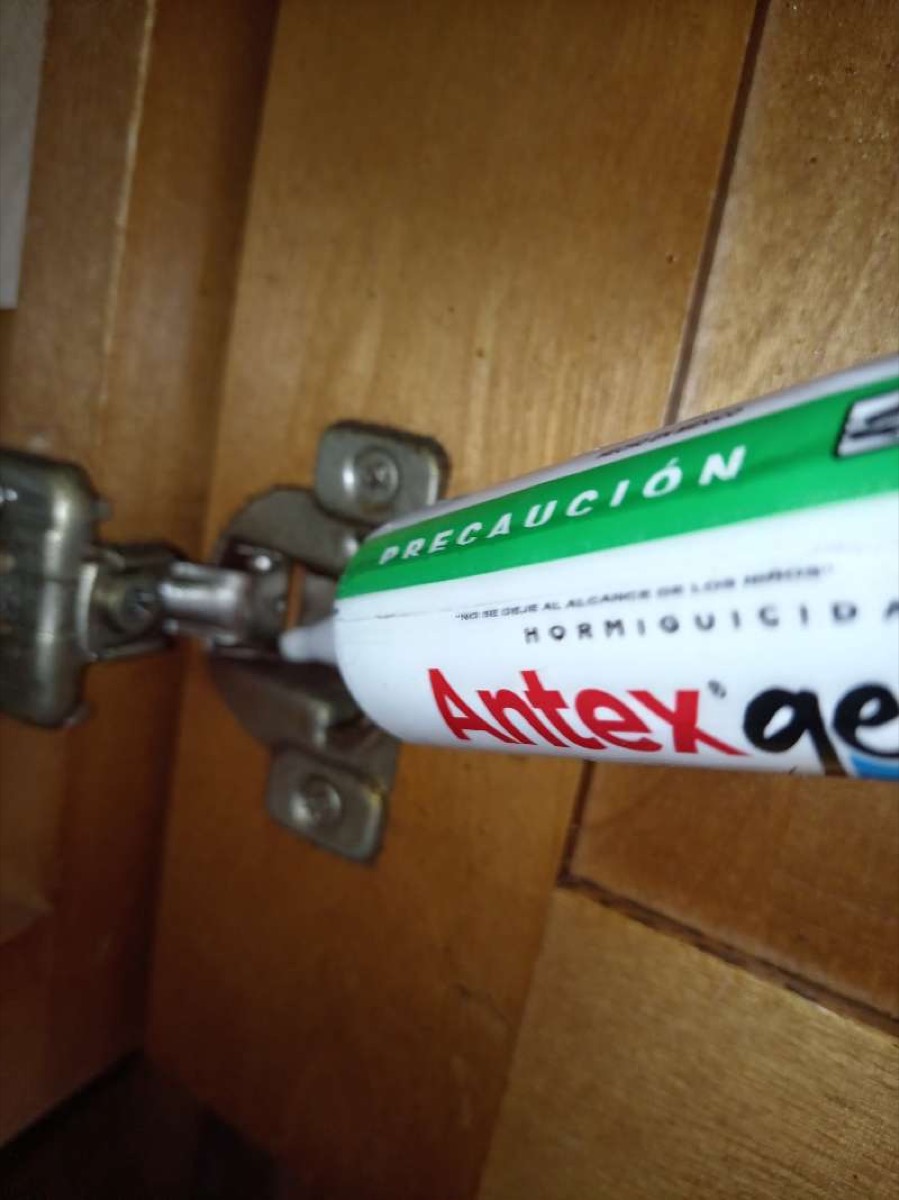
And one thing people get wrong with the best intentions: do not clean the bait away when you see it covered in ants. That crowd is exactly the point — they are transporting the product to the nest. And do not spray insecticide near the bait, because it repels them and the bait stops working.
When it is time for professional treatment
- Ants come out of the wall, the floor or the ceiling: the colony is inside the structure.
- Winged ants appear indoors: that is a reproductive swarm and means a mature colony very close by.
- There are several simultaneous trails on different routes: you are probably dealing with sub-colonies.
- You used the correct type of bait for three weeks and traffic has not dropped.
- You see fine sawdust next to timber: it could be carpenter ants, and that is structural damage, not a nuisance.
See also how to diagnose an ant problem.
It sounds counter-intuitive, but cleaning the trail with soap and leaving the right type of bait beats any aerosol. The target is not the ant walking across the counter: it is the one laying eggs where you cannot see her.
Need professional help?
Ant treatment. EcoPlagas serves the Greater Metropolitan Area.