
Diagnosis · Flies
Types of flies in Costa Rica: fruit fly, house fly, drain fly and how to break each cycle
- Each type of fly breeds in something different: garbage and manure (house fly), fruit and bottles (fruit fly), the film inside the drain trap (drain fly), meat and dead animals (blue and green bottle flies).
- Killing the adult fly doesn't work: the one flying lives two weeks and has already laid hundreds of eggs. You have to find and remove the breeding site.
- Lots of blue bottle flies suddenly inside the house almost always means a dead rat in the wall or the ceiling.
- In sodas and restaurants, a UV light trap with a sticky board is part of the plan the Ministry of Health requires.
The flies that bother homes and businesses in Costa Rica come in six types, and each one breeds in something different: the house fly in garbage and manure, the fruit fly in ripe fruit and bottles, the drain fly in the film inside the drain trap, the blue and green bottle flies in meat and dead animals, the stable fly in manure mixed with straw, and the horse fly in rivers and pastures. If you identify which one you have, you know what to clean or seal, and that's worth more than any product.
The reason is the cycle: an adult fly lives two to four weeks and lays hundreds of eggs in the breeding site. Killing the adults removes the ones flying today; the larvae already in the garbage or the drain trap come out within a week.
House fly (Musca domestica): the garbage fly
How to recognize it. The common fly: 6 to 7 mm, gray, with four dark lines along the thorax. It doesn't bite. It lands on food and on people and keeps coming back to the same spot.
Where it breeds. In moist, decaying organic matter: garbage with food scraps, the liquid at the bottom of the trash can, dog and chicken droppings in the yard, poorly managed compost, the shared dumpster of the condo. In Costa Rica's heat, the cycle from egg to adult takes 7 to 10 days.
What to remove. Garbage in closed bags and a trash can with a lid, washing the inside of the can every week (the liquid at the bottom is the breeding site), picking up pet waste daily, covered compost. Screens on windows and the kitchen door. That alone makes most house flies in a home disappear within two weeks. The treatment in fly control adds a residual on the surfaces where they land.
Fruit fly (Drosophila): the tiny one around fruit and bottles
How to recognize it. Tiny, 3 mm, yellowish brown, with red eyes. It flies slowly and in groups around fruit, the organic waste bin and empty bottles. It shows up overnight in large numbers.
Where it breeds. In anything that ferments: overripe bananas and mangoes in the fruit bowl, the bottom of a beer bottle, the kitchen towel that never dried, the sugary residue in the sink drain trap, the recycling bin, the bag of potatoes that rotted in the pantry. The cycle lasts 8 to 10 days.
What to remove. Ripe fruit in the refrigerator, bottles rinsed before recycling, dry towels, a drain trap cleaned with a brush. A homemade trap (apple cider vinegar with a drop of soap in a glass covered with perforated plastic wrap) catches the adults while you remove the breeding site. If you removed everything and they're still there, the breeding site is somewhere you haven't looked: behind the refrigerator, under the sink, in a forgotten potato.
Drain fly or bathroom fly (Psychodidae): the fuzzy one from the drain
How to recognize it. 2 to 4 mm, dark gray, fuzzy, with broad heart-shaped wings folded over the body like a roof. It looks like a tiny moth. It flies poorly, in short hops, and sits still on the bathroom wall or on the tile near the drain. The common species in Costa Rica is Clogmia albipunctata.
Where it breeds. In the gelatinous biofilm that forms inside drain traps, bathroom floor drains, laundry sink drains, the sink overflow, the air conditioner drip pan and septic tanks with a broken lid. The larva lives in that layer stuck to the pipe.
What to remove. The film, mechanically: bleach and hot water only graze it and don't remove it. Scrub the inside of the trap and the drain grate with a bottle brush, use an enzymatic drain cleaner and repeat every week for a month. If the bathroom is rarely used, run water every day. More in moisture control in bathrooms and sinks.
Blue and green bottle flies (Calliphoridae): a sign of something dead
How to recognize them. Large and metallic: 8 to 12 mm, shiny blue or emerald green, loud in flight. They bump against windows and land on raw meat. In Costa Rica, Chrysomya, Lucilia and Cochliomyia are common.
Where they breed. In meat and carcasses: the bag of chicken left out, fresh dog droppings and, above all, dead animals. If dozens of blue or green flies suddenly appear inside the house, stuck to a window, most likely there is a dead rat or mouse inside the wall or the ceiling, often from loose poison someone put out. The larvae grow in the carcass and the adults come out through any crack.
What to remove. Find and remove the dead animal (follow the smell; it's usually in the ceiling above the room where they appear), disinfect, and then check how the rodents got in. In a butcher shop or restaurant kitchen: meat refrigerated or covered, and meat waste double-bagged and kept cold if it isn't collected daily.
The ones that bite: stable fly and horse fly (rural areas)
The stable fly (Stomoxys calcitrans) looks like the house fly, but has a mottled abdomen and a hard proboscis that sticks out like a needle. It bites people, dogs and cattle, during the day, mostly on the legs. It breeds in manure mixed with wet grass and in piles of cut grass: a problem for farms and rural homes with cattle-raising neighbors, not for the Greater Metropolitan Area. What you have to remove is the manure and wet grass (spread it out or cover it); at home, screens and a residual on the walls where they rest in the sun.
The horse fly (Tabanidae) is large (1 to 2.5 cm), sturdy, with huge eyes and a loud flight. The female cuts the skin to feed on blood: the bite bleeds, hurts and swells. It breeds in the mud of rivers, pasture puddles and mangroves, never in a house. There's nothing to remove indoors: light-colored long clothing, repellent, screens and, for pets and livestock, whatever the vet recommends.
Sodas and restaurants: UV traps and what the inspector looks for
A UV light trap with a sticky board attracts the flies that are already inside and catches them with no noise or particles; zapper devices throw off fragments and aren't used in kitchens. It goes 1.5 to 2 m high, away from the door so it doesn't attract flies from outside, and the board is changed every month. It's useful for measuring: if it catches more flies every week, the breeding site is still active. What it doesn't do is eliminate the problem: if the trash can or the drain trap keep breeding flies, it will fill up forever.
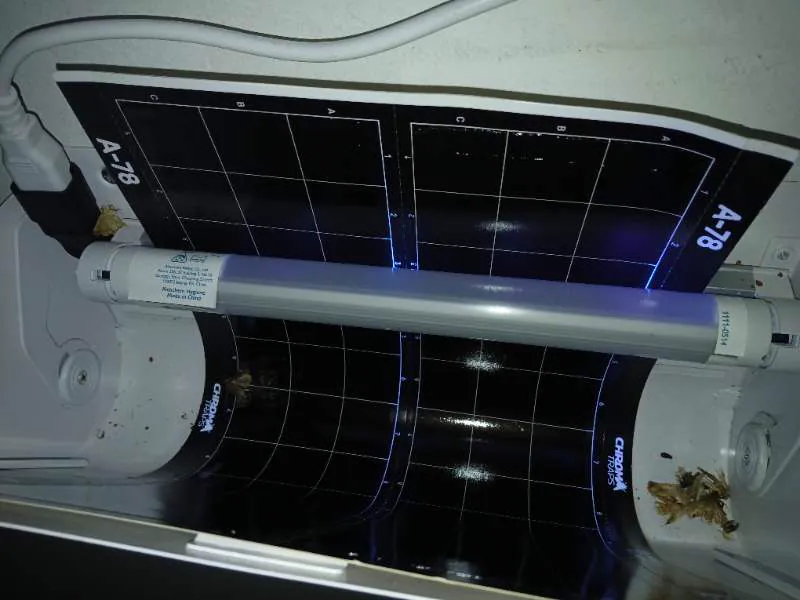
In a food business, flies are the finding that leads to a health order fastest, because the inspector sees them in the first few seconds. The Ministry of Health requires a documented pest control plan, and flies depend on daily operations: garbage closed and taken out on time, a clean grease trap, scrubbed drain traps, screens on the kitchen door, UV traps with a logbook. The guide to flies in sodas and restaurants explains the plan, and the article on Ministry of Health inspections of food businesses in 2026 covers what they're checking this year.
Which one you have
| If you see... | It's a | What to remove |
|---|---|---|
| Medium gray, lands on food | House fly | Trash can, pet waste, compost |
| Tiny, red eyes, on fruit | Fruit fly | Ripe fruit, bottles, towels, drain trap |
| Fuzzy, sitting still on the bathroom tile | Drain fly | The film inside the drain trap and grate |
| Metallic blue or green, many at once | Blue or green bottle fly | Meat left out or a dead animal in the wall |
| Like the house fly but it bites | Stable fly | Manure and wet grass (rural areas) |
| Large, painful bite, near a river or pasture | Horse fly | Nothing in the house: personal protection |
When to call and what it costs
Call if you've already removed the obvious and the flies are still there (the breeding site is hidden), if lots of blue bottle flies showed up indoors, or if you have a food business and need the documented plan. For homes, fly treatment is part of the common pest service: up to 100 m² ₡39,900, up to 200 m² ₡49,900, over 200 m² ₡59,900, VAT included, with no travel charge in the Greater Metropolitan Area. You can go back in one hour later. If you have not fumigated in the last 6 months, it takes two applications and the second one is charged; the 30-day check only applies once the plan is complete. Sodas and restaurants are quoted based on the premises. Date confirmed in under an hour on WhatsApp.
Frequently asked questions
Why did lots of blue bottle flies suddenly show up inside the house?
There's almost always a dead animal nearby: a rat or mouse in the wall, the ceiling or behind a piece of furniture, often from loose poison. The larvae grow in the carcass and the adults come out through cracks. You have to find it and remove it.
How do I get rid of drain flies in the bathroom?
By scrubbing the gelatinous film inside the drain trap and the grate with a bottle brush and using an enzymatic cleaner, once a week for a month. Bleach alone doesn't remove it.
Do fruit flies come from the fruit?
They lay their eggs in overripe or fermented fruit, in the residue in bottles and in damp towels, and in 8 to 10 days there are new adults. Fruit in the refrigerator, rinsed bottles and a clean drain trap break the cycle.
Does a UV light trap work in a soda?
Yes, with a sticky board, not a zapper, at 1.5 to 2 m high and away from the door. It catches adults and helps measure whether the breeding site is still active. It doesn't replace cleaning the trash can and the drain traps.