Moisture
Moisture Control in Bathrooms and Under Sinks

A bathroom brings together the three conditions a pest is looking for: permanent water, darkness and cracks to hide in. The laundry sink and the service bathroom add a fourth — being out of sight. That is why they are the starting point of so many infestations, and why controlling moisture there pays off more than spraying. The catch is that almost none of the problematic moisture is visible: there is no puddle, there is an occasional drip and a pipe that sweats.
- A cockroach survives weeks without food but very little without water: moisture is the limiting resource.
- The dry trap in an unused bathroom stops being a barrier and becomes a direct entrance from the drain.
- Condensation on cold pipes is not a leak, but it sustains populations just the same.
- Ventilating for 15 minutes after showering lowers humidity more than any product.
- If silverfish appear, humidity has been high for some time.
The six points that leak unnoticed
- The drain joint under the basin. Run your hand along the underside of the trap. If it comes away damp, there is a leak even if the floor is dry.
- The base of the toilet. A failed wax seal leaks into the sub-floor and is never visible. Signs: a floor that is always slightly damp around it, or a persistent smell.
- The laundry sink stopcock. It usually drips slowly and the water runs down the wall to the floor.
- The basin overflow. That little hole holds water and biofilm; it is a drain-fly breeding site.
- The shower-to-floor joint. Once the silicone lifts, water gets under the tile and stays there.
- Embedded cold-water pipe. It does not drip: it sweats. In a house with high ambient humidity that condensation is constant.
Diagnostic trick: dry everything, place kitchen paper under each point and check after 12 hours. The paper will tell you which one drips.
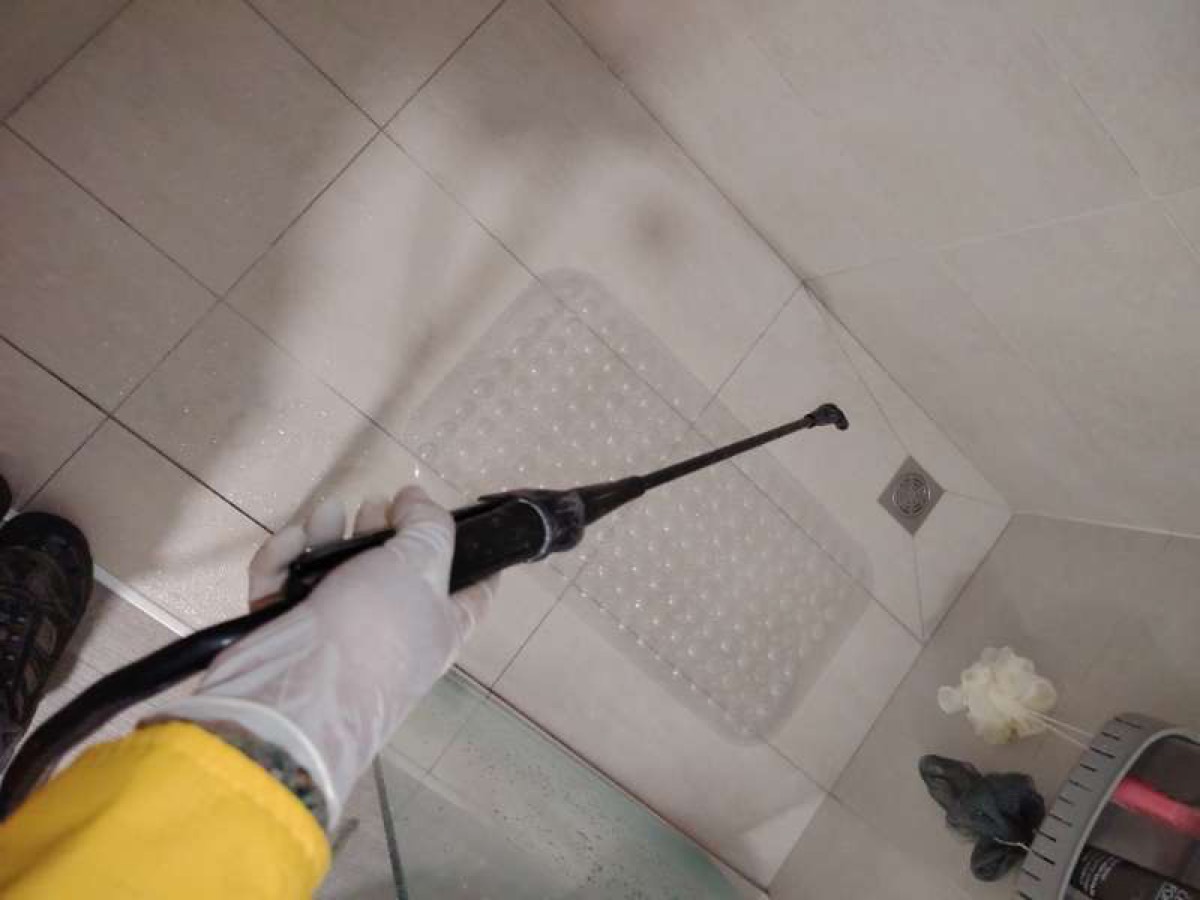
The dry trap: an open door to the drain
This is one of the most common findings and one of the least known. The bend in the drain — the trap — always holds a little water, and that water plug is what stops odours and insects coming up from the drainage network.
When a bathroom goes unused for weeks, that water evaporates. The trap empties and from then on anything walking through the pipe has free passage into the house: American cockroaches, drain flies, smells.
The fix costs nothing: pour a glass of water down rarely used drains once a week — the guest bathroom, the back sink, the garage floor drain. If the house will be empty for a month, add a spoonful of oil after the water: it forms a film that slows evaporation.
Condensation: water that is not a leak
When relative humidity is high and a surface is colder than the air, water condenses. In a bathroom that happens on the cistern, on embedded pipework and behind tiles on an exterior wall.
- How to tell it from a leak: condensation appears evenly across the whole cold surface and varies with the weather. A leak always drips from the same point.
- What to do: ventilate and move air. An extractor fan, or simply leaving the window open for a while, lowers relative humidity enough.
- If it is structural — cold exterior wall, no possible ventilation — it is worth considering pipe insulation or a dehumidifier in that room.

The routine that actually lowers humidity
- Ventilate for 15 minutes after showering. Open window or extractor fan. It is the single highest-impact measure.
- Squeegee the shower floor and hang the towel outside the bathroom, not over the door.
- Do not leave wet mops or sponges in the service bathroom: they are a permanent reservoir.
- Check the traps of rarely used drains once a week.
- Lift things off the floor under the laundry sink. Detergent boxes and stacked cloths against the wall create the perfect microclimate.
- Measure. A hygrometer costs little. Below 60% relative humidity most of these insects struggle; above 70% they are comfortable.
When it is no longer moisture but infestation
- You see cockroaches during the day in the bathroom: the population has outgrown its space.
- There are clustered dark specks in the skirting corner or behind the toilet: that is droppings.
- Small hairy flies rest on the bathroom wall: that is drain fly, which means biofilm inside the pipe.
- You fixed the leaks a month ago and activity is unchanged.
In those cases water is no longer the cause but the support of something already established. See also cockroach prevention in kitchen and bathroom.
It is the point we most often find to be the real cause of American cockroaches “appearing out of nowhere” in clean houses. A bathroom used once a month has a dry trap almost all of the time. A weekly glass of water solves it.
Cockroaches from moisture?
Fumigation and pest control across the Greater Metropolitan Area. Call us or message us on WhatsApp.