
Scorpions
Scorpion sting in Costa Rica: what to do, how serious it is and how to prevent more
- The common house scorpion in Costa Rica (Centruroides, brown) gives a very painful sting that is rarely serious in healthy adults.
- It is an emergency if the person stung is a young child, an older adult or someone with allergies, or if tingling of the tongue, drooling, vomiting or difficulty breathing appears.
- Wash, apply cold, keep the limb still. No tourniquet, no cutting and no home remedies.
- They hide in shoes, clothes on the floor, behind pictures, in the ceiling and in firewood. More of them come in when the rains start and during the dry season.
- Treatment up to 100 m² for ₡39,900 including VAT. If you have not fumigated in the last 6 months, it takes two applications and the second one is charged; the 30-day check only applies once the plan is complete.
How serious a scorpion sting is in Costa Rica
In Costa Rica, the scorpion that stings inside homes is almost always one of the genus Centruroides, the "house scorpion", brown or yellowish, 4 to 7 centimeters long, with slender pincers and a thin tail. Its sting hurts a lot: an immediate sharp pain, like a burn or an electric jab, that then turns into burning and tingling around the spot. In a healthy adult it is rarely serious: the pain eases in 1 to 2 hours and the tingling goes away within the day. It leaves no lasting effects.
The venom is neurotoxic, and in people who weigh little or are sensitive it can cause systemic symptoms. The question is not "is it deadly?" but "who was stung and what symptoms do they have?".
When it is an emergency
Go to the emergency room or call 9-1-1 immediately if the person stung is a child under 6, an older adult, a person allergic to insect stings, or someone with heart or respiratory disease. In them the venom acts more strongly, and the hospital can provide support and, if needed, scorpion antivenom.
For anyone, go to the emergency room if in the first 30 to 60 minutes any of these signs appear that the venom has spread through the body:
- Tingling or numbness in the tongue, lips or throat, a feeling of "a hair in the throat".
- Heavy drooling, watery eyes, sweating.
- Difficulty swallowing or breathing, a hoarse voice.
- Vomiting, abdominal pain, nausea.
- Abnormal eye movements, restlessness, tremors or muscle twitching.
- A very fast pulse or rising blood pressure.
If none of this appears in the first hour and the pain eases, the reaction will stay local. Even so, watch the person who was stung for 6 hours.
What to do in the first minutes
- Wash the spot with soap and water.
- Local cold: ice wrapped in a cloth, 10 minutes on and 10 off, during the first hour. It eases the pain and slows the absorption of the venom.
- Keep the limb still and, if it is a hand, take off rings and bracelets before it swells.
- For pain, over-the-counter acetaminophen or ibuprofen for adults. For children, only what the doctor prescribes.
- If possible, catch or photograph the scorpion. It helps confirm the species.
- Go to the emergency room if any of the systemic symptoms on the list above appear, or right away if the person stung is a young child, an older adult or someone with allergies.
What not to do: a tourniquet (it doesn't stop the venom and can damage the limb), cutting or sucking the wound, applying heat, or putting on alcohol, gasoline, garlic, coffee or any home remedy. None of that neutralizes the venom, and all of it increases the risk of infection.
Types of scorpions in Costa Rica, in brief
Brown house scorpion (Centruroides). The most common one inside homes throughout the GAM and the Pacific. Light brown to brownish yellow, sometimes with darker stripes, slender, with fine pincers. It climbs well, which is why it reaches the ceiling and hanging clothes. It is the one that matters medically.
Large black scorpions (Didymocentrus, Tityus and others). Black or very dark brown, with a thicker body and sturdy pincers, up to 10 centimeters long. They live in rural areas under rocks and logs. They are scarier and sting less: their venom is generally less potent than that of Centruroides, and their sting, although painful, usually stays as local pain. The general rule of thumb in Costa Rica: slender pincers and a thin tail, more venom; thick pincers, less.
None of them go looking for people: they sting when we squeeze them while putting on a shoe or sitting on a towel.
Where they hide inside the house
The house scorpion needs a dark, narrow and dry place to spend the day. The classic hiding places:
- Shoes, especially those left in the hallway, the garage or under the bed.
- Clothes and towels on the floor, or hanging against the wall without being moved for days.
- Behind pictures, mirrors and furniture placed against the wall.
- Ceilings and beams, especially wooden or board ceilings with gaps. The number one hiding place in older homes in the Central Valley.
- Cardboard boxes in storage rooms and closets, piles of newspaper, clothes stored in bags.
- Firewood, blocks, roof tiles and flowerpots stacked against the outside wall, the water meter and the breaker box.
- Drain grates in the bathroom and the laundry sink, which they use to go up and down.
If you see one, there are more. A scorpion rarely travels alone in a house.
Why they come in: dry season, rains, light and insects
Scorpions come into the house for three reasons. The first is the weather: in the dry season from February to April the ground cracks and heats up, and they look for the moisture of the bathroom, the laundry sink and the kitchen. When the rains start in May, the opposite happens: water floods their refuges in the ground and they climb to dry places, which means the ceiling and the walls.
The second is food. Scorpions eat cockroaches, crickets, spiders and moths. A house with cockroaches in the kitchen or with insects drawn to the porch light is a feeding ground. The third is light: it attracts the insects they hunt, and they follow them to the porch and the ceiling.
How to prevent more stings
- Shake out your shoes before putting them on and keep them in a closed shoe cabinet, not on the floor. The same goes for clothes that were on the floor or the towel you hung up yesterday.
- Seal: a door sweep under doors, silicone in cracks in walls and baseboards, screens on windows and covered grates on drains. If you have a wooden or board ceiling, check the joints and corners. Step-by-step guide in how to seal your home against pests.
- UV light: an ultraviolet flashlight from a hardware store, at night with the lights off, makes scorpions glow bluish green. In ten minutes you know how many there are and where they get in.
- A clear yard: firewood, blocks and flowerpots 50 centimeters from the wall and on pallets; fallen leaves picked up; grass kept short.
- Control cockroaches: without food, scorpions go elsewhere.
- Beds away from the wall and with no blankets touching the floor, especially in children's rooms.
There are more measures in scorpions at home: how to prevent them.
When to fumigate and how much it costs
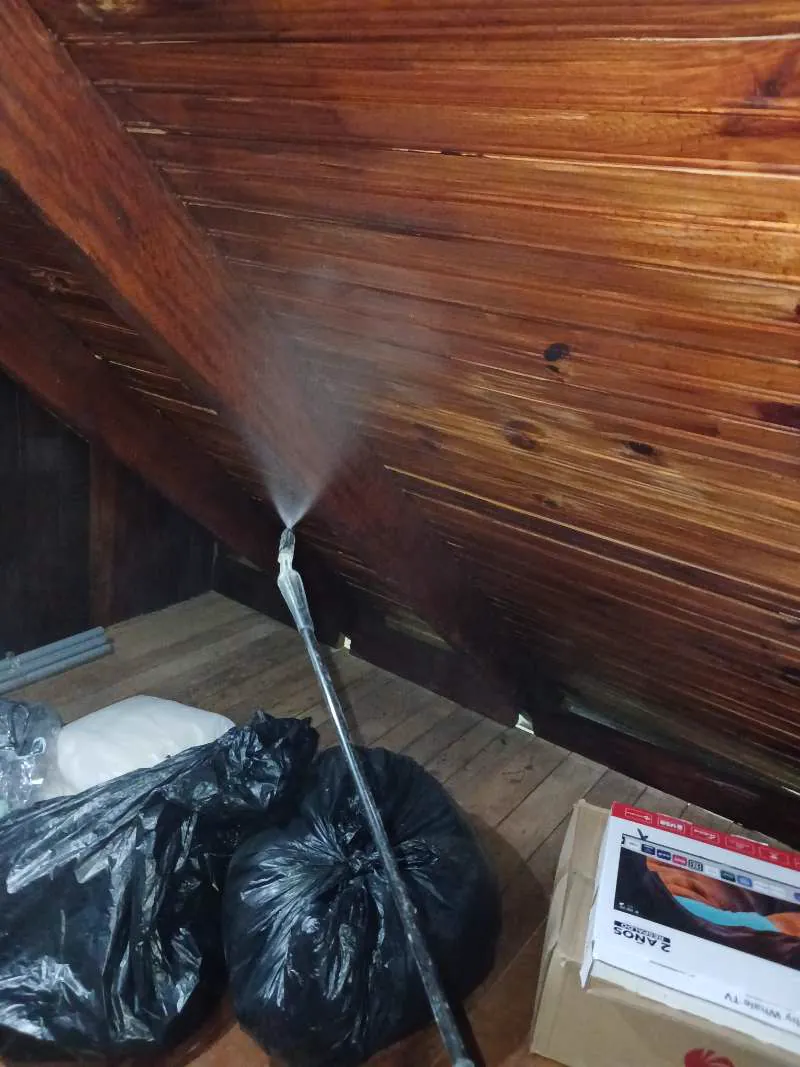
Fumigate when you have seen more than one in a few weeks, when there are young children or older adults in the house, when they show up inside bedrooms or the bathroom, or when the UV check showed several. Professional treatment applies residual insecticide in the ceiling, gaps, baseboards, behind furniture, storage rooms and the outside perimeter, and at the same time reduces the cockroaches and insects that feed them. You can go back in one hour after the application.
Price: house or apartment up to 100 m², ₡39,900; up to 200 m², ₡49,900; over 200 m², ₡59,900. VAT included, with no travel fee in the GAM. If you have not fumigated in the last 6 months, it takes two applications and the second one is charged; the 30-day check only applies once the plan is complete. Date confirmed by WhatsApp in less than an hour. The full service is on scorpion control.
Frequently asked questions
How long does scorpion sting pain last?
The sharp pain lasts from 30 minutes to 2 hours, and local tingling or numbness can last 12 to 24 hours. If after 24 hours it is the same or worse, or swelling appears and keeps growing, a doctor should see it.
Are Costa Rican scorpions deadly?
Costa Rican scorpions are not considered deadly to healthy adults. The real risk is for young children, older adults and people with allergies, in whom the venom can cause systemic symptoms that require hospital care.
Why are scorpions showing up in my house when there were none before?
Because of the weather: when the rains start in May they come out of the ground and cracks looking for dry places, and in the dry season from February to April they come in looking for moisture. They are also drawn by insects, especially cockroaches, and by the house lights at night.
Does ultraviolet light help find them?
Yes. Scorpions glow bluish green under UV light. With a UV flashlight from a hardware store, at night and with the lights off, you check baseboards, corners, behind furniture and the yard. It is the fastest way to find out how many there are and where they get in.