Sealing
Cracks and Hiding Spots: Sealing Your Home Against Pests

Sealing is the pest control measure with the best effort-to-result ratio there is: you do it once and it keeps working every day, with no product and no maintenance. The problem is that almost nobody does it well, because people seal what they can see — a crack in the wall — and leave open the passages that are actually used: the gap around a pipe, the bottom of a door, an unscreened vent. It helps to think like the pest, not like a builder.
- An adult mouse gets through about 6 mm; a young rat through about 12 mm.
- A German cockroach fits into a 1.5 mm gap; an American cockroach needs around 3 mm.
- Where pipes pass through walls is the most used entry point and the least sealed.
- Not everything gets sealed: vents are screened, never blocked.
- Expanding foam alone is not enough against rodents — they gnaw it. Combine it with steel wool or mesh.
The gap rule: who gets through what
This organises the whole job. If you know what you are sealing against, you know which gap matters:
- Mouse: about 6 mm, roughly the diameter of a pencil. Rule of thumb: if a pencil fits, a mouse fits.
- Rat: around 12 mm. If the gap takes your thumb, it is a rat run.
- German cockroach: 1.5 mm. In other words: almost any poorly finished joint.
- American cockroach: about 3 mm; it comes in mainly through drains and inspection chambers.
- Ants: under 1 mm. Sealing helps but is not the main answer against them; food management is.
Practical conclusion: sealing works extremely well against rodents, quite well against cockroaches, and only a little against ants.
The 30-minute inspection route
Do it with a torch, in daylight, starting outside and at ground level. The torch helps even by day: aim it along the wall and the shadows reveal the gaps.
- The bottom of every exterior door. From inside with the lights off: if you see a line of daylight, there is a way in.
- Where pipes pass through walls: water, gas, air conditioning, cabling. There is almost always a ring of space left.
- Recessed water meter and electrical box: check the edges.
- Vents in the roof space and the dryer outlet: do they have mesh, or just a louvre?
- Where wall meets roof at the eaves: the favourite entry for rodents that climb.
- Patio and laundry drains: do they have a firm metal cover?
- Window frames from outside, especially the bottom corner.

What material goes where
- Fine cracks and joints (under 5 mm): silicone or acrylic sealant. Quick and sufficient against insects.
- Gaps around pipework: compressed steel wool inside and sealant over it. The steel wool is the key part: rodents cannot gnaw through it.
- Large or irregular holes: fine metal mesh fixed in place, then mortar or foam over it. Foam alone does not work.
- Door bottoms: a sweep or a metal kick plate. Rubber-only strips get chewed.
- Vents: fine metal mesh. Never seal them shut: the house needs to breathe, and blocking them creates damp, which is another problem entirely.
The five openings everyone forgets
- Behind the fridge, where the water line comes through.
- Under the sink unit, the hole where the waste pipe and hoses come down. It is the number one cockroach entry inside the kitchen.
- The air conditioning outlet and its condensate drain.
- The gate’s electrical box and where the cable enters the house.
- The ceiling-to-wall joint in the bathroom, where a gap often remains behind the trim.
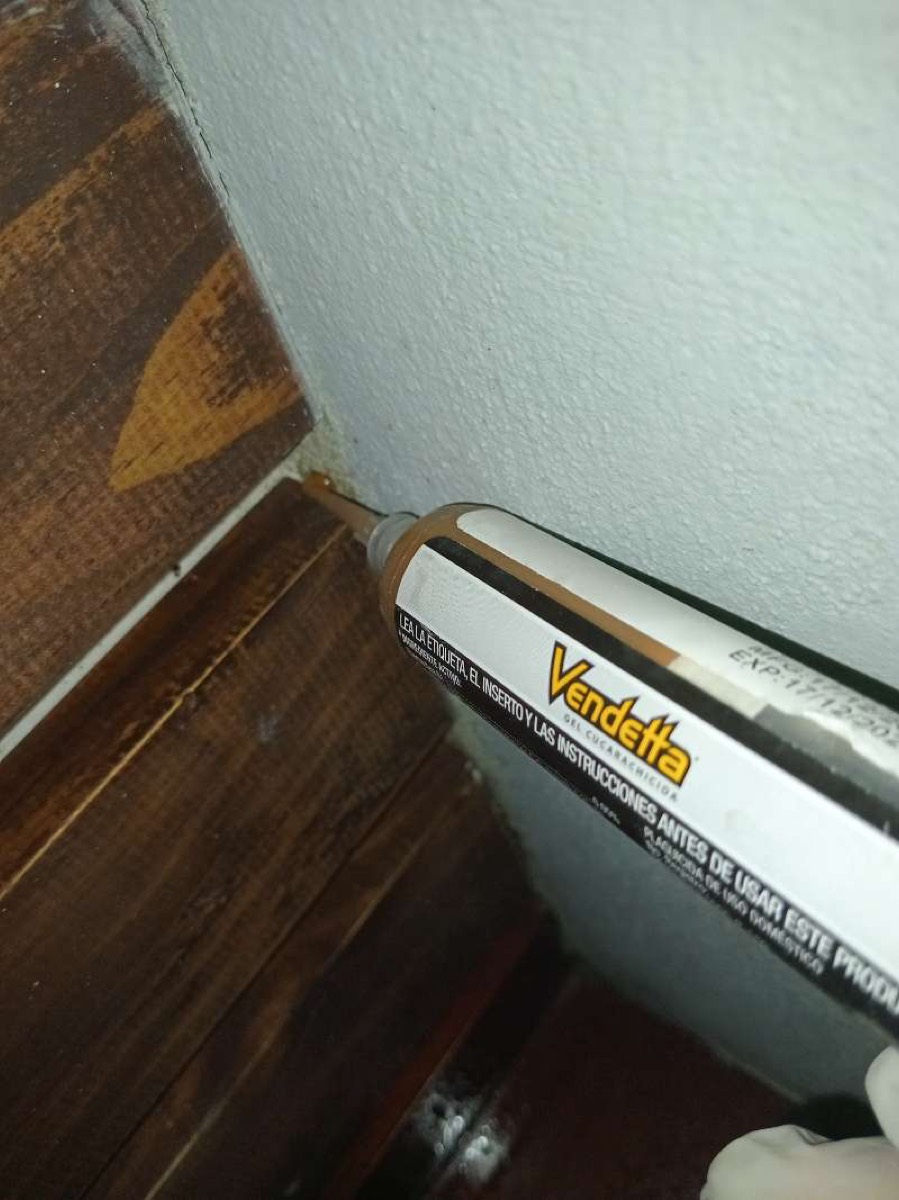
What not to do
- Do not seal with anything gnawable if rodents are the issue: foam alone, plastic, rubber or cardboard are through in one night.
- Do not block vents. It is the most expensive mistake: you trade a pest problem for damp and mould.
- Do not seal an active entry with animals inside. If rodents or bats are living in the structure, they have to be removed first; otherwise they are trapped and die inside.
- Do not expect an immediate result against an already established population. Sealing stops more from coming in; those already inside need treating.
First control what is already inside, then seal. The other way round, all you achieve is locking the pest in with you — and in the case of rodents, dead inside the wall, which is a considerably worse problem than the original one.
Still getting pests inside?
Fumigation and pest control across the Greater Metropolitan Area. Call us or WhatsApp.