
Spiders
Spider bite in Costa Rica: how to tell if it was a spider and when to worry
- Most of the lesions people call spider bites are from bed bugs, fleas, mosquitoes or a skin infection. The spider was almost never seen.
- A real spider bite is a single lesion, sometimes with two tiny dots, with local swelling and pain; it doesn't come in groups.
- In Costa Rica the ones that matter are the black widow and the recluse; the banana spider and tarantulas rarely cause problems in homes.
- Warning signs: pain that travels up the limb, cramps, fever or a lesion that turns dark. With any of them, go to the emergency room.
- Reducing the spider population at home: seal, clean out storage areas and fumigate; up to 100 m² costs ₡39,900 including VAT.
Most spider bites are not from spiders
If you woke up with a welt and never saw the spider, it most likely was not a spider. In doctors' offices, the vast majority of lesions that arrive with that home diagnosis turn out to be something else: bites from bed bugs, fleas or mosquitoes, or a skin infection such as a boil or a staph cellulitis that started in a pore or a scratch. Spiders don't seek out people, don't feed on blood, and only bite when they get trapped against the skin: inside a shoe, under the sheet, when you squeeze a box or put on a shirt that was on the floor.
It matters because the treatment is different: a skin infection needs antibiotics, and bed bug bites will keep coming every night even if you kill every spider.
What a real spider bite looks like
A spider bite has these characteristics:
- A single lesion. The spider bites once and leaves. If you have three or five welts, it was not a spider.
- Two tiny dots very close together in the center, from the two fangs, sometimes visible and sometimes not.
- Local swelling and redness, 1 to 3 centimeters, with pain rather than itching. With many house spiders it feels like a needle prick that then burns for an hour or two.
- It is on the hands, feet, ankles or waist, that is, at the points of contact with clothes, shoes and stored objects.
- There was a context: you were cleaning the storage room, moving firewood, put on a shoe that had been stored away, took a box out of the garage.
Spiders in Costa Rica that do matter
Black widow (Latrodectus). It gives the most serious bite in the country. Shiny black, with a round abdomen and a red hourglass-shaped mark on the underside. It lives in water meters, stacks of blocks, behind tanks and in little-used storage rooms. Its venom is neurotoxic: the bite itself hurts little, but between 30 minutes and 2 hours later severe muscle cramps, abdominal or back pain, sweating and sometimes nausea appear. It requires hospital care, especially in children and older adults; with treatment it resolves.
Recluse or violin spider (Loxosceles). Light brown, with long, thin legs and a dark violin-shaped mark on the front of the body. It is uncommon in Costa Rica compared with other countries in the region, but it exists. Its venom destroys tissue: the lesion burns, turns purple in the center, forms a blister and over the following days can darken and sink in. If a "bite" turns black in the center, a doctor should see it even if there are no other symptoms.
Banana spider (Phoneutria). Large, hairy, aggressive if cornered, and with potent venom. It lives in bunches of bananas and plantains and in dense vegetation, so it shows up in rural areas and on farms. It is rare inside homes in the GAM. Its bite requires medical attention.
Tarantulas and pica caballo. Their size is frightening, but they rarely bite and the effect is mild: local pain like a wasp sting. They live in holes in the ground and in gardens, not inside the house.
The spiders you see every day in the corners of the ceiling, the long-legged ones that shake in their webs, or the fast brown ones that run across the floor at night, are harmless to people and help control mosquitoes and small cockroaches.
Warning signs: when to go to the emergency room
For most spider bites it is enough to wash, apply cold and watch. Go to the emergency room or call 9-1-1 if any of these signs appear:
- Pain that travels up the arm or leg, beyond the bite site.
- Cramps or stiffness in the abdomen, back or legs, heavy sweating, nausea.
- Fever, chills or feeling generally unwell in the first few hours.
- A lesion that darkens, turns purple or black in the center, or develops a large blister.
- Difficulty breathing, swelling of the face or lips, hives all over the body (an allergic reaction, which can happen with any bite).
- The person bitten is a young child, an older adult or someone with underlying conditions, and a black widow or recluse is suspected.
What to do about the bite at home
Wash with soap and water for a couple of minutes. Apply cold with a cloth or a wrapped ice pack, 10 minutes every hour, to reduce swelling and pain. Keep the limb still and slightly raised. For pain, over-the-counter acetaminophen or ibuprofen works. Mark the edge of the redness and the time with a pen to see whether it spreads.
What not to do: cut the wound, suck it, apply a tourniquet, apply heat, or rub on home remedies such as garlic, onion or ground coffee. None of that removes venom, and all of it increases the risk of infection.
Where spiders live inside the house
Spiders look for three things: darkness, stillness and food. That is why the typical spots are the storage room and the laundry room, cardboard boxes stored for months, shoes that aren't worn, clothes on the floor or hanging untouched, behind pictures and mirrors, the back of furniture placed against the wall, the corners of the ceiling, the pile of firewood or boards in the yard, the water meter and the electrical box. The main way in is the gap under the doors.
And food: if there are many spiders, there are many insects. Reducing mosquitoes, flies and cockroaches reduces spiders.
How to reduce the population: seal, clean and fumigate
Seal. A door sweep under the doors, silicone in window frames and where pipes pass through, screens in good condition. It is the longest-lasting measure, and we explain it step by step in how to seal your home against pests.
Clean and declutter. Take cardboard boxes off the floor and switch to plastic bins with lids, pull furniture away from the wall once a month to sweep behind it, remove webs with a broom (spiders without a web leave), shake out stored clothes and shoes before using them, and move firewood away from the house wall.
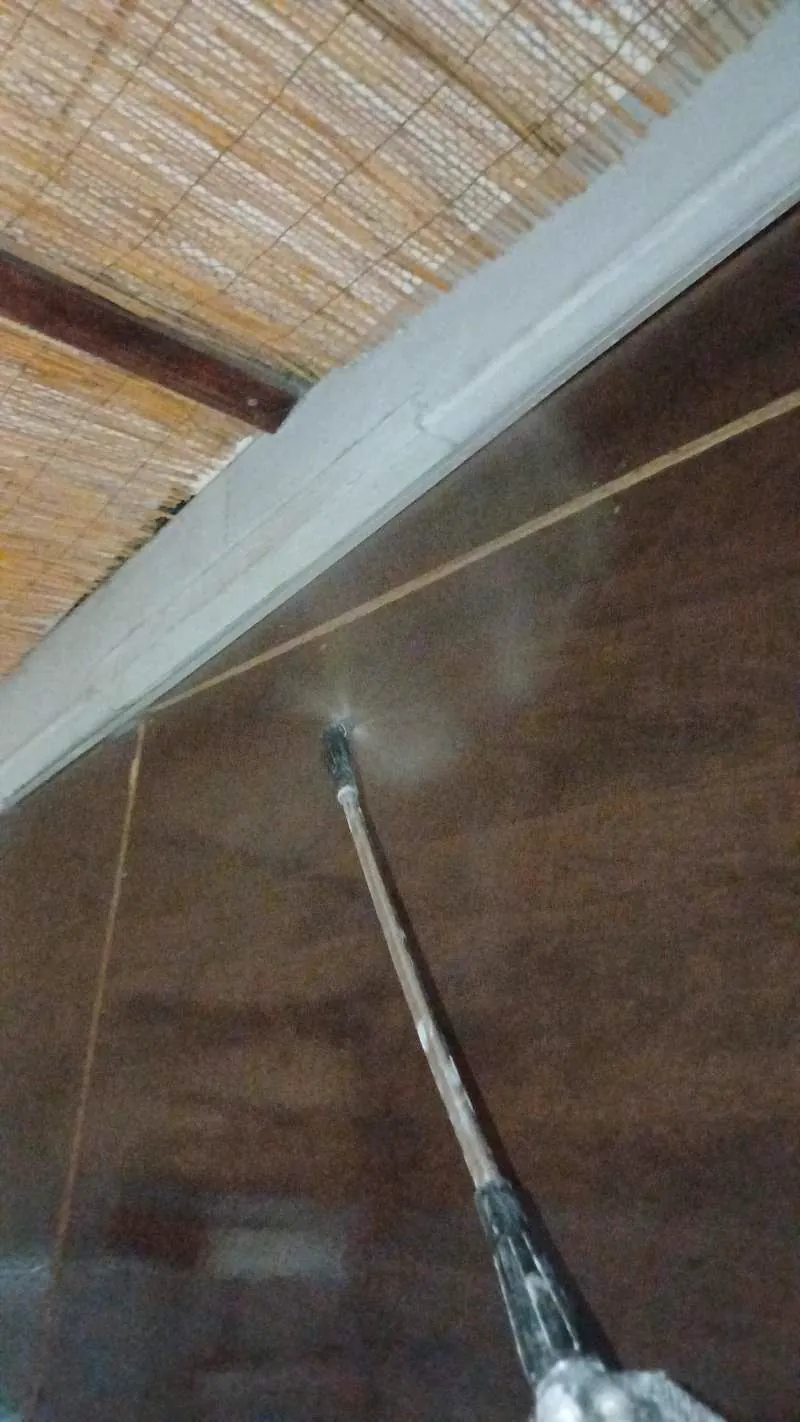
Fumigate. Professional treatment applies residual insecticide in corners, baseboards, behind furniture, storage rooms, the ceiling and the outside perimeter. Spiders that cross the treated surface die over the following days, and so do the insects they feed on. It is worth it when you have already seen a black widow, there are young children, or spiders show up in the bed or in clothes. The same applies to scorpions: they share hiding places, and the same treatment works for both.
How much it costs
House or apartment up to 100 m², ₡39,900; up to 200 m², ₡49,900; over 200 m², ₡59,900. VAT included, with no travel fee in the GAM. You can go back in one hour after the application. If you have not fumigated in the last 6 months, it takes two applications and the second one is charged; the 30-day check only applies once the plan is complete. Date confirmed by WhatsApp in less than an hour. Full details on spider control.
Frequently asked questions
How do I know if what I have is a spider bite?
If it is a single lesion, it hurts more than it itches, it is on a hand or foot, and it happened right after you reached into something stored away or put on clothes from the floor, it may be a spider. If there are several welts in a group or in a line and they itch, it almost certainly is not.
Are there deadly spiders in Costa Rica?
The black widow is present in the country and its venom can cause a serious illness, especially in children and older adults, but deaths are extremely rare and hospitals have treatment. The other house spiders are not life-threatening.
What do I do if a spider bit me and I have it?
Keep it in a jar, even if it is crushed, and bring it if you go to a health center. Identifying the species changes the treatment. If you don't have it, a photo helps.
Does fumigation get rid of spiders?
It significantly reduces the population and eliminates their food, which is other insects. Spiders walk less on treated surfaces, and the ones in crevices and storage rooms are reached by the application. Sealing cracks keeps them from coming back in.