Kitchen · Bathroom
Cockroach Prevention in the Kitchen and Bathroom

Kitchens and bathrooms concentrate the only things a cockroach needs: water, residue and warm crevices. It is no accident that almost every household infestation starts in one of the two. Effective prevention is not about cleaning more, but about cleaning in the right places and closing off access at night, which is when they come out. Here is what actually moves the needle.
- The fridge motor and the microwave housing are the most sought-after spots: constant warmth and darkness.
- Dirty dishes left overnight are eight hours of available food.
- Gaps under 3 mm are shelter: sealing matters as much as cleaning.
- Seeing a cockroach in daylight means the population has outgrown its space.
- Cardboard is both shelter and food: do not store boxes in the kitchen.
The ten hiding places in a kitchen
- The fridge motor, low at the back. Permanent warmth plus moisture from the condensate tray.
- Under and behind the cooker, with built-up grease.
- The underside of the microwave, where the motor vents.
- The gap between unit and wall, at skirting height.
- Drawer hinges and runners.
- The unit under the sink, especially the hole where the pipes come through.
- Behind lifted cabinet trim.
- Inside appliances that are not in use: toaster, stored blender, rice cooker.
- Cardboard boxes kept in the larder.
- The worktop-to-wall joint where the silicone has lifted.
Why an appliance is an incubator
Cockroaches seek warmth to breed faster: the higher the temperature, the shorter the cycle. A fridge motor runs most of the day, is dark, enclosed and often has condensation water nearby. It is, quite literally, the best property in the house.
This has a practical consequence that surprises people: an immaculate kitchen can hold an established population living in the fridge motor, because neither cleaning nor cloth ever reaches it. That is why, faced with an infestation, a technician looks behind the appliances first and not at the worktop.
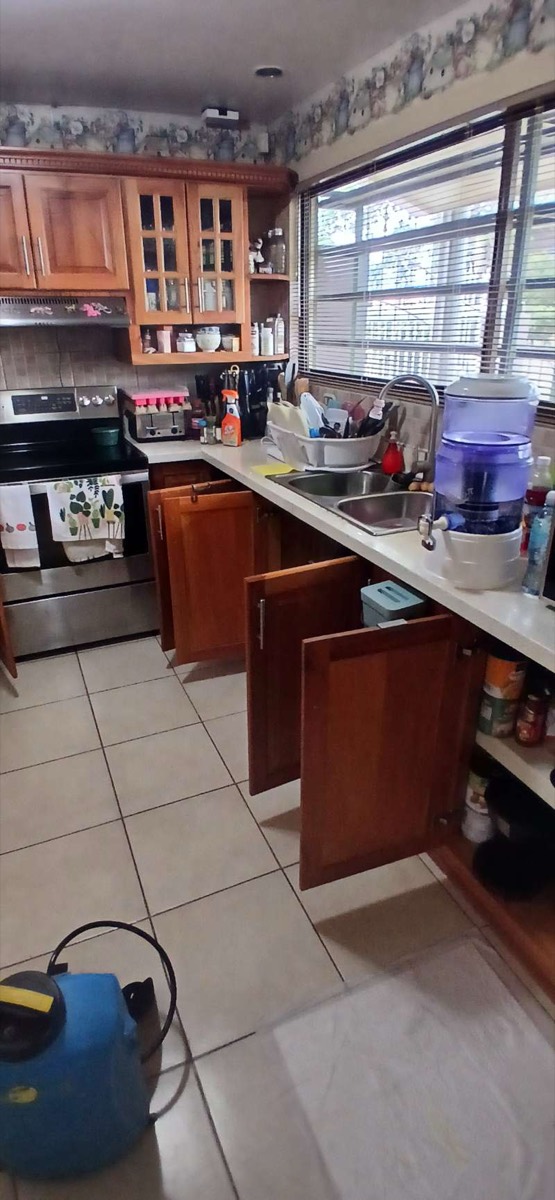
The nightly shutdown routine
Cockroaches come out at night. If at ten in the evening there is no accessible water or food, the resource simply is not there.
- No dirty dishes in the sink. If you are not going to wash them, leave them in soapy water: that makes them useless as food.
- Dry the sink and wring out the sponge; hang it up.
- Lift the pet food. A bowl of kibble left all night is the most constant source there is.
- Sweep or vacuum around the table and under the cooker.
- Close the bin and, if possible, take it out.
- No fruit left out and no bread on the table.
It takes five minutes. In prevention terms it beats an hour of cleaning on Saturday.
The bathroom: water, cardboard and traps
- Dry trap. An unused bathroom lets American cockroaches up from the drain. A weekly glass of water solves it; see moisture in bathrooms and sinks.
- Paper and cardboard: the spare roll on the floor, the toothpaste box. Both food and shelter.
- The basin unit: check it with a torch, including the underside of the trap.
- Brushes and soap: store them in a closed drawer, not in an open cup.
- Damp towels: let them dry outside the bathroom.
How to tell there is already a colony
- Seeing them in daylight. The clearest sign: shelter space has filled up.
- Black specks like pepper clustered in drawer corners, on hinges or behind skirting: droppings.
- Oothecae: brown capsules about 8 mm, stuck or loose in crevices.
- Smell: sweetish and rancid at once, noticeable when opening a closed unit.
- Nymphs: small pale cockroaches. They mean active breeding inside the house, not visitors from outside.
With two or more of these signs, prevention is no longer enough. See how to diagnose a cockroach problem.
Do not store cardboard boxes in the kitchen or larder, and break down shopping boxes the same day. Corrugated cardboard has channels the exact size of a cockroach, holds moisture, and its starch glue serves as food. It is also the most common vehicle for an infestation to travel from a warehouse into your home.
Cockroaches in the kitchen or bathroom?
Fumigation and pest control across the Greater Metropolitan Area, 24/7. Call us or message us on WhatsApp.