Diagnosis · Cockroaches
How to Diagnose a Cockroach Problem at Home
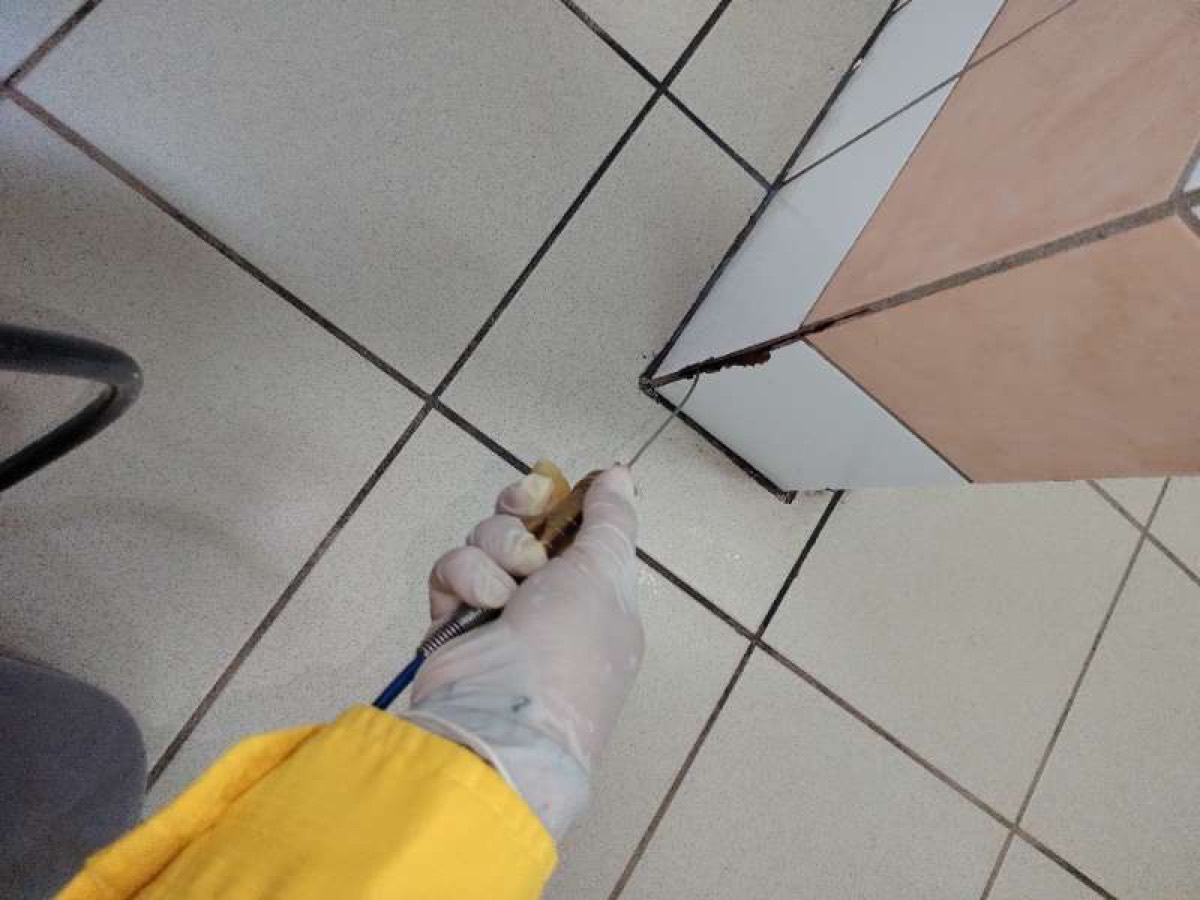
Cockroaches are almost always detected by traces rather than sightings: by the time you see one walking in daylight, the population has been there a while. Diagnosing properly has two parts and both matter: confirming there are cockroaches, and knowing which one. German and American cockroaches live in different places, enter by different routes and are controlled differently; treating them the same is the most common reason a treatment fails.
- Droppings in drawer corners and on hinges are the earliest and most reliable sign.
- The German lives inside the kitchen and breeds there; the American comes in from drains and damp areas.
- Seeing one in daylight means the available shelter has filled up.
- The German female carries her ootheca until it is nearly hatching: that is why populations grow so fast.
- The torch test in the small hours measures the real size of the problem in three minutes.
The five signs
- Droppings. In the German, black specks like peppercorns or ink marks, clustered in drawer corners, on hinges and behind skirting. In the American, larger granules with marked ends.
- Oothecae. Brown capsules about 8 mm, ridged. Finding them confirms breeding inside the house.
- Smell. Sweetish and rancid, most noticeable when opening a unit that has been closed. At high density it is noticeable on entering the kitchen.
- Smear marks: irregular dark marks on horizontal surfaces they always cross.
- Seeing them in daylight. They are nocturnal: if they are out in the light, shelter is saturated. That sign marks an established infestation, not a visitor.
German or American: the diagnosis that changes everything
This is the most valuable distinction you can make.
- German (Blattella germanica): small, 1–1.5 cm, light brown, with two dark parallel stripes behind the head. It lives indoors, in the kitchen, near warmth. It does not usually fly. This is the one that produces large infestations and the hardest to clear.
- American (Periplaneta americana): large, 3–4 cm, reddish brown. It lives outdoors — drains, inspection chambers, garden — and comes in as a visitor. It flies or glides. You see few at a time.
Practical consequence: if they are American, the work is in drains, traps and perimeter sealing; seeing one does not mean your kitchen is infested. If they are German, there is a colony indoors and gel treatment in cracks is required: here aerosol is counterproductive because it scatters them into other rooms.


The torch test
Three minutes that tell you the real size of the problem.
- Go into the kitchen between 2 and 4 a.m. without switching on the main light.
- Shine a torch at the floor, the skirting and under the units.
- Count what you see moving in the first ten seconds.
Interpretation: none on three separate nights is a good sign. One to three is a low, treatable population. More than ten, or small pale nymphs, indicates an established population with active breeding.
Alternative without losing sleep: place monitoring glue traps in the corners — under the sink, behind the fridge, in the bottom drawer — and check them after three days. As well as counting, they tell you where the focus is.
What to do about oothecae
The ootheca is a capsule holding dozens of eggs and it is remarkably resistant: contact insecticides do not penetrate it. That explains the “they went away and came back three weeks later” pattern: they did not come back, they hatched.
- If you find one, remove it physically. Vacuuming is the best way; take the bag out of the house afterwards.
- The German carries her ootheca attached to her body until nearly hatching, which protects the eggs and explains how fast they multiply.
- The American deposits it in crevices, sometimes glued with saliva. Look under the sink unit and behind the skirting.
- This is why treatment is repeated: a second visit two or three weeks later covers what hatched after the first. Without that repeat the job is only half done.
When to call
- You see cockroaches in daylight.
- You find nymphs: there is breeding indoors.
- You find oothecae or clustered droppings.
- They appear in more than one room: they have already spread.
- You have spent a month on proper hygiene and sealing with no reduction.
- It is a food-handling business: there is also a legal obligation involved.
Before the visit it helps to have ready: what size they are, which rooms, what time you see them and since when. That makes on-site diagnosis faster and more accurate.
This is the most expensive mistake. Aerosol repels and scatters: a colony concentrated in the kitchen spreads into bedrooms and bathrooms, and the problem goes from one room to the whole house. With German cockroaches the correct treatment is gel in cracks, which they consume and carry.
Already found cockroaches at home?
Professional treatment is more effective and safer. Call us for advice or a visit anywhere in the Greater Metropolitan Area.