
Diagnosis · Cockroaches
Cockroach species in Costa Rica: which one is in your home and how to get rid of it
- Four types show up in Costa Rican homes: German, American, Australian and brown-banded. The Oriental cockroach is almost nonexistent here.
- The small brown one in the kitchen (German) is the only one that signals a real infestation inside the house.
- The giant one that flies (American) comes from the sewer or the drain: the problem is outside, not in your kitchen.
- Each type is treated differently: gel bait for the German, drains and perimeter for the American, outdoor areas for the Australian.
In Costa Rica there are four types of cockroaches that regularly get into homes: the German (the small brown one in the kitchen), the American (the big reddish one that comes out of the drain and flies), the Australian (similar to the American, with yellow bands, more of a garden roach) and the brown-banded (small, found in bedrooms and appliances, less common). The Oriental cockroach, which appears in every U.S. guide, is practically never found in the country.
Knowing which one you have matters because the treatment changes completely. A German cockroach in the kitchen is a colony living in your cabinets. An American cockroach in the bathroom is an animal that came in through the drain trap, and you need to block its way in.
German cockroach (Blattella germanica): the kitchen one
How to recognize it. It's 1.3 to 1.6 cm, light brown, with two dark parallel stripes behind the head. The nymphs are darker and wingless. The female carries a brown egg capsule (ootheca), the size of a grain of rice, with 30 to 40 eggs inside. It has wings but almost never flies: it runs.
Where it lives. Indoors, always. Hinges and corners of kitchen cabinets, the refrigerator motor, behind the microwave, under the sink, in the bathroom next to the hot water pipe. If you turn on the kitchen light at night and see several small ones running, it's this one.
What seeing it means. That there's an established colony in the house. The full cycle takes about two months in the climate of the Greater Metropolitan Area, so a pair that arrived in a cardboard box turns into hundreds within a few months. More signs in how to diagnose cockroaches from their traces.
How to get rid of it. Gel bait in small dots inside the cabinets, never spray: spray scatters them to other rooms and doesn't touch the oothecae. It takes two or three applications because eggs keep hatching weeks later. Details on the German cockroach page.
American cockroach (Periplaneta americana): the giant from the drain
How to recognize it. The big one: 3.5 to 4 cm, shiny reddish brown, with a yellowish band around the head plate. Long wings that cover its whole body. It flies, especially on hot nights before rain, and it's the one people call the flying cockroach.
Where it lives. Outside and below: sewers, utility boxes, septic tanks, drain traps, the space between the floor and the pipes, damp ceilings. It gets into the house through the bathroom drain, the laundry sink grate or under the back door when it rains hard and the sewer fills up.
What seeing it means. Almost never that there's a colony in your kitchen. It means there's a drain without a trap, a grate without mesh or an open utility box nearby. Seeing one or two a week in the bathroom is typical of older homes in the Greater Metropolitan Area with concrete pipes. If you see a lot, check the attic and the sewer access box in the yard.
How to get rid of it. A residual in drains, utility boxes and the outside perimeter, plus grates with covers and drain traps with water in them. Gel is less useful because they don't live inside. There's a complete article on the giant flying cockroach.
Australian cockroach (Periplaneta australasiae): the garden one with yellow bands
How to recognize it. It looks a lot like the American, but it's a bit shorter (3 to 3.5 cm) and has two clear markings: a yellow stripe on the front edge of each wing, near the shoulder, and a more pronounced yellow pattern on the head plate. If the American is a uniform reddish color, the Australian looks "painted."
Where it lives. Outdoors: leaf litter, flowerpots, logs, firewood, the tall grass behind the house, under water tanks. It wanders in through open windows and patio doors, attracted by the light.
What seeing it means. That your garden or your neighbor's has a lot of damp plant material. It sometimes settles in garages and laundry rooms; an infestation inside the house is rare.
How to get rid of it. Clean up the garden (leaf litter, broken flowerpots, firewood against the wall), a residual on the perimeter and the base of the exterior walls, and screens on windows.
Brown-banded cockroach (Supella longipalpa): the one in bedrooms and appliances
How to recognize it. Small like the German (1.1 to 1.4 cm) but without the two stripes on the head. It has two light bands running across its body from side to side, hence the name. The male flies when disturbed. It's the one people mistake for a German cockroach "that showed up in the bedroom."
Where it lives. Unlike the German, it doesn't need moisture: it prefers dry, warm, high places. Behind picture frames, inside closets, on top of furniture, inside TVs, routers and chargers. It glues its oothecae under furniture and inside appliances, which is why it travels easily during a move.
What seeing it means. That the infestation is spread throughout the house, not just in the kitchen. It's less common than the German in Costa Rica, but it shows up in apartments and offices.
How to get rid of it. Gel bait in the high, dry places where the German isn't: behind picture frames, upper corners of closets, living room furniture. Vacuum the oothecae stuck under furniture. If only the kitchen is treated, it comes back.
Comparison table: which one is yours
One is missing that appears in every foreign guide: the Oriental cockroach (Blatta orientalis), almost black, 2.5 cm, from cold climates. In Costa Rica it's rarely reported and isn't a household pest. If you saw a big black cockroach, it was almost certainly a dark American cockroach or a garden species that wandered in.
| Type | Size | Color | Where you see it | What it means |
|---|---|---|---|---|
| German | 1.3 to 1.6 cm | Light brown, 2 stripes on the head | Kitchen, cabinets, bathroom | Colony inside: treat now |
| American | 3.5 to 4 cm | Reddish brown, flies | Bathroom, drain, yard | Comes from outside: block the way in |
| Australian | 3 to 3.5 cm | Reddish with yellow bands | Garden, garage, laundry area | Damp garden: clean up outside |
| Brown-banded | 1.1 to 1.4 cm | Brown with 2 cross bands | Bedrooms, closets, appliances | Infestation spread out: treat the whole house |
| Oriental | 2.5 cm | Almost black | Almost never in CR | Probably a different one |
A quick trick: if it's under 2 cm and you see it in groups, it's German or brown-banded and the problem is inside. If it's over 3 cm and you see it alone, it's American or Australian and the problem is in the drain or the yard.
What works for each one and what doesn't
Supermarket sprays kill the one you see and scatter the rest. With German and brown-banded cockroaches the colony spreads to rooms where it wasn't before; with American and Australian cockroaches they solve nothing because those live outside. What the cockroach poison page explains applies to all of them: bait they eat and carry back to their hiding place is what breaks the cycle.
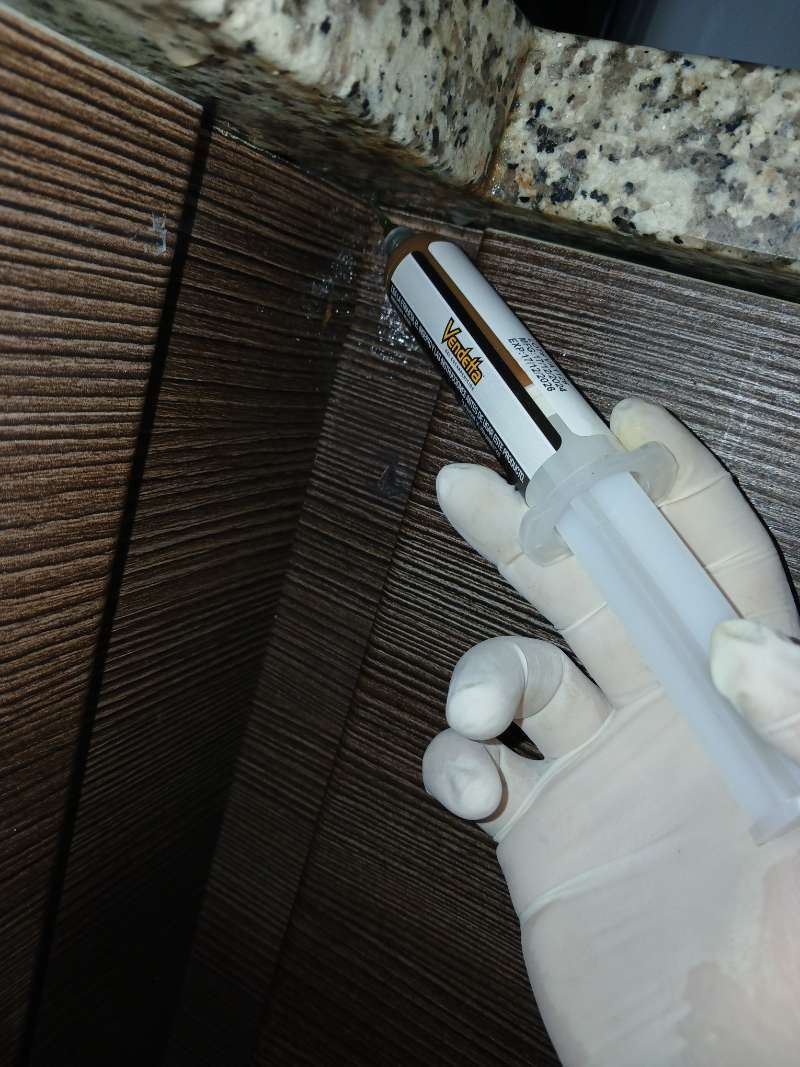
Professional treatment combines both: gel in the indoor areas where German and brown-banded cockroaches live, and a residual in drains, utility boxes, the ceiling and the perimeter for the ones that come in from outside. With a follow-up visit for the oothecae that hatch later. More in cockroach control.
What it costs
House or apartment up to 100 m²: ₡39,900, VAT included, with no travel charge in the Greater Metropolitan Area. Up to 200 m² ₡49,900 and over 200 m² ₡59,900. You can go back in one hour after the treatment. If you have not fumigated in the last 6 months, it takes two applications and the second one is charged; the 30-day check only applies once the plan is complete. Date confirmed in under an hour on WhatsApp. If you're not sure which one you have, send us a photo on WhatsApp and we'll tell you.
Frequently asked questions
Is the big flying cockroach the same as the small one in the kitchen?
No. The big one (3.5 to 4 cm, reddish) is the American and lives in drains and sewers; the small one (1.5 cm, light brown with two stripes) is the German and lives inside the cabinets. They're different species with different treatments.
If I see a single cockroach, do I already have an infestation?
It depends on the type. A single American cockroach in the bathroom almost always came in through the drain. A single German cockroach in the kitchen means there are more hiding: it's a species that lives in groups and you only see a fraction.
Are brown-banded cockroaches only in the kitchen?
No, and that's the problem. They prefer dry, high places: closets, behind picture frames, TVs and routers. If only the kitchen is treated, they reappear in the bedrooms.
Are there Oriental cockroaches in Costa Rica?
Practically none. They prefer cold climates and are rarely reported in the country. A big black cockroach in a Costa Rican home is almost always a dark American cockroach or a garden species.