
Cockroach poison: what really works, what doesn't, and when to call
✓ Pest control company authorized by the Ministry of Health · ✓ Licensed chemical oversight · ✓ Nationwide, 24 hours
Cockroach fumigation from ₡39,900House or apartment up to 100 m², VAT included · Authorized by the Ministry of Health · Available 24 hours, every day
- Covers cockroaches, ants, fleas, spiders and mosquitoes in the same visit.
- 30-day check once the plan is complete, with conditions
- Back inside one hour later
- Date confirmed in less than an hour over WhatsApp
If you are looking for cockroach poison, it's because you have already seen them: one running across the counter when you turn on the light, several small ones coming out of the microwave hinge, or a big one in the bathroom at midnight. At the supermarket you will find sprays, gels, powders and traps, and online people will recommend baking soda and bay leaves. This page tells you what each one really does, which one to buy depending on your case, and at what point buying more product is just throwing money away.
- Spray kills the ones you see and scatters the ones you don't. It doesn't touch the eggs.
- Gel bait in cracks is what kills the whole colony, including the ones that never come out.
- If they are small and in the kitchen, it's the German cockroach: there, spray makes the problem worse.
- Professional fumigation for a house or apartment from ₡39,900, VAT included.
Contents
- What types of cockroach poison are there
- Why spray scatters the colony and doesn't kill the eggs
- Gel bait: what professionals use and why
- Boric acid, powders and glue traps
- Home remedies: baking soda, bay leaves and vinegar
- Small cockroach or big cockroach: not the same problem
- Where to apply the poison so it works
- The seven mistakes that make treatment fail
- Do it yourself or call a professional?
- What EcoPlagas does on a cockroach visit
- Frequently asked questions
What types of cockroach poison are there
Everything sold as cockroach killer in Costa Rica falls into five groups. What matters is not the brand but how the product reaches the insect: that decides whether it kills one cockroach or kills the colony.
- Spray (aerosol): contact pyrethroids. It kills what it touches and repels what it doesn't.
- Gel bait: insecticide with a food attractant. The cockroach eats it, goes back to its hiding place and dies there; the others get contaminated through its droppings and its body.
- Powder: boric acid or diatomaceous earth. It works by ingestion and by abrasion.
- Glue traps: they don't poison, they catch. They are useful for finding out where the roaches are, not for getting rid of them.
- Home remedies: baking soda with sugar, bay leaves, vinegar. They have their own section further down.
The rule that sorts out everything else: for every ten cockroaches in a kitchen, you see one or two. The other eight are in the refrigerator motor, behind the baseboard or in the cabinet hinge. A product that only reaches the ones you see tackles 20% of the problem.
Why spray scatters the colony and doesn't kill the eggs
It's the first thing everyone buys and the thing that does the most damage when the problem is in the kitchen. It is good for killing a cockroach that just showed up. As a treatment for an infestation it fails for three reasons.
It repels more than it kills. Pyrethroids irritate the insect. When you spray the cabinet under the sink, the ones that didn't get a lethal dose flee the smell and move: to the next room, to the upper cabinet, to the neighbor's apartment. Where you had one hot spot, you now have three.
It doesn't penetrate the egg case. The egg case, or ootheca, is the capsule of eggs, 30 to 40 in the German cockroach, and its shell is impermeable to insecticide. You can soak it in spray and the nymphs still hatch two or three weeks later. That's why people say "I fumigated and three weeks later they came back": they didn't come back, they hatched.
It cancels out the bait. If you spray and then put out gel, the cockroach won't go near it because the area smells of repellent. If you are going to use gel, don't use spray in the same kitchen. And there is a health point: the spray lands on the surface where you prepare food and your family breathes it in.
Gel bait: what professionals use and why
When an EcoPlagas technician treats a kitchen, what they carry in hand is not a spray pump: it's a syringe or a gel gun. Cockroach gel bait solves all three problems with spray.
- It doesn't repel, it attracts. The cockroach seeks it out because it smells like food, eats it where it already walks and goes back to its hiding place.
- Cascade effect. It dies inside the shelter. The others, including newly hatched nymphs, feed on its droppings and its body and get the dose without ever touching the gel.
- It works for weeks. A well-placed dot stays active for two to four weeks and reaches the nymphs as they hatch from the egg cases.
It isn't instant. During the first 48 to 72 hours you may see more cockroaches, because they come out to eat the bait and the poisoned ones walk around sluggish and in plain sight. That is a sign it's working. The sharp drop shows up between day 4 and day 10.
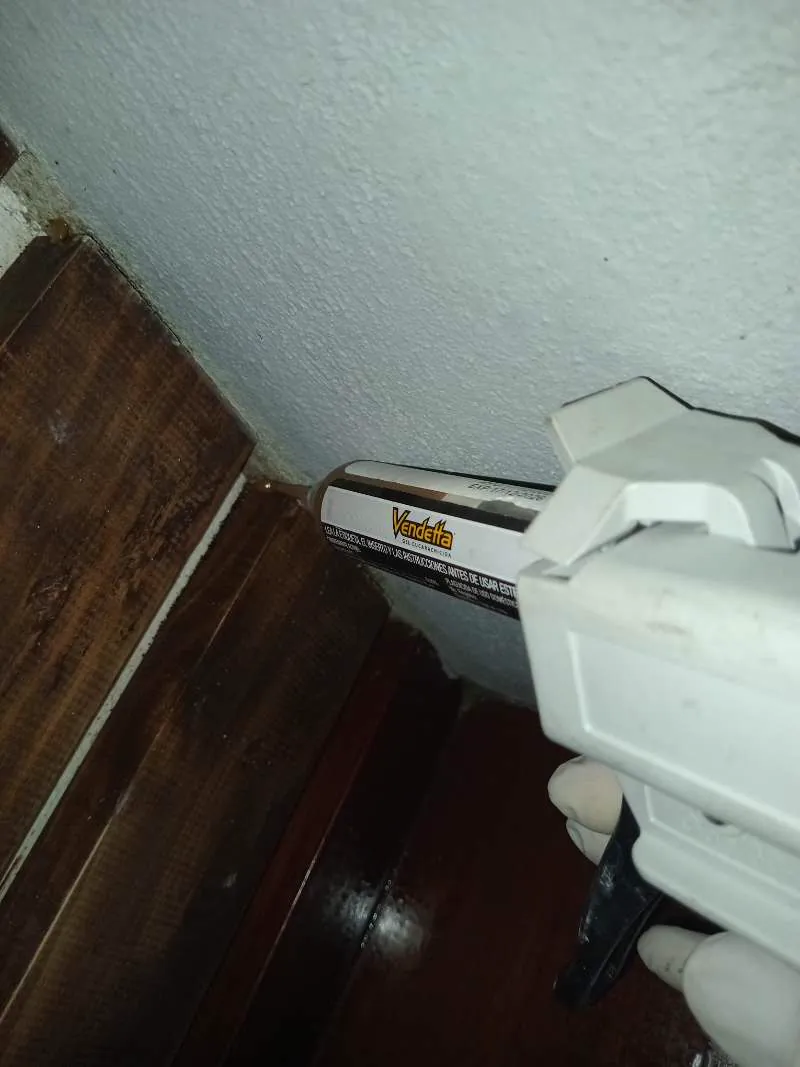
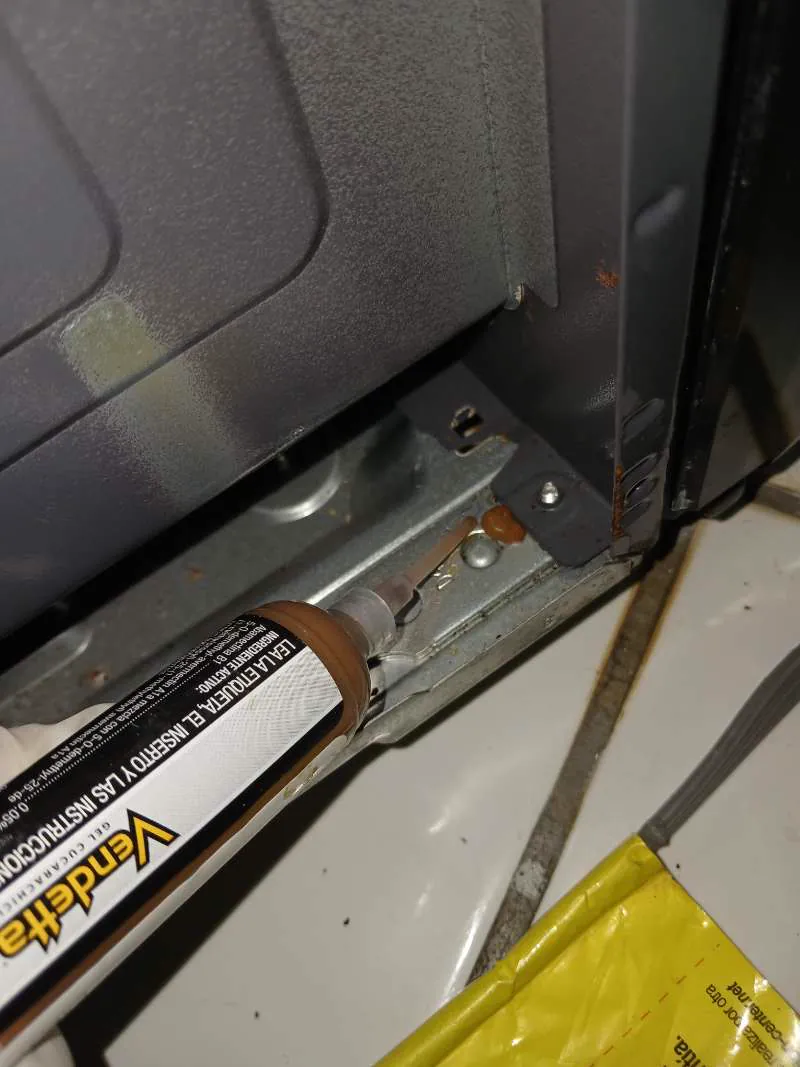
This is how gel is applied on a real job: dots the size of a lentil, inside the cracks, never on an open surface.

Boric acid, powders and glue traps
Boric acid is the oldest cockroach poison that still works: the cockroach picks it up as it walks and swallows it when it cleans its antennae, and it doesn't develop resistance. Its problems are practical. It has to be applied in a very thin layer, because if it forms a little pile they walk around it; moisture makes it useless, and in a Costa Rican kitchen that's all the time; and it ends up in areas with food, a bad idea with children and pets. It works as a complement in dry, closed spaces: behind the refrigerator, inside the baseboard, in the laundry area. Diatomaceous earth works the same way, is less toxic, slower, and is also ruined when it gets wet.
Glue traps are not poison, they are diagnostics. One under the sink, another next to the refrigerator and another behind the toilet will tell you in three nights where the hot spot is and what species you have, and with that you know where to put the gel. As an elimination method they fall short: the colony produces more than they catch.
Home remedies: baking soda, bay leaves and vinegar
- Baking soda with sugar. It kills a cockroach here and there if the mix stays dry and is well made, but it is far less effective than boric acid in the same recipe, and it competes with all the real food in the kitchen. If you are going to make a homemade mix, swap the baking soda for boric acid from the pharmacy.
- Bay leaves. They repel slightly while they are fresh. They kill nothing, and a hungry cockroach walks right over them.
- Vinegar. It cleans up the grease trail that attracts them, which helps with prevention. As a poison it does nothing.
- Coffee, cucumber, onion, garlic. No evidence.
The "homemade" approach that does work is not a poison: it's taking away their food, water and hiding places. The blog has a guide on how to seal food and trash and one on preventing cockroaches in the kitchen and bathroom.
Small cockroach or big cockroach: not the same problem
The German cockroach is the small one: 1 to 1.5 cm, light brown, with two dark stripes behind the head. It lives indoors, in the kitchen and bathroom, close to the warmth of appliances, and it multiplies faster than any other: one female leaves more than 200 offspring. Spray is its worst enemy and gel bait is the answer. It has its own guide: how to get rid of German cockroaches.
The American cockroach is the big one: 3 to 5 cm, reddish brown, sometimes flies clumsily. It lives in sewers, inspection boxes and drains, and gets in through the bathroom or laundry drain on rainy nights. Gel helps less with this one because it doesn't live indoors: what works is treating the drain, installing grates with covers and applying a residual barrier treatment outside. If you see a big one every so often, you don't have an infestation: you have an open entry point.
If you are not sure which one you have, the guide on how to diagnose a cockroach problem sorts it out in five minutes with a flashlight.
Where to apply the poison so it works
Gel doesn't go where you see the cockroaches: it goes where they live and where they walk. Dots the size of a lentil, many of them and spaced apart, not one long line.
- Hinges of the kitchen cabinets, on the inside.
- The joint between the cabinet and the wall and between the baseboard and the floor.
- Behind and under the refrigerator, near the motor: the number one hiding place.
- Microwave, coffee maker, toaster, oven: in the cracks of the casing, never inside the cooking chamber.
- Under the sink and behind the toilet, where the pipe goes into the wall.
- Electrical boxes and light switches near the kitchen.
What not to do: gel on the countertop or on surfaces that get cleaned every day. The cloth will wipe it away.
The seven mistakes that make treatment fail
- Spraying and then putting out gel. The repellent cancels out the bait. Pick one.
- Applying gel in long lines. It dries out faster and the cockroach eats less. Small dots, lots of them.
- Cleaning the gel area with bleach or disinfectant. It contaminates the gel and the cockroach rejects it. Clean around it, not on top.
- Leaving competing food. Crumbs under the toaster, the dog's bowl overnight, a trash can without a lid. If there is better food, the gel loses.
- Expecting results in 24 hours. Gel takes time. If you clean everything on the second day, it never reached the cascade effect.
- Treating only once. The egg cases don't die. Two applications at a minimum.
- Treating only your apartment. In buildings the colony lives in the shared duct. If the neighbor doesn't treat, you keep getting them.
Do it yourself or call a professional?
Do it yourself
- You see a big cockroach every now and then in the bathroom or the laundry sink, especially when it rains. Grates on the drains and you're done.
- You saw one or two small ones for the first time and suspect a box or the grocery bags. A glue trap to confirm and hardware-store gel in the hinges.
- You already had professional treatment and want to maintain it with a dot of gel every two or three months.
This is when a professional makes sense
- When you turn on the light at night you see several at once, or you see them during the day: they no longer fit in their hiding places.
- You find tiny black nymphs, droppings like grains of pepper, or brown capsules in the hinges.
- You have been using hardware-store gel for more than three weeks and the numbers aren't going down.
- It's a food business: you will be asked for a logbook and an authorized product, and one cockroach seen by a customer costs more than the service.
- There are babies or people with asthma in the house: cockroaches are one of the most common household allergens.
If your case is on the second list, check out the cockroach control service and the prices by home size. If it's on the first, buy gel and follow the section on where to apply it.
What EcoPlagas does on a cockroach visit
- Flashlight inspection of the kitchen, bathroom, laundry area and appliances to locate the hot spots and confirm the species.
- Gel bait in cracks and hinges, not spray in the air. The product goes inside the hiding places, not on the surfaces where you cook.
- Residual barrier treatment on baseboards, drains and outside entry points.
- Re-entry one hour after the application is finished.
- Between 70% and 90% of the population dies with the first application. The rest are nymphs that hatch from egg cases no product can penetrate. That's why the visit includes a 30-day check once the plan is complete, with conditions: it's part of the treatment.
House or apartment up to 100 m²: ₡39,900. Up to 200 m²: ₡49,900. Over 200 m²: ₡59,900. VAT included, and the same visit covers cockroaches, ants, fleas, spiders and mosquitoes. Date confirmed in less than an hour over WhatsApp, service nationwide, 24/7. You can message WhatsApp 6030-0045 or call 6073-1000.
Frequently asked questions
- What is the best cockroach poison?
- For an infestation in the kitchen or bathroom, gel bait. It attracts the cockroach, kills it inside its hiding place and contaminates the rest of the colony through a cascade effect. Spray is only good for killing a cockroach you can see; as a treatment it scatters the colony and doesn't touch the eggs. Boric acid is a good complement in dry areas. What decides the result is not the brand but applying the gel in the right cracks and repeating after two or three weeks.
- Does homemade cockroach poison with baking soda and sugar work?
- Very little. The mix can kill a cockroach here and there if it stays dry and is well made, but it competes with all the real food in the kitchen and is far less effective than the same recipe made with boric acid from the pharmacy. Bay leaves and vinegar don't kill cockroaches: bay leaves repel slightly while they are fresh, and vinegar only cleans up the grease trail. The homemade approach that does work is taking away their food, water and hiding places.
- Why do I see more cockroaches after putting out poison?
- It happens for two different reasons. If you used spray, the ones that didn't get a lethal dose flee the smell and show up in rooms where they weren't before: the colony scattered. If you used gel, more come out during the first 48 to 72 hours because they are eating the bait, and the poisoned ones walk around sluggish and in plain sight. In the second case it is a sign that it is working; the sharp drop shows up between day 4 and day 10.
- What poison works on the small cockroaches in the kitchen?
- The small ones, 1 to 1.5 cm long with two dark stripes behind the head, are German cockroaches, the ones that live inside appliances and multiply the fastest. Spray is their worst enemy because it scatters them and doesn't penetrate the egg cases. What works is gel bait in hinges, the refrigerator motor, the microwave and the joint between the cabinet and the wall, with a second application two or three weeks later for the nymphs that hatch.
- Can cockroaches be eliminated for good?
- You can get the house down to zero and keep it that way, but not with a single product applied once. You need to kill the whole colony with gel bait, repeat when the nymphs hatch from the egg cases, close the entry points where new ones get in (drains without grates, cracks, boxes and grocery bags) and take away their food and water at night. In buildings and semi-detached houses you also need to treat the shared duct, because if the neighbor doesn't treat, they keep coming.
- How much does professional cockroach fumigation cost in Costa Rica?
- At EcoPlagas the visit for a house or apartment up to 100 m² costs ₡39,900, up to 200 m² ₡49,900 and over 200 m² ₡59,900, VAT included, and the same visit covers cockroaches, ants, fleas, spiders and mosquitoes. It includes an inspection, gel in cracks and hinges, a residual barrier treatment, re-entry one hour later and a 30-day check once the plan is complete, with conditions. The date is confirmed in less than an hour over WhatsApp, and we serve nationwide, 24/7.