
German cockroach: how to get rid of the small cockroaches in the kitchen
✓ Pest control company authorized by the Ministry of Health · ✓ Licensed chemical oversight · ✓ Nationwide, 24 hours
Cockroach fumigation from ₡39,900House or apartment up to 100 m², VAT included · Authorized by the Ministry of Health · Available 24 hours, every day
- Covers cockroaches, ants, fleas, spiders and mosquitoes in the same visit.
- 30-day check once the plan is complete, with conditions
- Back inside one hour later
- Date confirmed in less than an hour over WhatsApp
If small cockroaches are showing up in your kitchen, light brown, coming out of the microwave hinge or running across the counter when you turn on the light, you have German cockroaches (Blattella germanica). It is the most common urban pest in the country and the one that responds worst to what everyone does first: buy a can of spray. This guide explains how to confirm it, why it showed up, where it is hiding and how to really get rid of it.
- Small, light brown, with two dark stripes behind the head. It doesn't fly. It lives indoors.
- It arrives in used appliances, boxes, grocery bags or from the apartment next door.
- Spray scatters it and doesn't kill the egg cases with 30 to 40 eggs. Gel bait does get rid of it.
- Professional treatment for a house or apartment from ₡39,900, VAT included. If you have not fumigated in the last 6 months, it takes two applications and the second one is charged; the 30-day check only applies once the plan is complete.
Contents
- How to recognize the German cockroach
- Why it showed up in your home
- Where it hides: a map of the kitchen
- Why spray makes it worse
- Egg cases: 30 to 40 eggs no product can penetrate
- The life cycle and why it multiplies so fast
- How it is really treated: gel bait, a flashlight and two or three applications
- How to keep it from coming back
- When the whole building needs treatment
- What EcoPlagas does and how much it costs
- Frequently asked questions
How to recognize the German cockroach
Four signs identify it with no room for error. A flashlight and thirty seconds are enough.
- Size: 1 to 1.5 cm for an adult. It fits in the slot of a hinge.
- Color: light brown, almost golden, with two dark parallel stripes behind the head, on the plate that covers the thorax. That mark is the species' signature.
- It doesn't fly. It has wings but doesn't use them. It runs, and it runs fast toward the nearest crack.
- Tiny black nymphs: the young measure 2 or 3 mm, are almost black with a light band in the middle and look like moving specks. If you see them, the colony is reproducing inside your home.
Other signs: droppings like ground pepper in the corners of cabinets, brown stains on the hinges, light brown capsules 6 to 8 mm long (empty egg cases) and, with a large population, a sweetish, rancid smell when you open the cabinet under the sink.
What is not a German cockroach: the big one, 3 to 5 cm, reddish brown, that shows up in the bathroom when it rains. That is the American cockroach; it lives in the sewer system and is treated differently. The general guide to cockroaches covers both, and the guide on how to diagnose cockroaches shows you how to confirm the species with glue traps.
Why it showed up in your home
The German cockroach almost never walks in from the street. You bring it in without knowing, or it comes from inside the building.
- Used appliances. A secondhand microwave, refrigerator or coffee maker that came with egg cases inside the casing. It is the number one cause in new homes.
- Cardboard boxes. Corrugated cardboard is its favorite place to lay egg cases. Moving boxes, produce boxes and online order boxes go straight into the kitchen.
- Grocery bags and packaging. One egg stuck to a bag of rice or an egg carton is enough.
- Moves. They come in furniture, in stereo equipment, in books.
- Neighboring apartments and businesses. In buildings they travel through pipe ducts and cable openings. If the neighbor has them and doesn't treat, you get them.
- Work or a restaurant. An egg case in a backpack, a lunch box or a purse.
This changes the strategy: treating the outside perimeter is useless, because that's not where they get in. The treatment is indoors and targeted.
Where it hides: a map of the kitchen
It looks for three things: warmth, moisture and darkness, less than two meters from food. In order of likelihood, these are the hiding places we check on every job.
- Refrigerator motor and compressor, at the back and underneath. Warm, dark, with condensation water. The number one hiding place.
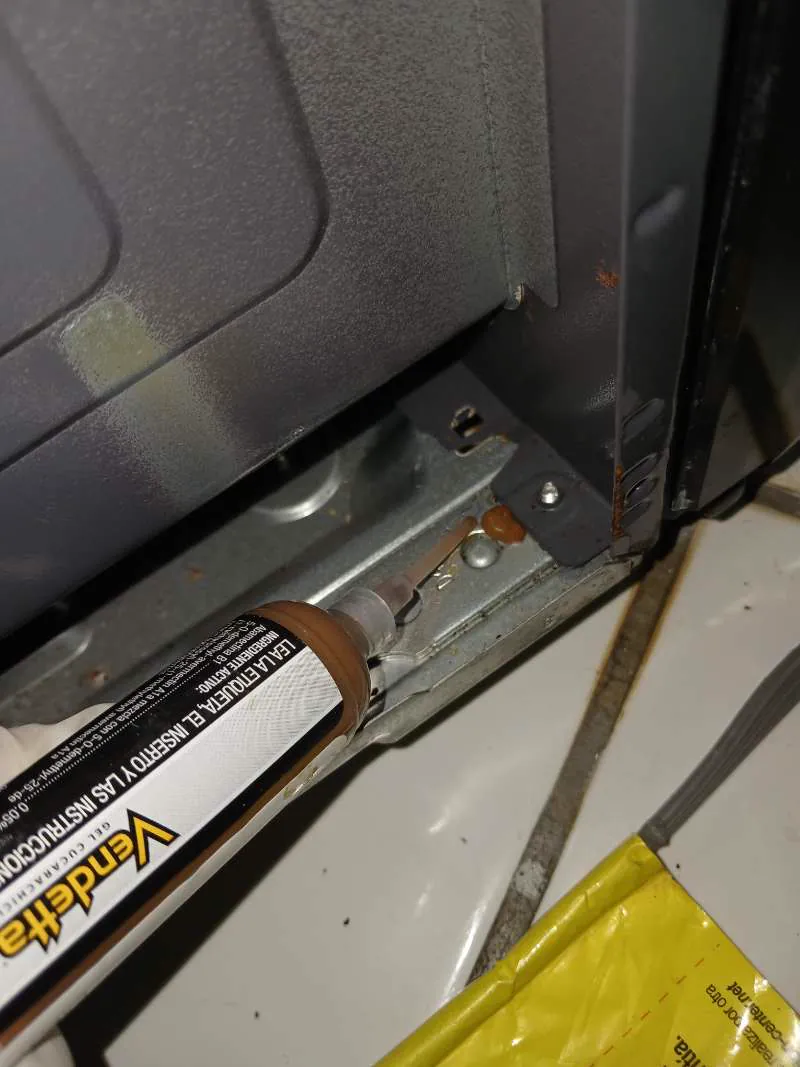
- Microwave, inside the casing, through the ventilation slots and behind the button panel.
- Kitchen cabinet hinges, on the inside, and where the door meets the frame.
- Coffee maker, toaster, rice cooker, blender. Warmth and crumbs.
- Behind and under the sink, where the pipe goes into the wall.
- Where the baseboard meets the floor and the cabinet meets the wall.
- Electrical boxes, light switches and outlets in the kitchen.
- Bathroom: behind the toilet, under the sink, inside the mirror cabinet.
The two spots where they concentrate most, and where the gel goes on a real job.

Why spray makes it worse
With German cockroaches, spray isn't neutral: it backfires. Three reasons.
It scatters them. The pyrethroids in spray are repellents. The ones that don't get a lethal dose flee the smell and move to another cabinet, room or apartment. The single hot spot you had under the sink turns into three.
It doesn't penetrate the egg cases. The egg capsule is impermeable to the product. Two or three weeks later, 30 to 40 nymphs hatch from each egg case and you conclude that "they came back".
It cancels out the gel. If you put out gel bait after spraying, the cockroach won't go near it because the area smells of repellent. You have to wait and clean before the bait will work.
There is a fourth reason that has to do with health, not effectiveness: spray lands on the surface where you prepare food and your family breathes it in. Use it to kill one you can see. As a treatment, no.
Egg cases: 30 to 40 eggs no product can penetrate
Here is the biological reason behind everything else. The female German cockroach produces a light brown capsule 6 to 8 mm long, the egg case or ootheca, with 30 to 40 eggs. Unlike other species, she carries it attached to her abdomen until one or two days before it hatches, and then leaves it in a protected crack. That way the eggs travel with her, away from any product, and the capsule's shell doesn't let insecticide through.
Over her lifetime, a female produces 4 to 8 egg cases. Do the math: a single female that came in on a box can leave more than 200 offspring, and her daughters start reproducing at two months. That's why a kitchen goes from "I saw one" to "they're everywhere" in three or four months.
The practical consequence: no one-time treatment gets rid of German cockroaches. Whatever kills the adults and the nymphs that have already hatched leaves the eggs about to hatch untouched. The treatment has to stay active or be repeated when those nymphs come out.
The life cycle and why it multiplies so fast
- Egg: 2 to 4 weeks inside the egg case.
- Nymph: 6 to 8 weeks with plenty of food and warmth, shedding its skin 6 or 7 times. Nymphs eat the same as adults and also the colony's droppings, which is exactly what makes them vulnerable to gel.
- Adult: lives 3 to 6 months, and the female starts producing egg cases within a few days.
The full cycle, from egg to reproducing adult, takes 2 to 3 months in a Costa Rican kitchen, which for this species is an ideal climate all year round. That figure drives the treatment schedule: the second application is timed for when the nymphs hatch, and the third, if needed, before those nymphs are old enough to reproduce.
How it is really treated: gel bait, a flashlight and two or three applications
The method any serious professional uses, and which you can partly replicate if the infestation is just starting, has three parts.
1. Flashlight inspection
Before applying anything, the hot spot is located: the cabinet under the sink, behind the refrigerator, hinges and microwave slots. You look for droppings, egg cases and nymphs. Wherever there are fresh droppings, that's where the gel goes. Three glue traps over two nights complete the map.
2. Gel bait in the hiding places
Dots the size of a lentil, lots of them, inside the cracks: hinges, the joint between the cabinet and the wall, under the refrigerator, the microwave casing, where pipes come in. Never on the countertop. The cockroach eats it because it smells like food, goes back to its hiding place and dies there; the others, including the nymphs, get contaminated through its droppings and its body. During the first 48 to 72 hours you may see more cockroaches, sluggish and in plain sight: that's the gel at work. The sharp drop shows up between day 4 and day 10.
3. Two or three applications
The first kills between 70% and 90% of the population. The second, two or three weeks later, reaches the nymphs that hatched from egg cases the product couldn't penetrate. Large infestations or buildings need a third. Which products exist, which ones work and which don't is covered in the guide to cockroach poison.
How to keep it from coming back
- Check what comes in. Used appliances: open them up and look at the casing before bringing them into the kitchen. Cardboard boxes: unpack outside and get the cardboard out of the house the same day.
- No water at night. Dry the sink, fix the dripping faucet, don't leave damp rags out. A German cockroach can survive a month without food but only a week without water. The blog has a guide on how to eliminate the moisture that attracts cockroaches.
- No accessible food. Crumbs under the toaster, grease behind the stove, the dog's bowl overnight, a trash can without a lid. What looks dirty to you is a buffet to them.
- Seal the cracks. Silicone where the cabinet meets the wall, where pipes come in and in baseboard cracks. Fewer hiding places means a smaller colony.
- A maintenance dot of gel in the hinges and under the refrigerator every two or three months, if you have already had an infestation.
When the whole building needs treatment
In apartments, condominiums and semi-detached houses, German cockroaches don't recognize shared walls: they travel through pipe ducts, cable openings, ceiling joints and shared trash areas. If you treat your unit and the neighbor doesn't, they will be back in six to eight weeks. Signs that the problem belongs to the building:
- You see them coming out of outlets, light switches or ceiling cracks, not out of your appliances.
- You treated properly, got down to zero, and they reappear without anything new coming in.
- More than one neighbor has the same problem, or there is a food business on the ground floor.
- The trash room or the shared duct has visible activity.
In that case what works is a treatment coordinated by the building management: all the affected units and the common areas in the same week, with gel in the ducts and a residual treatment in the shared passages. Treating one unit at a time, on different dates, just moves the colony from one floor to another.
What EcoPlagas does and how much it costs
- Flashlight inspection of the kitchen, bathroom and appliances to confirm the species and locate the hot spots.
- Gel bait in cracks, hinges and under appliances, not spray in the air over the surfaces where you cook.
- Residual barrier treatment on baseboards, drains and pipe openings.
- Re-entry one hour after we finish.
- 30-day check once the plan is complete, with conditions, because no product penetrates the egg cases and the second application is part of the treatment.
House or apartment up to 100 m²: ₡39,900. Up to 200 m²: ₡49,900. Over 200 m²: ₡59,900. VAT included, and the same visit covers cockroaches, ants, fleas, spiders and mosquitoes. Date confirmed in less than an hour over WhatsApp, service nationwide, 24/7. Authorized by the Ministry of Health. Message WhatsApp 6030-0045 or call 6073-1000. The details for each size are on the prices page.
Frequently asked questions
- How do I know if I have German cockroaches?
- By four signs: it measures 1 to 1.5 cm, it is light brown with two dark parallel stripes behind the head, it doesn't fly but runs to the nearest crack, and it shows up in the kitchen and bathroom close to appliances. If you also see tiny black nymphs 2 or 3 mm long, droppings like ground pepper in the corners of cabinets, or brown capsules 6 to 8 mm long in the hinges, the colony is already reproducing inside the house.
- How do I get rid of the small cockroaches in the kitchen?
- With gel bait applied in small dots inside their hiding places: cabinet hinges, the joint between the cabinet and the wall, under and behind the refrigerator, the microwave casing and where the pipes come in. First, a flashlight inspection to locate the hot spots. Then a second application two or three weeks later, when the nymphs hatch from the egg cases the product can't penetrate. No spray, because it scatters them and cancels out the gel.
- Why does spray make German cockroaches worse?
- Because the pyrethroids in spray are repellents: cockroaches that don't get a lethal dose flee the smell and move to other cabinets, rooms or apartments, so one hot spot turns into several. Spray also doesn't penetrate the egg cases, and two or three weeks later 30 to 40 nymphs hatch from each capsule. And if you put out gel afterward, the cockroach won't go near it because the area smells of repellent.
- Where did they come from if my house is clean?
- German cockroaches almost never come in from the street. They arrive in used appliances, cardboard boxes, grocery bags, food packaging, moves, backpacks and lunch boxes, or they travel from the neighboring apartment or business through pipe ducts and cable openings. A single egg case stuck to a box brings 30 to 40 eggs. Cleanliness helps the colony grow more slowly, but it doesn't keep it from getting in.
- How many applications does it take to get rid of them?
- At least two. The first kills between 70% and 90% of the population, but the eggs inside the egg cases are left intact because no product penetrates the capsule. The second application, two or three weeks later, reaches the nymphs that have hatched. In large infestations, in buildings or in food businesses a third may be needed. That's why the EcoPlagas service includes a 30-day check once the plan is complete, with conditions.
- How much does it cost to get rid of German cockroaches in Costa Rica?
- At EcoPlagas the visit for a house or apartment up to 100 m² costs ₡39,900, up to 200 m² ₡49,900 and over 200 m² ₡59,900, VAT included. The same visit covers cockroaches, ants, fleas, spiders and mosquitoes, and includes an inspection, gel in cracks and hinges, a residual barrier treatment, re-entry one hour later and a 30-day check once the plan is complete, with conditions. The date is confirmed in less than an hour over WhatsApp, and we serve nationwide, 24/7.