
Rodents
Ultrasonic mouse repellers: why they don't work and what to do instead
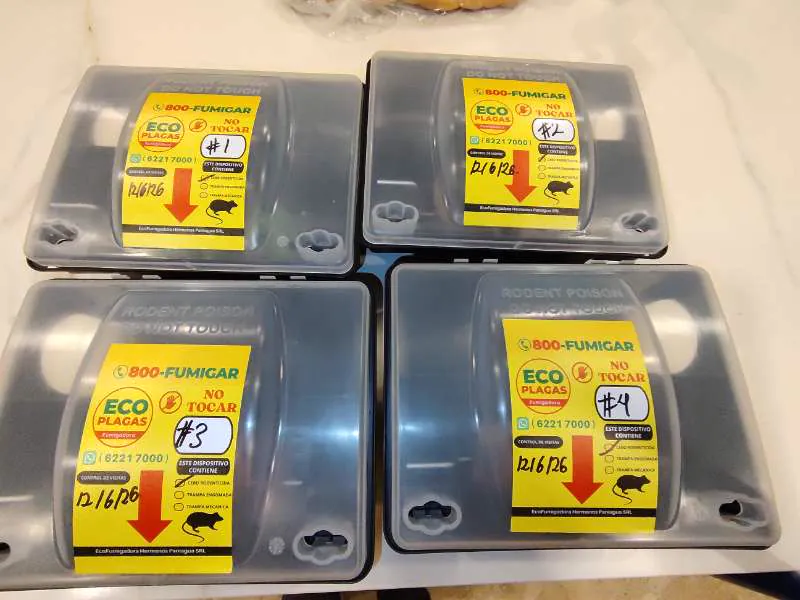
- Ultrasound doesn't drive mice out: they get used to it in days, the sound doesn't pass through walls or furniture, and the US FTC warned manufacturers over unsupported advertising.
- Neither do peppermint, pepper, mothballs (which are also toxic) or a cat as the only solution.
- What really keeps them away: no food or water within reach, 2 cm gaps sealed with mesh, and trees trimmed back from the roof.
- If there's already a population: traps for 1 or 2 animals, locked bait stations for more. 4 stations installed, ₡48,900.
Ultrasonic devices for driving away mice don't work. This isn't the opinion of a pest control company trying to sell a service: it's what laboratory and field tests have shown since the 1980s, and what led the US Federal Trade Commission (FTC) to warn and penalize manufacturers for unsupported advertising. If you already bought one and the mice are still there, you didn't set it up wrong: the mouse got used to it, or never heard it behind the wall.
What does get rodents out of a house is less flashy but always works: take away their food and water, seal the entry points and, if there's already a population, use traps or locked bait stations. Let's go step by step.
What the devices promise
They plug into the wall and emit sound between 20 and 65 kHz, above the range humans can hear. The ads say the sound "stresses" the rodent, "disorients" it and forces it to leave within 2 to 4 weeks, over an area of 100, 200 or 400 m² depending on the model. Some add strobe lights or "electromagnetic pulses through the house wiring". They cost between ₡8,000 and ₡40,000 and are sold in hardware stores, online shops and even supermarkets.
What the evidence says
Rodents get used to it within days. It's the consistent finding of every study: at first the animal avoids the area around the device, and somewhere between day two and day seven it goes back to eating and nesting right next to it as if it weren't there. It's the same thing that happens with the noise of a train or the refrigerator: the brain stops registering a stimulus that has no consequences. If the food is there, the sound loses.
Ultrasound doesn't go through anything. High frequencies travel in a straight line and are absorbed by any obstacle: a wall, a drywall panel, a cabinet door, the refrigerator, a sofa. The device plugged in in the kitchen can't be heard in the ceiling, which is where the roof rat lives, or inside the cabinet under the sink, which is where the mouse lives. At best it covers the open space of the room it's in, and rodents don't stay there anyway.
The FTC said so publicly. In 2001 the US Federal Trade Commission sent warnings to more than 60 manufacturers and sellers of ultrasonic repellers, demanding that they withdraw claims without scientific evidence, and later reached settlements with manufacturers that kept promising results. The studies the FTC reviewed, several of them from agricultural universities, found no reduction in the number of rodents or in the damage they caused.
We see it a different way on our visits: in houses with two or three devices plugged in, there are fresh droppings right next to the outlet.
Remedies that don't work either
- Peppermint oil or cotton balls soaked in peppermint. The smell is strong for a couple of hours and then evaporates. The mouse holds its nose, goes past, and eats. There's no evidence it clears a house.
- Mothballs. They're not a rodent repellent and they're toxic: naphthalene in an enclosed space affects people, especially children, and pets. Don't put them in the ceiling or in drawers.
- Pepper, chili, lime, garlic, ammonia. They bother rodents for a few minutes. The rat shifts its route by a meter and keeps going.
- A cat as the only solution. A hunting cat catches mice on the kitchen floor. It doesn't catch roof rats in the ceiling, and its food bowl on the floor is exactly what attracts the mouse. It helps as a deterrent; it doesn't solve the problem.
- Homemade poison (plaster with flour, baking soda, chocolate with cement). It's unproven, it doesn't kill quickly, and the dying animal crawls into the wall.
What really keeps them away
A rodent stays where there are three things: food, water and shelter. Take them away and it leaves, or at least stops coming.
- Food in sealed containers, including dog and cat food (pick up the bowl at night), rice and beans in bags, birdseed and fallen fruit in the yard. Trash in a lidded bin, taken out of the house every night.
- Water: fix leaks, don't leave water in plant saucers, dry the sink at night. In the dry season rats come into the house looking for water as much as for food.
- Seal the entry points. A mouse fits through a 6 mm gap (about 1/4 inch) and a rat through a 2 cm one (about 3/4 inch). Check with a flashlight: where pipes pass under the sink, ventilation grilles, the edge of the ceiling, under the garage door, the meter box. Seal them with metal mesh (galvanized screen) stuffed into the gap and covered with cement or foam; foam alone gets chewed through in one night. Step by step in sealing your home: cracks and pest entry points.
- Trim trees and palms so no branch is within a meter of the roof: it's the roof rat's highway. Same with vines on the wall and the neighbor's cable running right along the eave.
- Remove shelter next to the house: firewood, boxes, scrap, tall weeds, the crumpled tarp. Leave 50 cm (about 20 inches) of clear ground around the wall.
With these five things, a house without an established population stops getting rodents. If animals are already living inside, this alone won't make them leave: they have to be removed.
Traps and bait stations: what removes the ones already there
For one or two animals, snap traps of the right size, baited with peanut butter, set perpendicular to the wall along the route where there are droppings. Which ones work, which don't and how to set them in rat traps: which ones work and how to set them right.
For noise every night in the ceiling, droppings in several rooms or more than 2 or 3 animals, what works is locked bait stations: keyed boxes, numbered and dated, along the outside perimeter and the roofline. The rodent goes in and eats; children and dogs can't reach the bait. At 15 days we check which station was eaten from, which tells us where they move and when the job is done. Together with sealing the main entry point, it's the method that lasts; the full plan is in how to get rid of rats at home for good and the service in rodent control.
How much it costs
4 stations installed: ₡48,900, within 24 to 72 hours, with a check at 15 days. 8 stations: ₡79,900 for large houses, lots with fruit trees or commercial spaces. VAT included, no travel fee in the GAM (Greater Metropolitan Area). The date is confirmed in under an hour on WhatsApp. It's less than three ultrasonic devices cost, and at 15 days there's a way to know whether it worked.
Frequently asked questions
Does ultrasonic sound for mice work even a little?
In tests, some rodents avoid the device for the first few hours or days and then ignore it completely. If food and shelter are there, the sound no longer matters. No controlled test shows a house left free of mice because of ultrasound.
Don't ultrasonic devices bother dogs and cats?
Some devices do bother dogs, cats, hamsters and rabbits, which can hear those frequencies. In other words, they bother your pet and not the mouse living in the ceiling behind a drywall panel.
How do I get rats out of the house without killing them?
Take away what they're looking for: food (including dog food and fallen fruit), water (leaks, plant saucers) and shelter (boxes, firewood, weeds against the wall). And block their way in: seal every gap of 2 cm (about 3/4 inch) or more with metal mesh and trim branches that touch the roof. If animals are already inside, that alone won't make them leave: they have to be trapped or you need bait stations.
How much does rodent control with bait stations cost?
4 locked bait stations installed along the perimeter and the roofline, CRC ₡48,900, with a follow-up check at 15 days. 8 stations, ₡79,900. They're installed within 24 to 72 hours and the date is confirmed in under an hour on WhatsApp.