Home
Preventing Pests Without Chemicals: Habits at Home

“I want to fix this without poison” is one of the things we hear most, and it is a fair request: there are children, there are pets, or the idea of spraying the house simply does not appeal. The good news is that a large part of pest control is not chemical at all: it is closing entry points, removing water and not leaving food available. The bad news is that a great deal of home-remedy advice does nothing, and only wastes weeks while the population grows. Here is what works, what does not, and how to know when physical measures are no longer enough.
- No pest settles in without all three: food, water and shelter. Removing even one changes the picture.
- Physical barriers are the most cost-effective measure there is: screens, door sweeps and drain covers.
- Water is usually the limiting factor, and it is the easiest one to cut off.
- Internet remedies — vinegar, cucumber, coffee grounds — repel for a few hours at best; they do not control a population.
- Once a colony is established inside walls, the responsible move is targeted treatment, not more insisting.
The three things every pest is looking for
Cockroach, ant, rat or mosquito: the details change, but they all need the same things. Food, water and shelter. Non-chemical control is, literally, managing those three variables.
It pays to know which one matters most in each case, because that is where the effort belongs:
- Cockroaches: water rules. They survive weeks without eating, but very little without drinking. That is why one leak under the sink sustains an entire population.
- Ants: food rules. They track sugar or grease depending on the species, and they do not stay where there is nothing to carry back.
- Rodents: shelter rules. Given a safe, warm place they endure a lot; they go out for the rest.
- Mosquitoes: standing water rules, and very little is needed — the lid of a bucket is enough.
Physical barriers: the best return on effort
This is the boring part and the one that pays the most. An afternoon of work prevents months of trouble.
- Screens on windows and vents. Check for tears and lifted corners: a one-centimetre gap cancels out the whole screen.
- Sweeps on the bottom of doors. If you can see daylight underneath from inside, a mouse can get through. The gap to beat is about half a centimetre.
- Metal covers on drains — patio, laundry sink and service bathroom. It is the most underestimated entry point in the house.
- Seal where pipes pass through walls. That ring of space around the pipe is a highway for cockroaches and rodents. See how to seal the house.
- Mesh on the dryer vent and on the roof-space vent.

Water: the factor almost nobody checks
If you were only going to do one thing, this would be it. Walk the house looking for available water and cut it off:
- Drips under the kitchen sink and the basin, even one drop a minute.
- The saucer under the plant pot, the pet bowl overnight, the fridge drip tray.
- Condensation on cold pipes: not a leak, but water all the same, and it sustains whole populations.
- Damp cloths and sponges left in the sink. Wring them out and hang them up.
- The dry trap in a bathroom nobody uses: pour a glass of water down it weekly, because once it dries out it stops being a barrier and becomes an entrance.
The detail is in eliminating moisture sources and in moisture in bathrooms and sinks.
What circulates online and does not work
This is worth stating plainly, because people lose weeks to it:
- Cucumber peel, bay leaves, cloves. At most they cause some avoidance for a while. They do not kill, they do not reduce the colony, and the effect disappears as they dry.
- Vinegar. It does work for erasing the chemical trail ants follow — that part is real — but it does not eliminate the colony. It is support, not a solution.
- Ultrasonic devices. There is no evidence supporting their effectiveness against rodents or insects. It is one of the best-documented negatives in the field.
- Coffee grounds, eggshells, chalk. No measurable effect on an established population.
The underlying problem is not that they fail: it is that they create the feeling of doing something while the population keeps growing. And a German cockroach population doubles in weeks.
Non-chemical methods that do control
They exist and they work well when used with judgement:
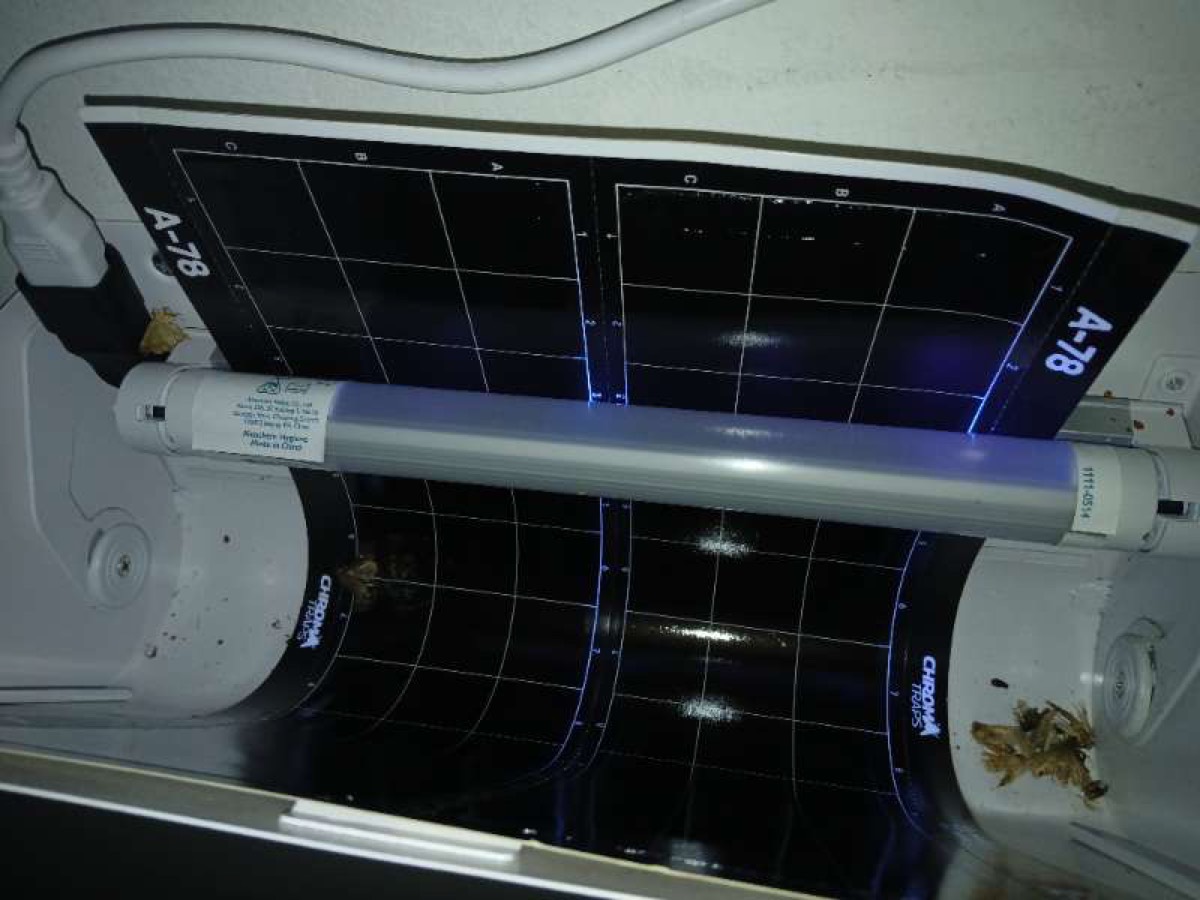
- UV light traps with adhesive boards for flying insects in kitchens and commercial premises. They double as monitoring: the number of captures tells you whether the problem is rising or falling.
- Mechanical traps for rodents, placed against the wall and perpendicular to their route.
- Diatomaceous earth of the appropriate grade in dry cracks. It is physical — it abrades the cuticle — not toxic. It loses all effect once wet.
- Thorough vacuuming for fleas: it removes eggs and larvae from the floor, which is where most of the population lives.
- Heat and cold for pantry pests: freezing newly bought goods for three days kills eggs.
When chemical treatment is the responsible choice
Insisting on physical methods once a colony is established is not safer: it lets the problem grow. Move to targeted treatment when:
- You see insects during the day. With cockroaches that means the population has outgrown the available shelter.
- You find oothecae (egg cases) or accumulated droppings.
- They come out of walls, floors or ceilings: the nest is inside the structure and no barrier reaches it.
- You have spent over a month on well-executed physical measures with no reduction.
- There is a health risk: food handling, a crawling baby, someone with asthma.
It is also worth knowing that modern professional treatment is not spraying the whole house. It is targeted application — gel in cracks, bait at specific points — with green-label products and a defined re-entry time. In terms of the volume of chemical released into your home, it is usually considerably less than several months of buying aerosols.
If after three weeks of doing the physical work properly — sealing, water cut off, tidy — you still see the same number of insects, this is no longer a hygiene problem: there is an established population and it needs targeted treatment. Insisting further only buys the colony time.
Need professional help?
Call us or send a message. We serve homes and businesses across the Greater Metropolitan Area.